kottke.org home archives + xml about kottke.org contact me
kottke.org - home of fine hypertext products

kottke.org posts about 'art'

A collection of artworks featuring Kate Moss, including a self-portrait drawn with lipstick.

Oct 9, 2008    tags: art katemoss

Evan Roth has been putting metal plates with messages and symbols cut into them into his carry-on luggage when he goes through security at the airport.

Here's Roth's idea, which he calls "TSA Communication" and tells me has already made it through three trial airport runs: Take a metal plate, stencil and cut out a message -- words or an image -- place the plate at the bottom of your carry-on bag, and watch what happens as the TSA employee operating the airport X-ray machine notices ... or doesn't notice.

So far, he's used plates with outlines of the American flag, a "NOTHING TO SEE HERE" message, and something he calls The Exact Opposite Of A Box Cutter, a plate with a box cutter shape cut out of it.

Daniel Eatock's counterbalancing shelves.

5 pine planks (each 6 feet), 5 metal brackets, tools and materials from the gallery utility closet or found on the gallery grounds. Each of the five shelves that comprise this work is balanced on a single bracket. All maintain their level balance by the precise placement of the objects they bear.

With a little more conceptual work and product placement, he could have turned this into a piece about consumerism and the collapse of the networked global economy blah blah blah.

Sep 29, 2008    tags: art danieleatock

Why have I not heard of artist Tara Donovan before...her stuff is great.

Though Ms. Donovan's new prints won't be on view, her glass-shattering talents will be: she intends to recreate "Untitled (Glass)," a process-oriented sculpture that she first made in 2004. It involves stacking sheets of tempered glass into a perfect cube, then working carefully one by one from bottom to top, striking a single corner of each pane with a hammer. As with the print, Ms. Donovan will contain the glass with a wooden frame while she works. Once the mold is removed, the cube "stays in place," she said. "You can still see the layers, but everything's really broken into itty-bitty teeny-weeny shards."

Donovan is one of the 2008 MacArthur genius fellows. (via delicious ghost)

Sep 24, 2008    tags: taradonovan art

Color palettes taken from a MoMA exhibition of nighttime paintings by Vincent van Gogh. Review of the show by the NY Times.

This year's harvest of crop art from the Minnesota State Fair included Grand Theft Festal, a mashup of Grand Theft Auto and Festal-brand canned corn done in millet, alfalfa, canola, and white clover seeds. The artist recorded a timelapse video of its construction. (via mark simonson)

Mark Rothko's daughter Kate remembers her father nearly 40 years after his death.

Rothko may have been depressed at the end of his life, he may not have been as clear as he should have been when it came to writing a will; but with regard to his work, and where it might end up, he had long held strong views. While selling to private individuals from his studio, he would scrutinise their reactions to paintings; they had to pass a test they did not know they were taking. If they failed, they went home empty-handed, irrespective of the size of their wallets. Lighting, on which wall of a gallery a painting might hang; these things obsessed him.

I saw Rothko's Seagram Murals at the Tate Modern in May.

Sep 16, 2008    tags: markrothko art

How to identify interactive or new media art.

7. Someone in your audience wearing a Crumpler bag, slinging a fancy digital SLR and/or standing with their arms folded smugly says, "Yeah..yeah, I could've done that too..c'mon dude..some Perlin Noise? And Processing/Ruby-on-Rails/AJAX/Blue LEDs/MaxMSP/An Infrared Camera/Lots of Free Time/etc.? Pfft..It's so easy..."

(via russell davies)

Sep 10, 2008    tags: lists art howto

Short film: Blow Job by Andy Warhol. Mostly SFW...it's just the face of the recipient. Here's some info on the film.

When Andy Warhol decided to shoot Blow Job, he rang Charles Rydell and asked him to star in it, telling him that "all he'd have to do was lie back and then about five different boys would come in and keep on blowing him until he came," but that the film would only show his face.

Charles agreed, but when he didn't show up for the following Sunday afternoon shoot, Andy reached him at Jerome Hill's suite at the Algonquin and screamed into the phone "Charles! Where are you?" Charles responded: "What do you mean, where am I? You know where I am - you called me," and Andy the said "We've got the camera ready and the five boys are all here, everything's set up!" Charles's shocked reply was: "Are you crazy? I thought you were kidding. I'd never do that!"

In order to explain serial computation vs. parallel computation, the Mythbusters guys pit two paintball guns against each other in a art contest...one shoots one ball at a time and the other very much doesn't. (thx, steve)

Anatomical drawings that are part medical and part American Apparel advertisement. (via clusterflock)

Aug 26, 2008    tags: art science

How to draw anything in one step: Draw a dog covering the thing you can't draw. The examples are hilarious. (via waxy)

Aug 26, 2008    tags: howto art

Christoph Niemann has used some unusual image sources to tile his bathrooms. For the shower, an appropriation of Warhol's Brillo box. For the kids bathroom, a NYC subway map.

Paintings of notable movie families, including the Clark W. Griswolds and the Jack Torrences from The Shining.

Aug 25, 2008    tags: movies art
Old Masters and Young Geniuses

This short NY Times profile of economist David Galenson reminded me that I never shared Old Masters and Young Geniuses with you. The book was recommended to me by Malcolm Gladwell -- which means that many of you can now form your opinion of it without even reading it -- through a talk that he gave a couple of years ago. Gladwell also wrote an article for the New Yorker about Galenson's work but it was rejected:

When Mr. Gladwell submitted an article about Mr. Galenson's ideas to The New Yorker, he suffered his first rejection from the magazine. "You buy this Galenson stuff?" Mr. Gladwell recalled his editor saying to him. "What are you, crazy?"

But never mind all that, Old Masters and Young Geniuses is one of the most interesting books I've read in the past few years. I haven't studied enough art history to know if Galenson's thesis is correct, but the book presents an interesting framework for thinking about innovation and how to best harness your own creativity.

The main idea is this. Instead of people being super creative when they're young and getting less so with age (i.e. the conventional wisdom), Galenson says that artists fall into two general categories:

1) The conceptual innovators who peak creatively early in life. They have firm ideas about what they want to accomplish and then do so, with certainty. Pablo Picasso is the archetype here; others include T.S. Eliot, F. Scott Fitzgerald, and Orson Wells. Picasso said, "I don't seek, I find."

2) The experimental innovators who peak later in life. They create through the painstaking process of doing, making incremental improvements to their art until they're capable of real masterpiece. Cezanne is Galenson's main example of an experimental innovator; others include Frank Lloyd Wright, Mark Twain, and Jackson Pollock. Cezanne remarked, "I seek in painting."

Galenson demonstrates these differences through analysis of how often artists' works are reproduced in textbooks, auction prices, and museum shows. The pattern is clear, although the method is less than precise in some cases and Galenson has since backed off his thesis somewhat. But the compelling part of the book is what the artists themselves say about how they work. The text is littered with quotes from painters, poets, writers, sculptors, and movie directors about how they perceived their own work and the work of their peers and predecessors. Their thoughts provide ways for contemporary creators to think about how their creativity manifests itself.
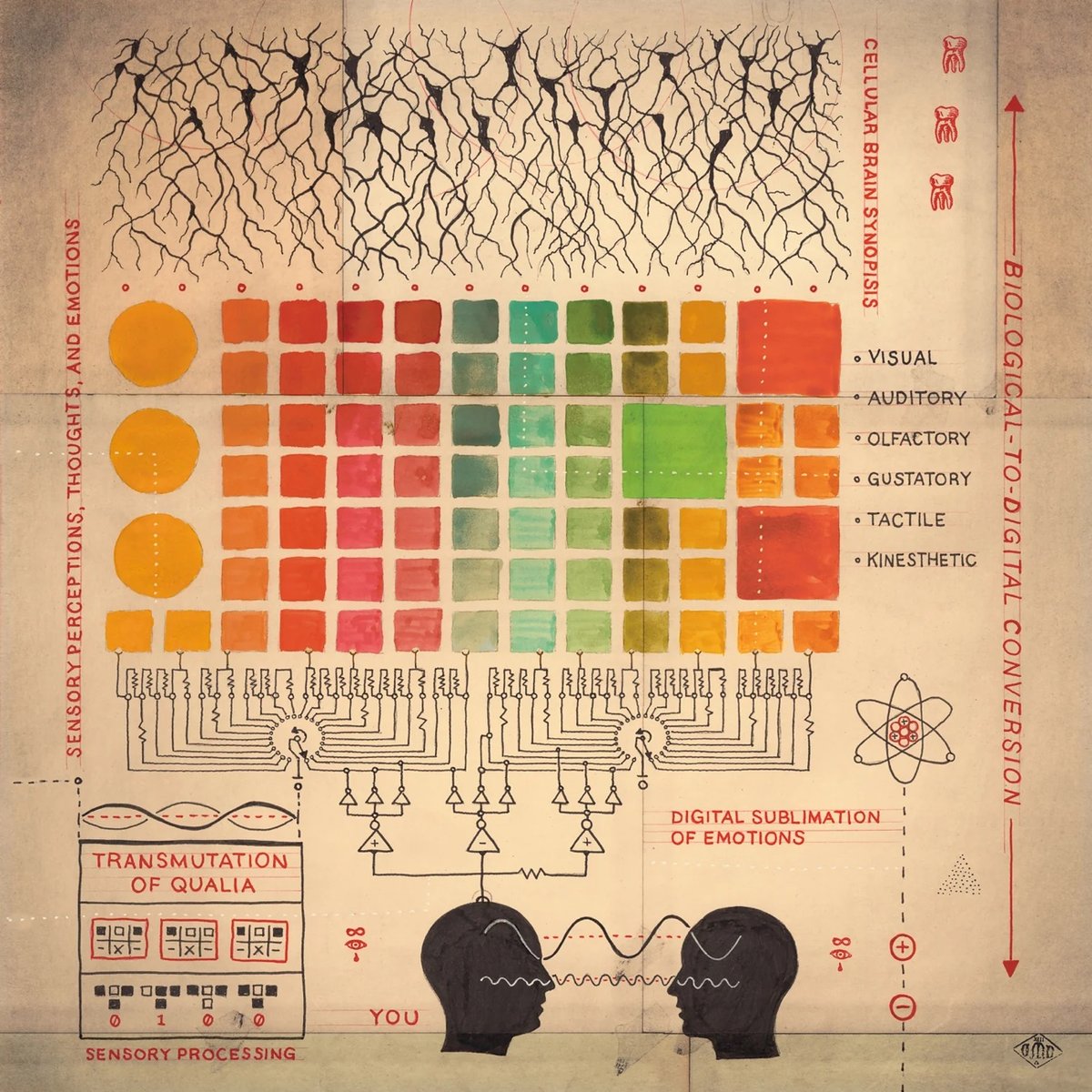
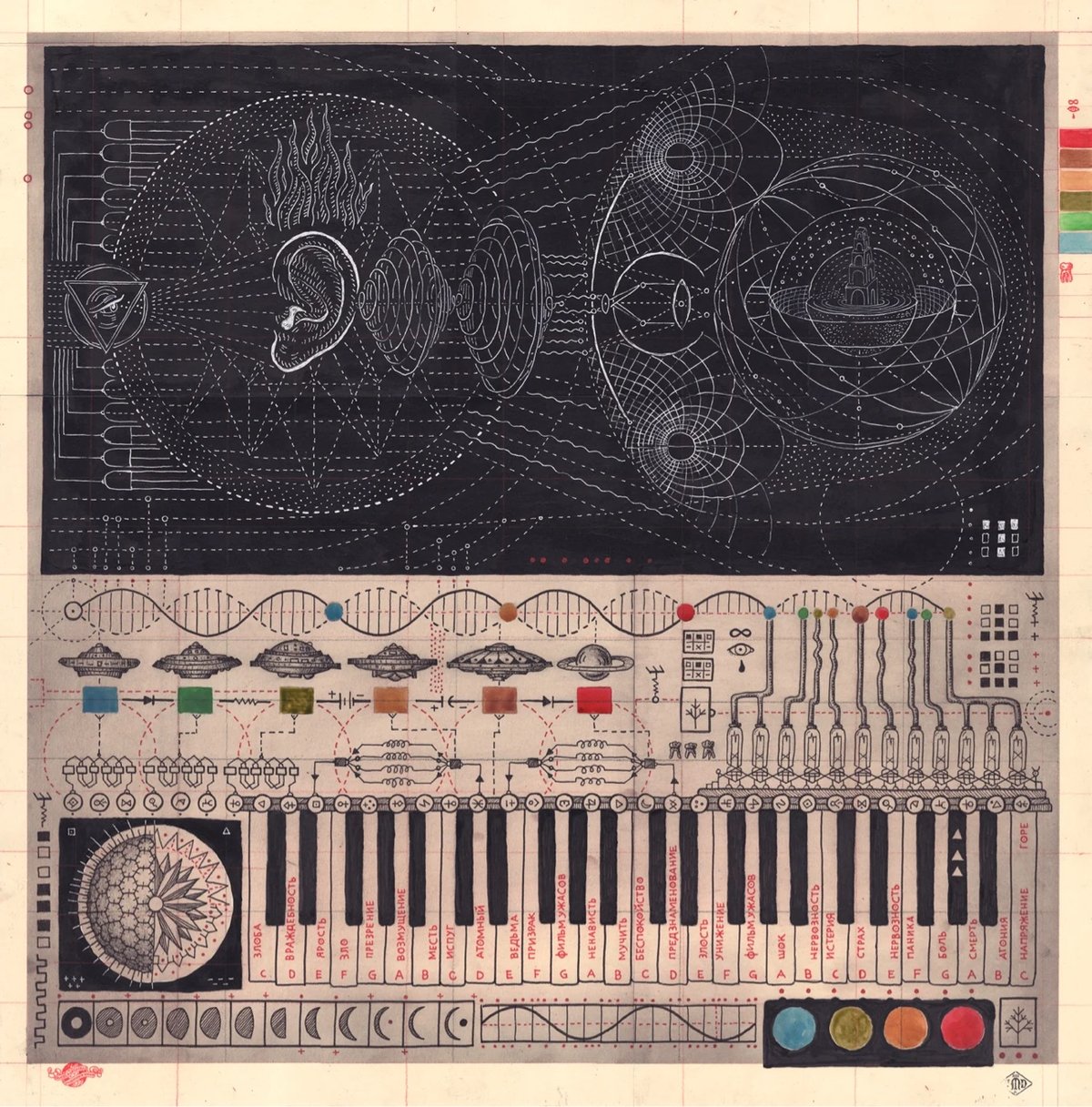
The transcript of Gladwell's talk is a good introduction to there ideas. Galenson's next book, And Now for Something Completely Different, appears to be available online in its entirety in a preliminary form. Much more information is available on his web site.

Video of a UFO flying over Gdansk, Poland. I'm probably not spoiling anything by telling you that the saucer is actually an art project by Peter Coffin with an SMS-controlled light show. (via greg)

Aug 5, 2008    tags: ufo art

X-ray analysis has revealed a van Gogh painting underneath another van Gogh painting. (via clusterflock)

A collection of the often banal and artless images used in the development and testing of 3-D modeling technologies and digital imaging.

While the "end user" rarely sees any of these images or objects, a handful of them (Lena, the mandrill, the Utah Teapot, the Stanford Bunny and the Cornell Box) are well known to the point of being iconic within the digital imaging research community. They have even become the subjects of inside jokes between programmers and animators: 3D models of the Utah Teapot are hidden in Pixar's Toy Story, a screensaver that comes as part of Microsoft Windows, and the Simpsons episode where Homer stumbles into a computer-generated "Third Dimension".

Jul 29, 2008    tags: 3d art

In order to create art for the 10,000-year Clock chamber, Edward Burtynsky has been investigating how to make photographic prints that last a long time.

Burtynsky went on a quest for a technical solution. He thought that automobile paint, which holds up to harsh sunlight, might work if it could be run through an inkjet printer, but that didn't work out. Then he came across a process first discovered in 1855, called "carbon transfer print." It uses magenta, cyan, and yellow inks made of ground stone-the magenta stone can only be found in one mine in Germany-and the black ink is carbon.

On the stage Burtynsky showed a large carbon transfer print of one of his ultra-high resolution photographs. The color and detail were perfect. Accelerated studies show that the print could hang in someone's living room for 500 years and show no loss of quality. Kept in the Clock's mountain in archival conditions it would remain unchanged for 10,000 years.

A year after her husband died, photographer Hilla Becher was interviewed by a German magazine about her work and her husband.

SZ: Why was your husband not interested in such photos?
HB: He rejected them because he was not interested in taking them. Actually, he was never interested in photography.

SZ: That is an unusual statement about a man who spent his whole life on it.
HB: Originally, Bernd did sketches. In the beginning, he sketched industrial landscapes. But he never managed to finish his work, because he was so precise. Often the object was demolished right in front of his eyes, back then heavy industry in the Siegerland was being abandoned for good. The demolishing, the decay happened faster than he could sketch it.

SZ: So then he took photos?
HB: Right. He borrowed a 35mm camera and took photos, to use them for his sketches. That's how it started, photography as the means to an end.

The Bechers worked tirelessly to photograph all kinds of industrial machinery.

I love this painting by Barnaby Furnas but I doubt Meg would let me hang it anywhere in the house. Perhaps if we had a dungeon.

Barbaby Furnas, Antietam

Furnas has done several paintings in this style, including one I saw at the Whitney in aught-four.

Jul 14, 2008    tags: art barnabyfurnas

In an attempt to make Billy Bob Thornton jealous, artist Jillian McDonald pasted herself into movie scenes kissing several well-known actors, including Thornton's former wife, Angelina Jolie.

Video of a kinetic sculpture from the BMW museum in Munich. It starts doing cool stuff about 45 seconds into the video. (via cyn-c)

Jul 8, 2008    tags: art video

An amazing collection of abstract satellite photos, demonstrating the "impressionist, cubist and pointillist" side of the earth's landscape.

The images you see below were taken at the turn of the Millennium, when NASA's scientists had a brilliant idea: to scan through 400,000 images taken by the Landsat 7 satellite and display only the most the most beautiful. A handful of the best were painstakingly chosen and then displayed at the Library of Congress in 2000.

You must see these. Bonus: all the images are available in wallpaper size for your computer desktop.

Martin Creed's Work No. 850 features a runner sprinting through an empty gallery at the Tate Britain every 30 seconds. (via buzzfeed)

Jul 8, 2008    tags: art martincreed

Thumber is a OS X app that screencaps one-second intervals of movies and stitches the results together into one big image. Inspired by one of my favorite art projects, Cinema Redux by Brendan Dawes.

Video art by William Lamson. The banana firecracker, the balloon duel, and the balloon box pop are my favorites.

Camille Utterback's Liquid Time Series project modifies the playback of a video according to a person's motion in front of the screen. The closer a person is to the screen, the faster the video plays in that area. Kinda hard to explain...just check out the video. See also yesterday's time slicing Processing video.

Jul 1, 2008    tags: time video art

This is still one of my all-time favorite paragraphs that has ever appeared in the NY Times. It concerns the captain of a tugboat that was towing a piece of art by Robert Smithson.

It's enough to give a tugboat captain angina. So when Bob Henry, captain of the Rachel Marie, who is in charge of towing Smithson's island, looked out across the East River Thursday afternoon and saw another piece of conceptual art gaining on him, he did not view the development kindly.

Jun 30, 2008    tags: art nyc

CandyKaraoke, a bunch of album covers reimagined by Irish artists. (via ffffound)

Jun 27, 2008    tags: art music design remix

Olafur Eliasson's NYC Waterfalls starts today in NYC. The project consists of four huge waterfalls erected in the East River. NYC Waterfalls is the new The Gates.

Three things I saw at the MoMA today

1. Perhaps the most playful art I've ever seen in a major museum is Olafur Eliasson's Ventilator, a fan hung on a long cord in the main atrium in the museum. Watching it blow around the huge room, chased by children, is hard-to-beat fun.

2. The rest of Eliasson's show on the third floor. His art seems so conceptually and constructurally simple yet, I dunno, I just wanted to hang out in the gallery all day, like I was required to remain part of the experience. Left me wishing I'd made it to London to see The Weather Project.

3. The typology photos of Bernd and Hilla Becher. Recommended if you like photography and multiples of things.

Irritated that I missed: van Gogh's Starry Night (out on loan to Yale until Sept...I've seen it 20 times at least but still like checking it out whenever I'm there), the exhibition of George Lois' Esquire covers, and lunch at Cafe 2.

The "american gothic" tag on Flickr is quite interesting; I like the ketchup and mustard one myself.

Moving Mario: imagine Super Mario Bros as created by Michel Gondry. Check out the video to get the gist.

Any Wikipedia entry that references Adolf Wolfli is a friend of mine. Horror vacui:

Horror vacui is the filling of the entire surface of an artwork with ornamental details, figures, shapes, lines and anything else the artist might envision. It may be considered the opposite of minimalism.

(More of my friends here, apparently.)

Chris Gilmour makes intricate life-sized art entirely out of cardboard. Bikes, microscopes, cars, typewriters, wheelchairs, etc. (via fire wire)

Jun 9, 2008    tags: art chrisgilmour

At the Tate Modern

I very much liked Gerhard Richter's Cage paintings on display at the Tate Modern.

Gerhard Richter, Cage

Part Pollack, part Rothko, part glitch art. From the Financial Times:

The six paintings are composed in his characteristic swiping, blurred style of over-painted and obliterated layers, fine-tuned nuances of grey and white worked through with coruscating colours -- carmine, emerald, turquoise, cadmium yellow, fiery orange -- dragged across the canvas, smeared, wiped, leaving fragments of beauty on cool but sensuous surfaces. They suggest rain and mist, instability and displacement, absence and endings, classical rigour and postmodern ruin. They echo the northern European palette of earnest darkness and piercing brightness that goes back to Grunewald and Caspar David Friedrich, but Richter is also a minimalist, a denier of meaning, ideals, personal signatures. He has named the works in honour of composer John Cage, in reference to his Lecture on Nothing -- "I have nothing to say and I'm saying it."

Three other things I found interesting there:

1) Miroslaw Balka's 480x10x10, a sculpture consisting of used bars of soap held together by a stainless steel rope hanging from the ceiling. It's not often that contemporary art smells Zestfully Clean.

2) Jean Dubuffet's The Exemplary Life of the Soil (Texturology LXIII). The online image doesn't do it justice...the painting looked just like a slab of rock hanging on the wall.

3) The Turbine Room is an amazing, amazing space...I could have spent hours in there. I took this photo of Ollie attempting to take his first steps in the Turbine Room. Oh, and they've patched the cracks from Doris Salcedo's Shibboleth. The patching is shoddy...I wonder if that's on purpose as a permanent aftertaste of the artwork.

Artist Jason Polan (he of the The Every Piece Of Art in The Museum Of Modern Art Book) is on a mission to draw every single person in New York City. If you'd like to be drawn, drop him a line on where you'll be, and he'll show up and sketch you.

May 7, 2008    tags: jasonpolan art nyc

Opening tonight at Jen Bekman: Love = Love by Kent Rogowski. Rogowski takes pieces from different puzzles and assembles them into new images.

Longish but interesting profile of Larry Gagosian, the world's foremost art dealer.

Gagosian attracts artists and collectors alike because he understands the intense coupling between art and money. In 2004 the top price for a painting by Takashi Murakami at auction was $624,000. Since then, Gagosian has sold Murakamis to Cohen and others, and in November one was auctioned for $2.4m. He has repeated that trick time after time. Not long after joining his stable in 2003, the painter John Currin made his auction record of $847,500; his highest price before joining Gagosian was a little over half that. Recently Adam Sender, the head of the hedge fund Exis Capital Management, reportedly sold a Currin painting through Gagosian for $1.4m. Before Glenn Brown began showing with Gagosian, in 2004, his top price at auction was $46,000; in June 2007, a painting of his made $969,000. In May, when Anselm Reyle was still represented by Gavin Brown, his work was fetching at most around $200,000 at auction. In October, after he had joined Gagosian's stable, a work of his made nearly four times that amount

Great 60-minute documentary on English painter Francis Bacon in six parts: one, two, three, four, five, six. The production is inventive and I've never seen someone answer so many seemingly penetrating questions so quickly and fluidly, save for the one he has to read off of a card produced from his pocket. (thx, dean)

Update: The program is available in one part here. (thx, marissa)

May 1, 2008    tags: video francisbacon art

For her Mended Spiderweb project, Nina Katchadourian found spiderwebs in need of repair and fixed them with a needle and thread.

All of the patches were made by inserting segments one at a time directly into the web. Sometimes the thread was starched, which made it stiffer and easier to work with. The short threads were held in place by the stickiness of the spider web itself; longer threads were reinforced by dipping the tips into white glue. I fixed the holes in the web until it was fully repaired, or until it could no longer bear the weight of the thread.

The spiders didn't think much of her handiwork:

The morning after the first patch job, I discovered a pile of red threads lying on the ground below the web. At first I assumed the wind had blown them out; on closer inspection it became clear that the spider had repaired the web to perfect condition using its own methods, throwing the threads out in the process. My repairs were always rejected by the spider and discarded, usually during the course of the night, even in webs which looked abandoned.

(via 3qd)

The One Day Poem Pavilion uses the sun to display a poem one line at a time over the course of an entire day. (via stingy kids)

Apr 25, 2008    tags: poetry time art sun

James Danziger on the photographs of the Florida teens accused of beating a classmate and filming it for YouTube.

The pictures of the accused are startling in the banality of the faces. (While the spelling of many of the names -- April, Britney, Brittini, Cara, Kayla, Mercades, Stephen, Zachary bring to mind a revived Mouseketeers.) A number of the girls look surprisingly similar, but minus the prison garb, they could just as easily be reacting to a berating for poor schoolwork. The boys, who were posted as lookouts while the girls carried out the beating, look a little more ready for jail.

The pictures are fascinating in the narrow range of emotion they convey, from self-pity to sullenness, but to my mind all stop before genuine contriteness. (I'm reading this in, of course, but I have a hunch I'm right.) Yet there's an all-American look to these kids that can only remind us how narrow the line is between good and evil.

The original photos are here.

As part of the the Takashi Murakami show at the Brooklyn Museum of Art, the artist is collaborating with Louis Vuitton to station street vendors -- who typically sell counterfeit merchandise -- outside the museum selling real LV bags designed by Murakami himself.

For scientist Dr. Anne Adams (and composer Maurice Ravel), a rare disease called frontotemporal dementia caused a burst of creativity.

The disease apparently altered circuits in their brains, changing the connections between the front and back parts and resulting in a torrent of creativity. "We used to think dementias hit the brain diffusely," Dr. Miller said. "Nothing was anatomically specific. That is wrong. We now realize that when specific, dominant circuits are injured or disintegrate, they may release or disinhibit activity in other areas. In other words, if one part of the brain is compromised, another part can remodel and become stronger."

Some of Adams' work can be seen here...her portrait of pi contains a touch of synesthesia. (thx, cory)

Gorgeous maps and infographics by Stefanie Posavec that map the literary geography of Jack Kerouac's On the Road.

The maps visually represent the rhythm and structure of Kerouac's literary space, creating works that are not only gorgeous from the point of view of graphic design, but also exhibit scientific rigor and precision in their formulation: meticulous scouring the surface of the text, highlighting and noting sentence length, prosody and themes, Posavec's approach to the text is not unlike that of a surveyor. And similarly, the act is near reverential in its approach and the results are stunning graphical displays of the nature of the subject. The literary organism, rhythm textures and sentence drawings are truly gorgeous pieces.

The sentence drawings are really worth checking out.

Regal

Leslie Hall by Noah Kalina

The Rainbow Portrait of Queen Elizabeth I

Top: Leslie Hall by Noah Kalina.

Bottom: The Rainbow Portrait of Queen Elizabeth I by Isaac Oliver. (thx, adriana)

Delicately knit human organs (brain, heart, intestines) by Sarah Illenberger. See also the Brain Bag. (via this is that)

Anders Weberg makes true P2P art. Weberg shares his videos on Bittorrent until a single other user downloads them. Then he stops sharing it and...

After that the artwork will be available for as long as other users share it. The original file and all the material used to create it are deleted by the artist. [...] Feel free to don't or download the film, watch it and share it for as long as you like. Or delete it immediately.

Permanent Vacation, a piece by Cory Arcangel consisting of "two unattended computers send endlessly bouncing out-of-office auto-responses to each other". (via vitamin briefcase)

The world's 50 best works of art and where to go to see them. Random Knowledge has links to all the art so you can check them out virtually in less time and for less money.

Mar 13, 2008    tags: art lists bestof

An article in the Times about the transition of sales in high-end galleries to the web.

Mr. Gupta said about half of his sales take place without the presence of the buyer. "Being in Chicago, without the walk-in traffic of a gallery in New York or even L.A., I can't imagine working without digital images," he said. "We have a ton of European collectors, and we reach them through art fairs and digital images, a combined effort."

(via ev +/-)

Mar 2, 2008    tags: art internet markets

Did you know that there's a teensy museum on the moon?

Now I find out there was already an entire Moon Museum, with drawings by six leading contemporary artists of the day: Andy Warhol, Robert Rauschenberg, David Novros, Forrest "Frosty" Myers, Claes Oldenburg, and John Chamberlain. The Moon Museum was supposedly installed on the moon in 1969 as part of the Apollo 12 mission.

I say supposedly, because NASA has no official record of it; according to Frosty Myers, the artist who initiated the project, the Moon Museum was secretly installed on a hatch on a leg of the Intrepid landing module with the help of an unnamed engineer at the Grumman Corporation after attempts to move the project forward through NASA's official channels were unsuccessful.

Scott King: How I'd Sink American Vogue. His approach would include stories like "How To Dress Angry", "635 Poor People Upside Down!", and "Karl Lagerfeld Discusses Various Cancers", as well as a 14-page advertisement-free issue.

Why does the woman depicted in the Mona Lisa appear to be both smiling and not smiling at the same time? The smile part of the Mona Lisa's face was painted by Leonardo in low spatial frequencies. This means that when you look right at her mouth, there's no smile. But if you look at her eyes or elsewhere in the portrait, your peripheral vision picks up the smile. (via collision detection)

Proust Was a Neuroscientist

Proust Was a Neuroscientist is the story of how eight writers and artists anticipated our contemporary understanding of the human brain. From the preface:

This book is about artists who anticipated the discoveries of neuroscience. It is about writers and painters and composers who discovered truths about the human mind -- real, tangible truths -- that science is only now rediscovering. Their imaginations foretold the facts of the future.

I enjoyed the book quite a bit so I sent the author, Jonah Lehrer, a few questions via email. Here's our brief conversation.

Jason Kottke: Your exploration of the intersection of neuroscience and culture begins with Proust; you were reading Swann's Way while doing research in a neuroscience lab. Where did the idea come from for a collection of people who anticipated our modern understanding of the human brain? How did you find those other stories?

Jonah Lehrer: The lab I was working in was studying the chemistry of memory. The manual labor of science can get pretty tedious, and so I started reading Proust while waiting for my experiments to finish. After a few hundred pages of melodrama, I began to realize that the novelist had these very modern ideas about how our memory worked. His fiction, in other words, anticipated the very facts I was trying to uncover by studying the isolated neurons of sea slugs. Once I had this idea about looking at art through the prism of science, I began to see connections everywhere. I'd mutter about the visual cortex while looking at a Cezanne painting, or think about the somatosensory areas while reading Whitman on the "body electric". Needless to say, my labmates mocked me mercilessly.

I'm always a little embarrassed to admit just how idiosyncratic my selection process was for the other artists in the book. I simply began with my favorite artists and tried to see what they had to say about the mind. The first thing that surprised me was just how much they had to say. Virginia Woolf, for instance, is always going on and on about her brain. "Nerves" has to be one of her favorite words.

Kottke: Which of your characters did you know the least about beforehand? Even a seeming polymath like yourself must have a blind spot or two.

Lehrer: Definitely Gertrude Stein. I actually found her through William James, the great American psychologist and philosopher. She worked in his Harvard lab, published a few scientific papers on "automatic writing," and then went to med-school at Johns Hopkins before dropping out and moving to Paris to hang out with Picasso. So I knew she had this deep background in science, but I had only read snippets of her work. I then proceeded to fall asleep to the same page of "The Making of Americans" for a month.

Kottke: Are there other characters that you considered for inclusion? If so, why weren't they included?

Lehrer: Lots of people were left on the cutting room floor. I had a long digression on Edgar Allen Poe and mirror neurons. (See, for instance, "The Purloined Letter," where Poe has detective Dupin reveal his secret for reading the minds of criminals: "When I wish to find out how wise, or how stupid, or how good, or how wicked is any one, or what are his thoughts at the moment, I fashion the expression of my face, as accurately as possible, in accordance with the expression of his, and then wait to see what thoughts or sentiments arise in my mind or heart, as if to match or correspond with the expression.") I also had a chapter on Coleridge and the unconscious, but I think that chapter was really just me wanting to write about opium. But, for the most part, I can't really say why some chapters survived the editing process and others didn't. I certainly mean no disrespect to Poe. If they let me write a sequel, I'll find a way to include him.

Kottke: I noticed that three out of the eight main characters in the book are women. Surveying the usually cited big thinkers of the 19th and 20th centuries, it would have been easy to write this book with all male characters. Is there an implicit statement in there that science would be better off with a greater percentage of women participating?

Lehrer: While I certainly agree with the idea that the institution of science would benefit from more female scientists, I didn't choose these female artists for that reason. I don't think you need any ulterior motive to fall in love with the work of Virginia Woolf and George Eliot. Their art speaks for itself. That said, I think the psychological insights of women like Woolf were rooted, at least in part, in their womanhood. Woolf, for instance, rebelled against the stodgy old male novelists of her day. Their fiction, she complained, was all about "factories and utopias". Woolf wanted to invert this hierarchy, so that the "task of the novelist" was to "examine an ordinary mind on an ordinary day." There's something very domestic about her modernism, so that the grandest epiphanies happen while someone is out buying flowers or eating a beef stew. Women might not be able to write novels about war or politics, but they could find an equal majesty by exploring the mind.

Plus, I think Woolf learned a lot about the brain from her mental illness. As a woman, she was subjected to all sorts of terrible psychiatric treatments, which made her rather skeptical of doctors. (In Mrs. Dalloway, she refers to the paternalistic Dr. Bradshaw as an "obscurely evil" person, whose insistence that the mental illness was "physical, purely physical" causes a suicide.) Introspection was Woolf's only medicine. "I feel my brains, like a pear, to see if it's ripe," she once wrote. "It will be exquisite by September."

Kottke: Are there other books/media out there that share a third culture kinship with yours? I received a copy of Lawrence Weschler's Everything That Rises: A Book of Convergences for Christmas...that seems to fit. Steven Johnson's books. Anything else you can recommend?

Lehrer: I've stolen ideas from so many people it's hard to know where to begin. Certainly Weschler and Johnson have both been major influences. I've always worshipped Oliver Sacks; Richard Powers has more neuroscience in his novels than most issues of Nature; I just saw Olafur Eliasson's new show at SFMOMA and that was rather inspiring. I could go on and on. It's really an exciting time to be interested in the intersection of art and science.

But I'd also recommend traveling back in time a little bit, before our two cultures were so divided. We don't think of people like George Eliot as third-culture figures, but she famously described her novels as a "a set of experiments in life." Virginia Woolf, before she wrote Mrs. Dalloway, said that in her new novel the "psychology should be done very realistically." Whitman worked in Civil War hospitals and corresponded for years with the neurologist who discovered phantom limb syndrome. (He also kept up with phrenology, the brain science of his day.) Or look at Coleridge. When the poet was asked why he attended so many lectures on chemistry, he gave a great answer: "To improve my stock of metaphors". In other words, trying to merge art and science isn't some newfangled idea.

--

Thanks, Jonah. You can read more of Lehrer's writing at his frequently updated blog, The Frontal Cortex.

This portrait of Homer Simpson painted in the style of Rembrandt is strangely mesmerizing. Can't look away from those giant eyes.

The Adam Baumgold Gallery is currently showing a series of drawing by Chris Ware, Drawings for New York Periodicals. His series that ran in the NY Times and his Thanksgiving New Yorker covers are included. Feb 1 - Mar 15, 2008. (thx, evan)

Jason Polan, who you may remember from the series of drawings he did of every piece of art in the MoMA, has a unique 20x200 offering available. The larger editions are drawings and copies of his hand while the $2000 edition of 2 is described thusly:

I will come to your house and shake your hand. Two of these interactions will be available. After I meet you I will give you a certificate, to be signed by both you and me, stating the authentification of the encounter. This artwork is a collaboration between you and me. You will also receive a photograph that is taken the moment of our meeting.

20x200 curator Jen Bekman has more on this offering.

Jason's work is about a lot of lofty ideas, but those ideas are grounded in the most mundane of media and happenstance. The ideas center around his ambitions to interact authentically with both the media he chooses to work in and the collectors who buy his work.

The true meaning of George W. Bush's favorite painting. Quoting Inigo Montoya, "I do not think it means what you think it means". (via conscientious)

Jan 24, 2008    tags: art georgewbush

Art Grand Slam would be the perfect name for a web site showcasing the tennis-related art of Martina Navratilova. And so it is.

Almost 20 years since her last grand slam singles title, Martina Navratilova is back in action on the circuit -- only this time she is turning tennis strokes into brush strokes as she helps to create a new form of contemporary art.

In its crudest and, perhaps, most joyful expression, it involves the player hitting paint-covered tennis balls at a canvas, usually marked with court lines and prepared to resemble a playing surface: clay, grass or artificial.

(via quipsologies)

Will Ashford takes used books and creates art and new meanings out of them.

At some unpredictable point along the way, in my mind, the images start to invent themselves. Using colored vellums, graphite and or India ink to highlight or obscure my words; I create the image of that invention. Though I strive to make each document visually engaging I find it is the words that I value most.

(via monoscope)

Update: Ashford's work is quite similar to Tom Phillips' A Humument, which was first published in 1970. (thx, joel)

Jan 23, 2008    tags: books art willashford

Long-exposure photo of two people having sex on a bed. (It's mostly safe for work, believe it or not.) This reminds me of two things: the timelapse threesome scene in A Clockwork Orange and Jason Salavon's work, specifically 76 Blowjobs and Every Playboy Centerfold. Those last tow links probably NSFW. (via the h line)

Update: Atta Kim's work is similar too, particularly his "Sex Series". (thx, jeff)

This summer's big public art project in NYC: 4 large waterfalls falling into the East River and New York Harbor, including one falling from the Brooklyn Bridge. Olafur Eliasson is the responsible party...he's done a couple previous waterfall pieces.

Update: Eliasson's work will also be on display at MoMA and P.S. 1 this summer, April 20 through June 30, 2008. (thx, praveen)

MoMA's "Multiplex"

the bad germansSo I ditched out of "work" early yesterday for MoMA, because it was the last day of the Martin Puryear show. (This is why everyone everywhere should quit his job!) Elsewhere in the museum—on view through July—is a sprawling collection show called "Multiplex," which is apparently about art since 1970 and, according to the opaque curator's text, the flowering of, um, a "complicated artistic terrain." (Yeah. Well, it's been almost 40 years, go figure.) There are three groupings of work: abstraction, mutability, and provocation. (I dunno either!) There's a Gursky that's really one of the worst, an incredible Tacita Dean painted photograph, and a Julie Mehretu painting that is just wowza. (Seriously, you should go see that one.) Also, I'd never seen this Clemens von Wedemeyer video "Big Business," a two-channel wingding that's technically a remake of a Laurel and Hardy film, but which, more importantly, stars two really hot German guys destroying a house. It is all kinds of awesome! I wanted to watch it twice more! But that (and some other nice items) doesn't mean this show isn't a bizarro mess. There's a whole lotta wall text to make their gussied up case. And the tiny end section, "provocation," contains some of the least provocative contemporary art going. (There's a mild Philip Guston painting from 1972! Huh?) Is it that MoMA's collection just doesn't have work down in the basement that could deliver some incitement?

Lawyer-Dance

lawyers
Dying to see this video now showing in Chelsea of a dance performed by lawyers, including John Sloss, a film attorney, and Scott Rosenberg, who I think is with Legal Aid. It's playing with another video, of four day laborers hired to create an earthwork on the beach; both are by Ann Carlson and Mary Ellen Strom.

Jan 14, 2008    tags: art lawyers video

Cherry Blossoms is a project by Alyssa Wright:

Cherry Blossoms is a backpack that uses a small microcontroller and a GPS unit. Recent news of bombings in Iraq are downloaded to the unit every night, and their relative location to the center of the city are superimposed on a map of Boston. If the wearer walks in a space in Boston that correlates to a site of violence in Baghdad, the backpack detonates and releases a compressed air cloud of confetti, looking for all the world like smoke and shrapnel. Each piece of confetti is inscribed with the name of a civilian who died in the war, and the circumstances of their death.

Really interesting interview with artist/designer Tobias Wong by Rob Walker.

That question hits an important point in my work (and pet peeve), because many people are always interested in how I get work out there, financially. And it's quite simple. If there's something I really believe in, I just find a way to make it happen. No daily Starbucks (US$4) or cigs ($8) or dining out ($20), and before you know it you've got the money to do something.

God's Eye View presents four important Biblical events as if captured by Google Earth, including The Crucifixion, Noah's Ark, and Moses parting the Red Sea.

Liquidated Logos by French street artist Zevs.

Re-painting the logos in their own colours, the artist pours paint over them, liquidating one logo after another.

I am a sucker for dripping paint.

Dec 13, 2007    tags: logos art graffiti zevs

Eric Gill was a respected British artist and typographer -- Gill Sans is his most famous typeface -- but according to his diaries, he also regularly engaged in sexual relations with his sisters, his daughters, and the family dog.

For some of Gill's fans, even looking at his work became impossible. Most problematically, he was a Catholic convert who created some of the most popular devotional art of his era, such as the Stations of the Cross in Westminster Cathedral, where worshippers pray at each panel depicting the suffering of Jesus.

These details of Gill's private life were revealed in a 1989 book by Fiona MacCarthy...here's a NY Times review of the book soon after it was published.

The hand-painted toilet seats featured on this artist's website make me wonder if anyone has ever answered Duchamp by using a urinal as a canvas. (via cynical-c)

Update: Kohler (the Toilet People) has its own take on toilet seat art. (thx, Sadie)

Stuff I want to see in NYC soon

I'm writing these down in the hope that doing so will motivate me to actually get out of the apartment to check these out.

- Paula Scher: Recent Paintings at Maya Stendal. Through January 26, 2008.

- Gustav Klimt: The Ronald S. Lauder and Serge Sabarsky Collections at Neue Galerie. Through June 30, 2008.

- Edward Burtynsky: Quarries at Charles Cowles. Though December 1, 2007.

- This Is War! Robert Capa at Work at ICP. Through January 6, 2008.

- Georges Seurat: The Drawings at MoMA. Through January 7, 2008.

Did I miss anything? (Besides Jill Greenberg's bear photos at Clampart?)

Related to Jason Salavon's work from last week is Brian Piana's work, the layouts and colors of web sites with all of the text and graphics stripped out. For instance, Barack Obama's Twitter page. The flowchart stuff is lovely...reminds me a bit of this page from Jimmy Corrigan. (thx, jonathan)

Jason Salavon's Field Guide to Style & Color, a reproduction of the 2007 Ikea catalog with everything but the structure and color excluded. You may remember Mr. Salavon from his composite photographs and videos of blowjobs, late night talk show hosts, and Playboy centerfolds.

I can't see how on earth Julie Jackson's Subversive Cross Stitch didn't make it into the Museum of Arts & Design show on Extreme Embroidery. Maybe it's too straightforward but still...

Blendie is a blender built by Kelly Dobson that only works when you growl at it.

People induce the blender to spin by sounding the sounds of its motor in action. A person may growl low pitch blender-like sounds to get it to spin slow (Blendie pitch and power matches the person) and the person can growl blender-style at higher pitches to speed up Blendie. The experience for the participant is to speak the language of the machine and thus to more deeply understand and connect with the machine.

Check out the movie to see Blendie in action. Dobson's other projects include Machine Therapy (therapy sessions with people and their machines) and ScreamBody (a portable vessel in which to put your screams). (via core77)

Nov 14, 2007    tags: kellydobson art video

I went to a mini conference put on by Core77 on Friday and I'll post a bit more about a couple of the participants in a day or so, but if you were in attendance, you may not have noticed that the person onstage claiming to be artist/designer Tobias Wong was not actually Tobias Wong (more).

The setup was an art project on Tobias's part, they practiced together for some time to make it work. There were a lot of little jokes in fake Tobias's talk for people who knew what was going on. Tobias was in the audience, actually answered a question for fake-Tobias during his talk.

Frida Kahlo at The Walker

It's something of a Minneapolis-New York-World week here at kottke.org. As if I needed an excuse to post about Peter Schjeldahl's write-up of the new Kahlo exhibit at the Walker in this week's New Yorker:

...her pansexual charisma, shadowed by tales of ghastly physical and emotional suffering, makes her an avatar of liberty and guts. However, Kahlo's eminence wobbles unless her work holds up. A retrospective at the Walker Art Center, in Minneapolis, proves that it does, and then some. She made some iffy symbological pictures and a few perfectly awful ones—forgivably, given their service to her always imperilled morale—but her self-portraits cannot be overpraised.

Iconic Moments of the 20th Century

Euro art collective Henry VIII's Wives recreate iconic 20th century photographs using Glaswegian pensioners as models, all posed outside their housing complex in Glasgow. A real glaswegian kiss to the complacent gaze with which the original photos are too-easily met.

(thx, joseph)

Oct 30, 2007    tags: art photography

FFFFOUND!, art curating for the masses

Alexander Bohn wrote a glowing review of FFFFOUND! at Speak Up the other day. My FFFFOUND! fandom is documented elsewhere, so I'll comment instead on an observation Bohn made in his initial paragraph:

Graphic design might not work in the white cube, but it flourishes on a white background. A new mutated strain of design blog has evolved: The Randomly Curated Other People's Images White Background Site, or RCOPIWS. Sites like Manystuff, Monoscope, Your Daily Awesome, and VVORK (among countless others) offer designers and design aficionados a constant flood of typographic morsels, interesting photos, arresting new art, and the like. One such site sets itself apart, notably, from the other RCOPIWSes: the collaborative image-bookmarking site ffffound.comallegedly, but unconfirmed, initiated by online fiend Yugo Nakamura.

Among the many things that the internet has democratized is curating, a task once more or less exclusive to editors (magazine, book, and newspaper), art gallery owners, media executives (music, TV, and film), and museum curators. They choose the art you see on a museum's wall, the shows you see on TV, the movies that get made, and the stories you read in the newspaper. The ease and low cost of publishing on the web coupled with the abundance of sample-ready media has made the curating process available to many more people. Smashing Telly is David Galbraith's rolling film festival (or TV channel). By simply listening to the music that you like, Last.fm allows anyone to put together their own radio station to share with others. kottke.org is essentially a table of contents for a magazine I wish existed. Shorpy has freed old photography from the nearly impenetrable Library of Congress web site and presented it in a compelling blog-like fashion.

In the case of FFFFOUND! and other RCOPIWSs, I would argue that these sites showcase a new form of art curating. The pace is faster, you don't need a physical gallery or museum, and you don't need to worry about crossing arbitrary boundaries of style or media. Nor do you need to concern yourself with questions like "is this person an artist or an outsider artist?" If a particular piece is good or compelling or noteworthy, in it goes. The last week's output at Monoscope would make a pretty good show in a Chelsea art gallery, no? It'll be interesting to see how this grassroots art curating will affect the art/design/photography world at large. Jen Bekman, who has roots in the internet industry, is already exploring this new frontier with her nimble gallery and the Hey, Hot Shot! competition. Others are sure to follow.

Ursine is a new series of photos by Jill Greenberg, who previously did monkey portraiture and crying children, the latter of which provoked some controversy in the blogosphere.

I was going to shoot grizzly bears because they're safer than bloggers.

A complete series of photos are available on Greenberg's web site, sadly buried in an inscrutable Flash interface.

A pair of Lego skyscrapers (made from 250,000 pieces and inhabited by 1000 Lego people) are on display at the Storefront for Art and Architecture in NYC through November 24. Dennis Crowley's got some pictures and a short movie. Details include a wee Banksy piece on the side of the building and tiny iPod ads. Here's a timelapse video of the construction. (thx, dens)

Cool anatomical drawing of a balloon animal. See also: drawings of skeletal systems of cartoon characters by Michael Paulus, which are available as prints. (via ffffound!)

Oct 24, 2007    tags: art michaelpaulus

Aleksandra Mir's Newsroom 1986-2000 project features huge hand-drawn reproductions of tabloid front pages. Show is up through Oct 27 in NYC. (via quipsologies)

Photograph of the graves of Vincent and Theodore van Gogh in Auvers-sur-Oise, France. (Don't quite know why I'm posting this...it just struck me is all.)

Processing: A Programming Handbook for Visual Designers and Artists

Casey Reas and Ben Fry, inventors of the Processing programming language (that's Proce55ing to you old schoolers), have just come out with a book on the topic that looks fantastic. In addition to programming tutorials are essays and interviews with other heavy hitters in the programmatic arts like Golan Levin, Alex Galloway, Auriea Harvey, and Jared Tarbell. The site for the book features a table of contents, sample chapters, and every single code example in the book, freely available for download. Amazon's got the book but they're saying it's 4-6 weeks for delivery so I suggest hoofing it over to your local bookstore for a look-see instead.

Fritz Kahn's Man As Industrial Palace.

Kahn's modernist visualization of the digestive and respiratory system as "industrial palace," really a chemical plant, was conceived in a period when the German chemical industry was the world's most advanced.

Be sure to check out the larger version.

Sep 27, 2007    tags: fritzkahn design art

Is lazy reporting hurting the visual arts? Jonathan Jones argues that almost all reporting about art takes one of six forms: expensive art, graffiti, plagiarism, earth-shattering discoveries, and restoration. Looking back through kottke.org's art tag page, I am guilty of linking to stories of all those types. Eep.

Sep 26, 2007    tags: art lists journalism

Hoax or art? Or both? Artist Xu Zhen climbed Mt. Everest and shaved off almost 2 meters of the top of the mountain, the literal peak of Everest, and is displaying it as art.

Audiences may not believe that this is real, which is similar to how people rarely question whether the height of Everest truly is 8848 meters. This relationship between belief and doubt has to deal with questions of standard, height, reality, and borders.

(via daily awesome)

Sep 20, 2007    tags: xuzhen art mteverest

Justin Quinn's wonderful typographic art (more here).

Justin Quinn

Jessica Lagunas' Return to Puberty, an artwork consisting of a "video close-up of my pubis in a static single shot, in which I depilate most of my pubic hair with a pair of tweezers continuously for one hour". It's like the female version of Empire. NSFW.

Get Lost is a collection of maps of downtown Manhattan drawn by a variety of artists.

Sep 13, 2007    tags: maps nyc art

Impressionism, Realism, and blogging

I'm intrigued by Marc Hedlund's differentiation of Impressionist bloggers from Realist bloggers. My interpretation of this difference (which might not be what Marc meant by it) is that Realist blog posts are self-contained, -explanatory, and -evident entities while a post on an Impressionist blog serves to complement the whole, much like the dots making up a Seurat painting aren't that interesting until you stand back to see the whole thing.

The downside for Impressionist blogs is that their individual posts don't work that well outside of their intended context. If you run across a single post from an Impressionist blog in your River of News, a remixed Yahoo Pipes RSS feed, in del.icio.us, or an item in a Google search results set, it might not make a whole lot of sense. Impressionist blog posts are less likely to get Dugg or bookmarked in del.icio.us or linked around much at all. Fewer incoming links, big or small, to individual pages means fewer pageviews, which makes it more difficult to run an Impressionist blog as a business that relies on advertising revenue. If you look at most of the big blog sites, they're all non-Impressionist blogs. All the sites whose posts are featured on the front page of Digg are non-Impressionist...those posts/articles are designed to float self-contained around the web. The blogosphere is dominated by non-Impressionist blogs and the sort of content they produce...which is sad for me because, like Marc, I value Impressionism in a weblog.