Ok, I said no more eclipse posts (maybe) and then posted like two or three more, but really this is the last one — maybe! In 1973, a group of scientists witnessed the longest ever total solar eclipse by flying in the shadow (umbra) of the moon in a Concorde prototype for 74 minutes over the Sahara desert. From the abstract of a paper in Nature about the flight:
On June 30, 1973, Concorde 001 intercepted the path of a solar eclipse over North Africa, Flying at Mach 2.05 the aircraft provided seven observers from France, Britain and the United States with 74 min of totality bounded by extended second (7 min) and third (12 min) contacts. The former permitted searches for time variations of much longer period than previously possible and the latter provided an opportunity for chromospheric observations of improved height resolution. The altitude, which varied between 16,200 and 17,700 m, freed the observations from the usual weather problems and greatly reduced atmospheric absorption and sky noise in regions of the infrared.
Mach 2.05 = 1573 mph = 2531 km/h. 17,700 m = 58,000 ft. They added portholes to the roof of the plane for better viewing and data gathering. This page on Xavier Jubier’s site contains lots of amazing details about the flight, including a map of the flight’s path compared to the umbra, photos of the retrofitted plane, and a graph of the umbra’s velocity across the surface of the Earth (which shows that for at least part of the eclipse, the Concorde was actually outrunning the moon’s shadow).
By flying inside the umbral shadow cone of the Moon at the same speed, the Concorde was going to stay in the darkness for nearly 74 minutes, the time for astronomers and physicists on board to do all the experiences they could imagine to complete during this incredible period of black Sun. They were able to achieve in one hour and fifteen minutes what would have taken decades by observing fifteen total solar eclipses from places that would have not necessarily gotten clear skies.
Ok, one last post about the total solar eclipse and then I’m done talking about it. (Maybe.)
There are so many mind-blowing things about eclipses but the one I can’t stop thinking about is the nearly impossible coincidence that the sun and the moon are the same relative size in the sky. If the moon were a little bit smaller or farther away, we wouldn’t have total eclipses where you can look directly at the sun, see the corona, the sky goes dark, you see a sunset effect all around the horizon, etc. That is some spooky magical shit. Ted Underwood put it this way:
Random accident that the moon and sun are the same apparent size here. If we had interstellar tourism, this is the One Thing that everyone would know about the Earth, and when they visited they wouldn’t want to see anything else. “We also have museums?” we’d say.
The moon is slowly drifting away from the Earth and total eclipses will gradually get rarer and rarer until, hundreds of millions of years from now, they will stop completely.1 That we’re all here right now, getting to experience this magical thing? Like, what?! If a science fiction writer made this up for a story, we’d say it’s too much.
And yet, for me at least, the coincidences don’t stop there.
When I saw my first total eclipse in 2017, we had to drive for 3.5 hours through three different rainstorms to find some clear skies. When we finally stopped, 40 minutes before totality, it was in a town so small that it’s not even called a town anymore: Rayville, Missouri. Yep, we found the sun in Rayville. What are the odds?
And then this year, on April 8th, the path of totality went right over my house in Vermont. In the past 70 years in Vermont prior to 2024, it’s been overcast about 50% of the time and only mostly sunny in 13 of those years. This year? Not a cloud in the sky when I woke up Monday morning.
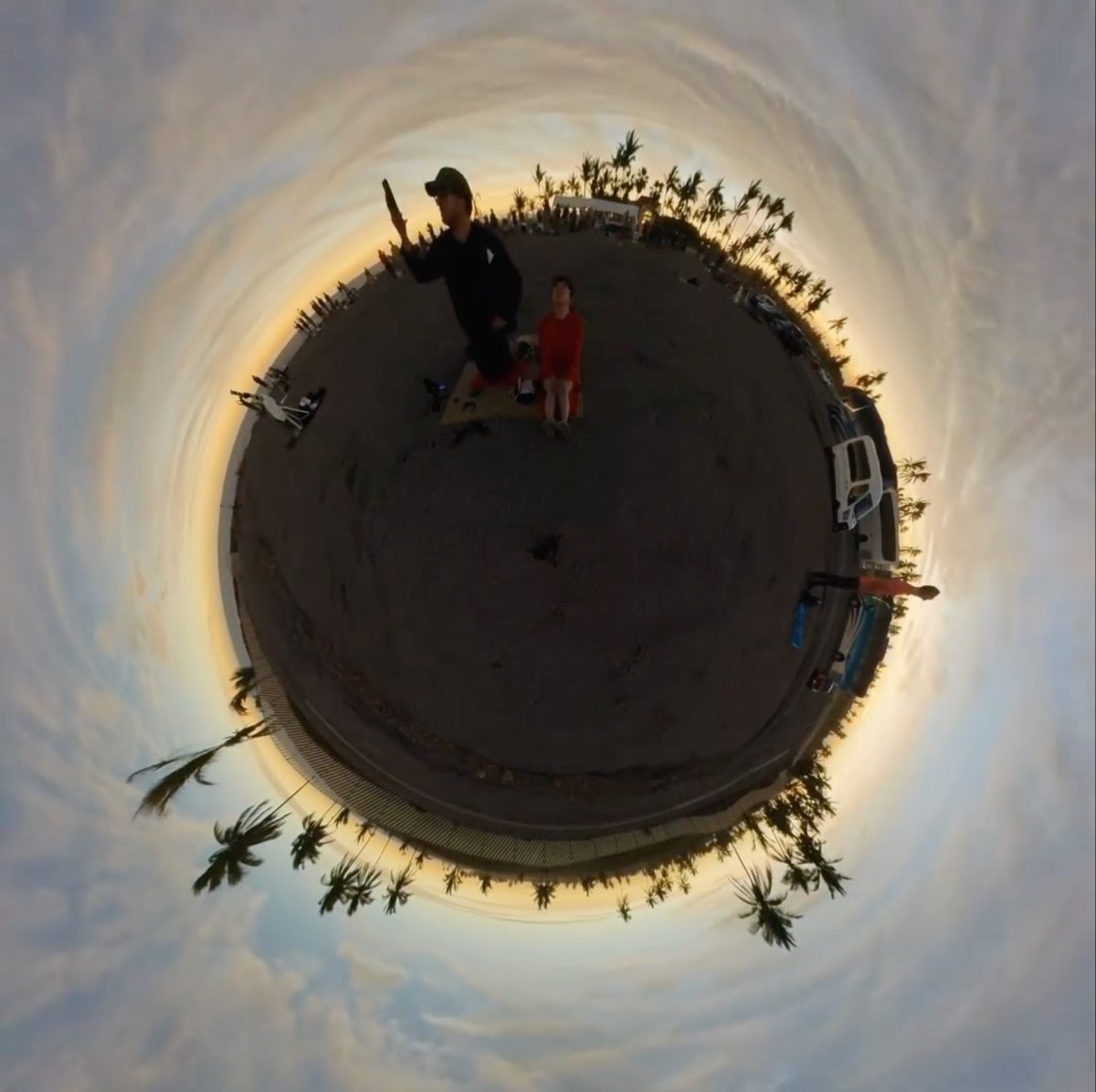
I watched with a group of people in a big field in Colchester, including my friend Caroline and her dog, Stella (a name derived from the Latin word for star). There were a bunch of other groups watching in the field too and after totality had thrilled us all, they trickled back to their cars and homes. Our group stayed and I watched the last little bit of the moon slip past the sun through my telescope — it was officially over.
A large nearby group of folks with a couple of dogs left shortly after that. One of the dogs came over for a sniff and one of our party asked the guy what the dog’s name was. “Luna.”
I am sure, hundreds of millions of years ago, when the moon was closer to the Earth, total eclipses were a whole other level of whoaaaaa — lasting for 10-20 minutes at a time, completely blocking out any light from the sun, total darkness all around, etc.↩
Well, the total solar eclipse was once again completely awesome. I didn’t have to go chasing all over tarnation this time, the telescope worked out amazingly well, and I got to share it with a bunch of first-timers, both in-person and via text. I’m going to share some thoughts, photos, and videos from others around the internet in an even bloggier fashion than usual. Here we go.
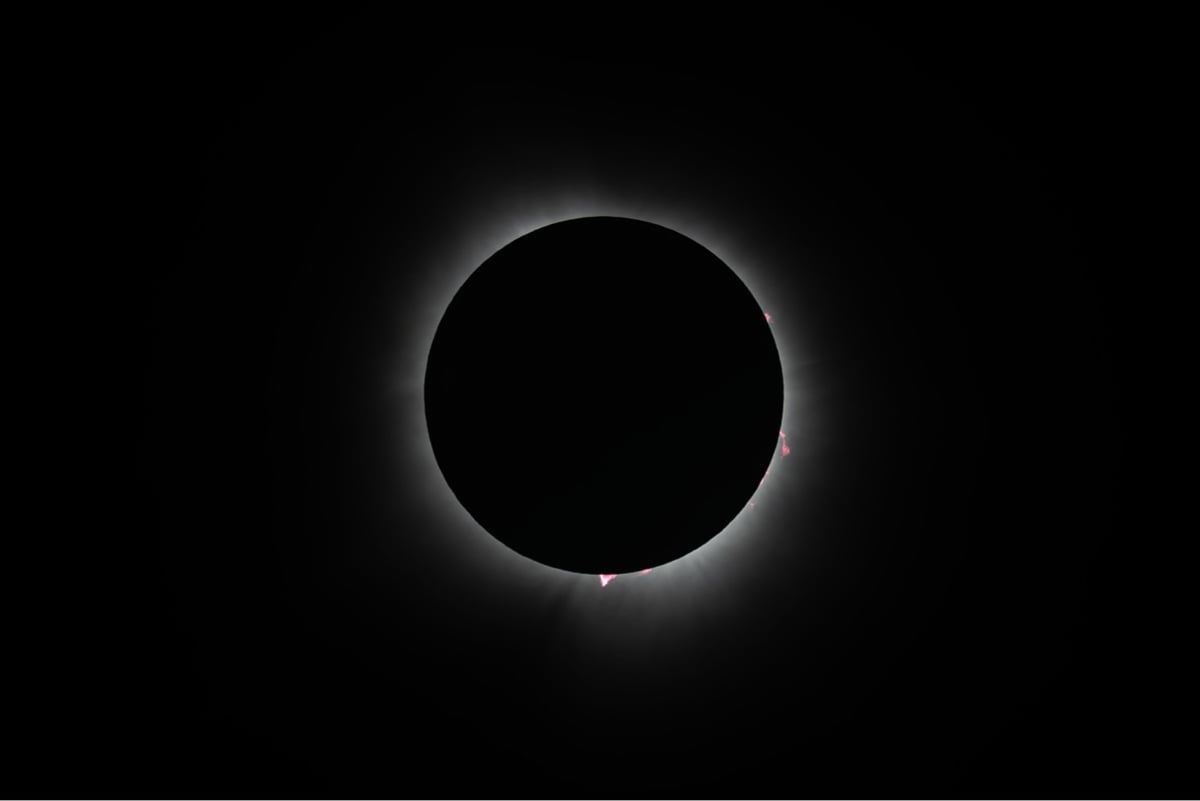
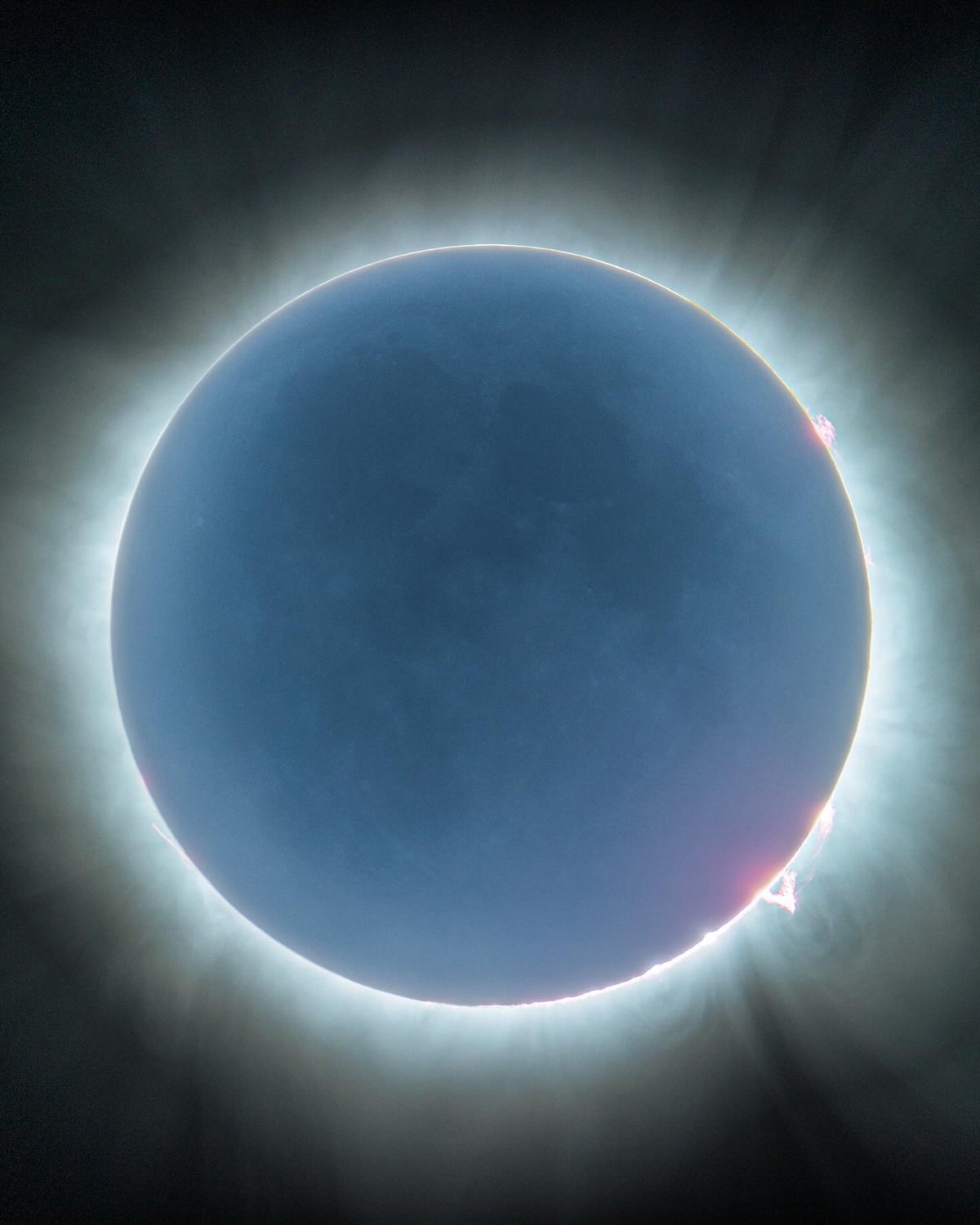
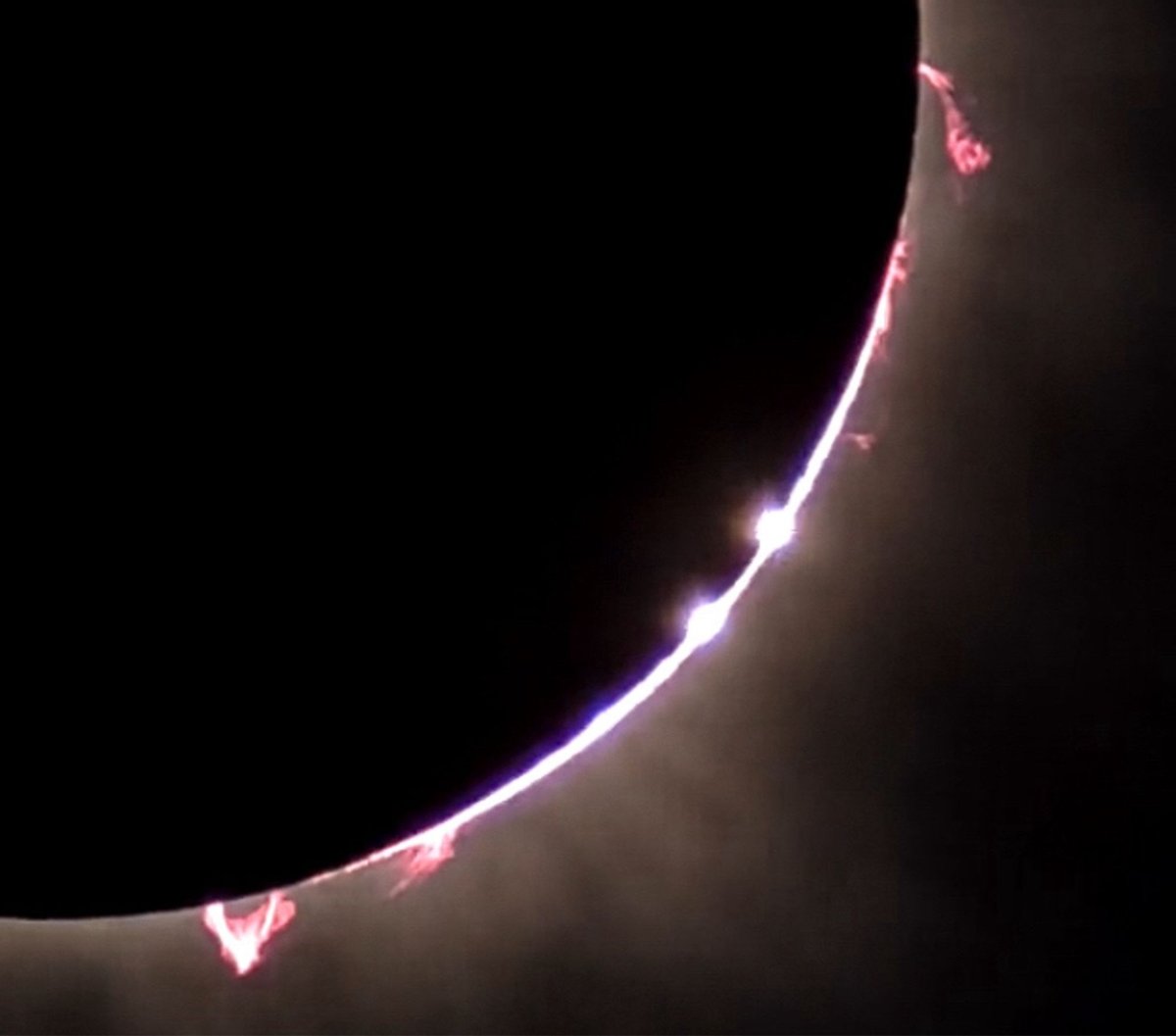
Quick solar prominence explainer interlude: if you had a clear look at totality, you may have noticed some orange bits poking out around the moon. NASA: What is a solar prominence?
A solar prominence (also known as a filament when viewed against the solar disk) is a large, bright feature extending outward from the Sun’s surface. Prominences are anchored to the Sun’s surface in the photosphere, and extend outwards into the Sun’s hot outer atmosphere, called the corona. A prominence forms over timescales of about a day, and stable prominences may persist in the corona for several months, looping hundreds of thousands of miles into space. Scientists are still researching how and why prominences are formed.
The red-glowing looped material is plasma, a hot gas comprised of electrically charged hydrogen and helium. The prominence plasma flows along a tangled and twisted structure of magnetic fields generated by the sun’s internal dynamo. An erupting prominence occurs when such a structure becomes unstable and bursts outward, releasing the plasma.
A timelapse video of totality from Scientific American:
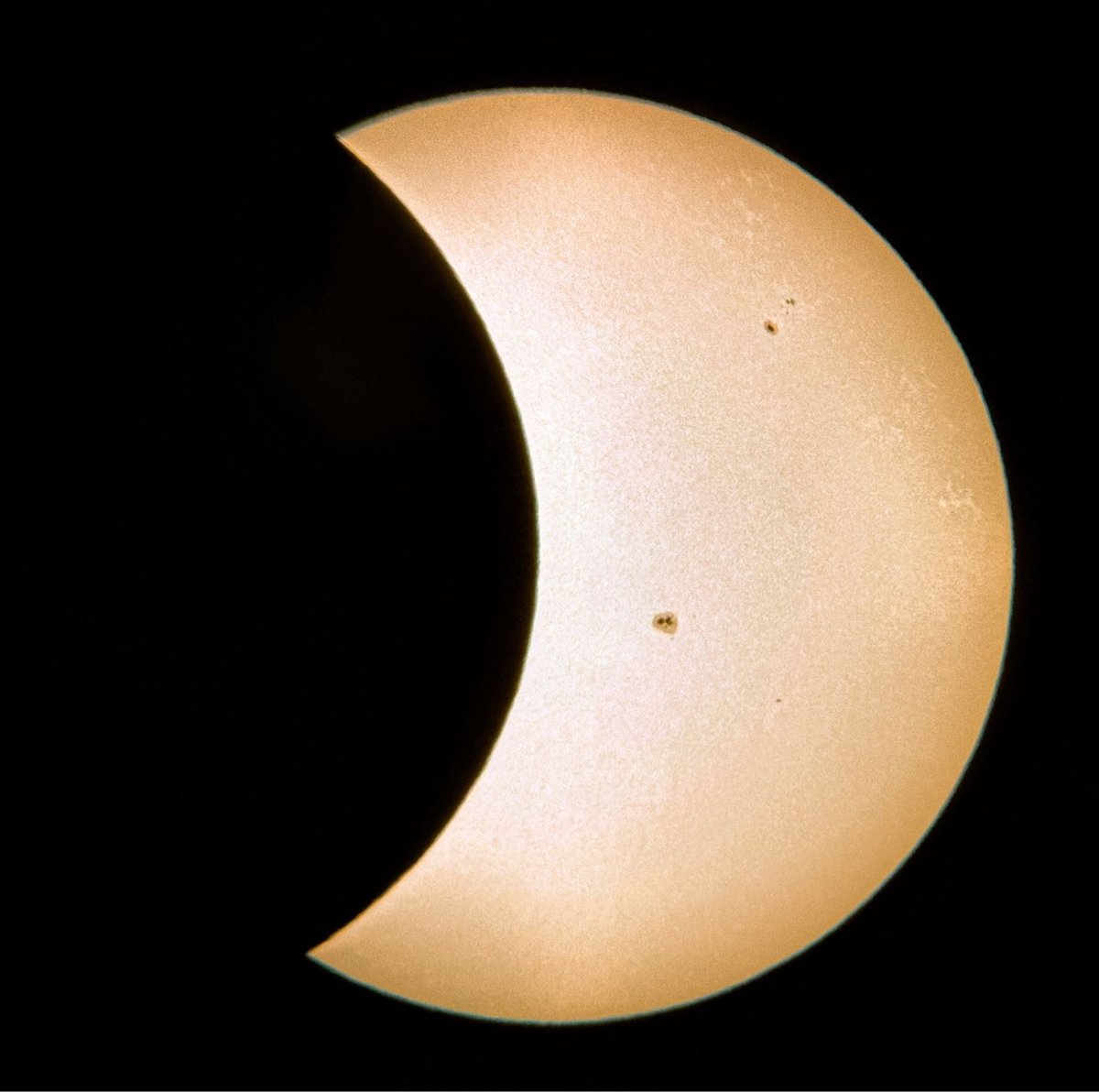
A sunspot is simply a region on the surface of the sun-called the photosphere-that is temporarily cool and dark compared to surrounding regions. Solar measurements reveal that the average surface temperature of the sun is 6000° Celsius and that sunspots are about 1500° Celsius cooler than the area surrounding them (still very hot), and can last anywhere from a few hours to a few months. Sunspots expand and contract as they move across the surface of the sun and can be as large as 80,000 km in diameter.
Sunspots are magnetic regions on the sun with magnetic field strengths thousands of times stronger than the Earth’s magnetic field, and often appear in pairs that are aligned in an east-west direction. One set will have a positive or north magnetic field while the other set will have a negative or south magnetic field. The field is strongest in the darker parts of the sunspots — called the umbra. The field is weaker and more horizontal in the lighter part-the penumbra. Overall, sunspots have a magnetic field that is about 1000 times stronger than the surrounding photosphere.
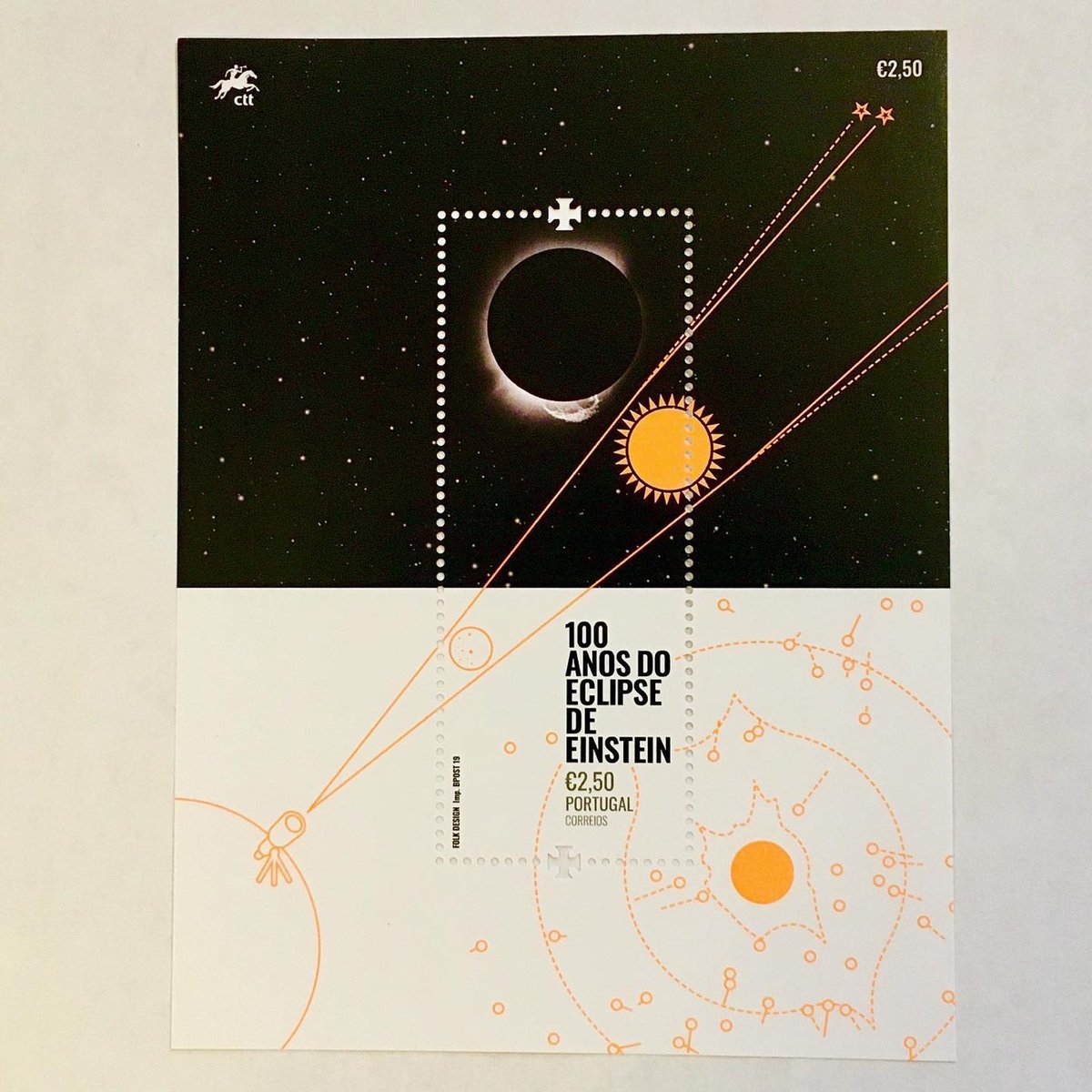
This Instagram account has a lovingly assembled collection of solar eclipse stamps from around the world (Aruba, Bhutan, Chile, Romania, Kenya, and even North Korea).
Total solar eclipses occur because the moon and the sun have the same apparent size in Earth’s sky — the sun is about 400 times wider than the moon, but the moon is about 400 times closer.
But the moon is slowly moving away from Earth by about 1-1/2 inches (4 centimeters) per year, according to the NASA statement. As a result, total solar eclipses will cease to exist in the very distant future, because the apparent size of the moon in Earth’s sky will be too small to cover the sun completely.
“Over time, the number and frequency of total solar eclipses will decrease,” Vondrak said in the statement. “About 600 million years from now, Earth will experience the beauty and drama of a total solar eclipse for the last time.”
Ok, that’s all for now. Depending on what else I come across, I might update this post periodically throughout the day. I know some of you who were lucky enough to see the total eclipse shared your experiences in the comments of yesterday’s post but feel free to do so here as well.
Hey, gang. Today is the solar eclipse, it’s supposed to be mostly sunny here in Colchester, VT, we’ve got 3 minutes and 16 seconds of totality to enjoy, and I built a solar filter for my telescope (and binoculars!), so kottke.org is going to take the day off. Edith and I will see you back here tomorrow.
In the meantime, are you doing anything for the eclipse? Anyone got any crazy camera/telescope setups? Do you think Instagram is going to crash this afternoon? Will I completely lose my mind if a cloud drifts in front of the sun today at 3:26pm ET? Is it a coincidence or a miracle that we happen to be alive during the relatively brief period of time when the moon almost exactly covers the sun, resulting in total solar eclipses? Could you imagine if the eclipse somehow doesn’t happen today??!
KECK: It was in the middle of the depression, he reminds me. And while he learned about the eclipse in his one-room schoolhouse, he doesn’t recall too much hoopla surrounding it.
F VAN ALSTYNE: I don’t know. We didn’t think much about general things in those days like they do now. Or we thought about minding their own business, I guess.
In 1900, celebrated magician (and astronomy enthusiast) Nevil Maskelyne travelled to North Carolina to film a solar eclipse on May 28, 1900. The Royal Astronomical Society and the British Film Institute reckon this is “the first surviving astronomical film in the world”.
In 1898 he travelled to India to photograph an eclipse. He succeeded but the film can was stolen on his return journey home.
It was not an easy feat to film. Maskelyne had to make a special telescopic adapter for his camera to capture the event. This is the only film by Maskelyne that we know to have survived.
The original film fragment held in The Royal Astronomical Society’s archive has been painstakingly scanned and restored in 4K by conservation experts at the BFI National Archive, who have reassembled and retimed the film frame by frame. The film is part of BFI Player’s recently released Victorian Film collection, viewers are now able to experience this first film of a solar eclipse since the event was originally captured over a century ago.
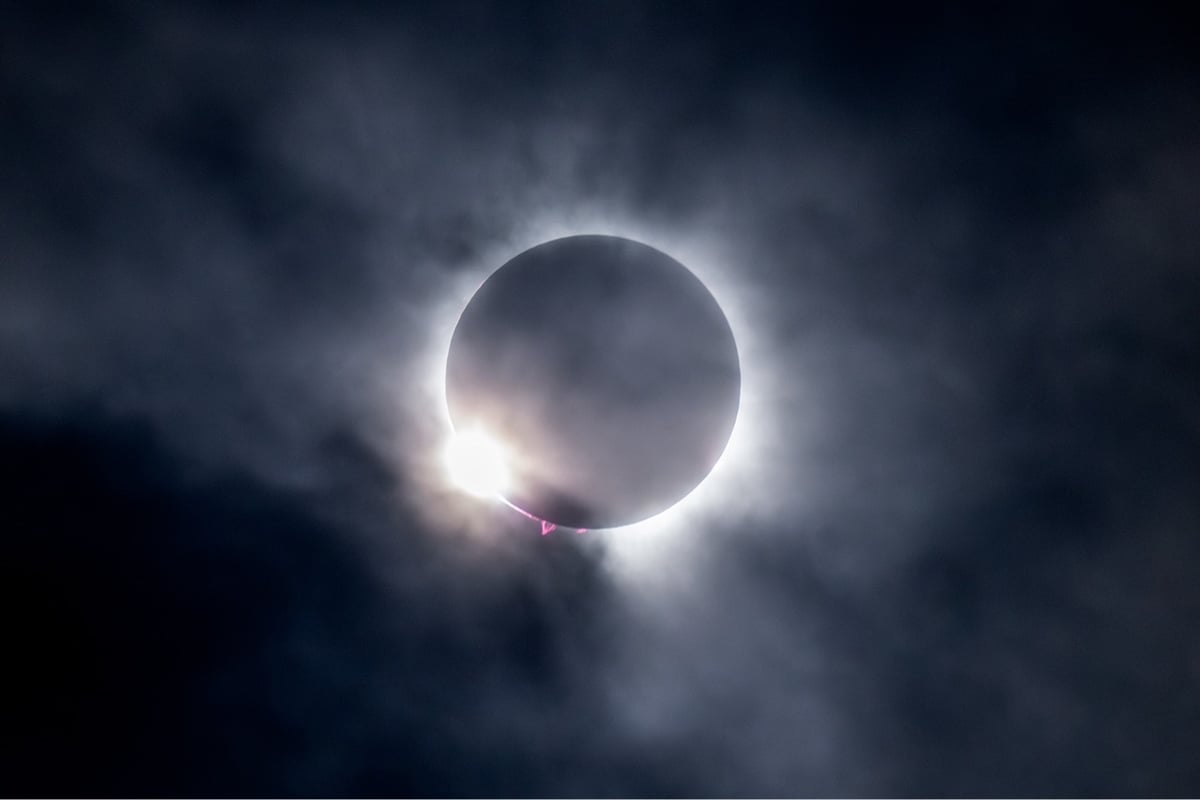
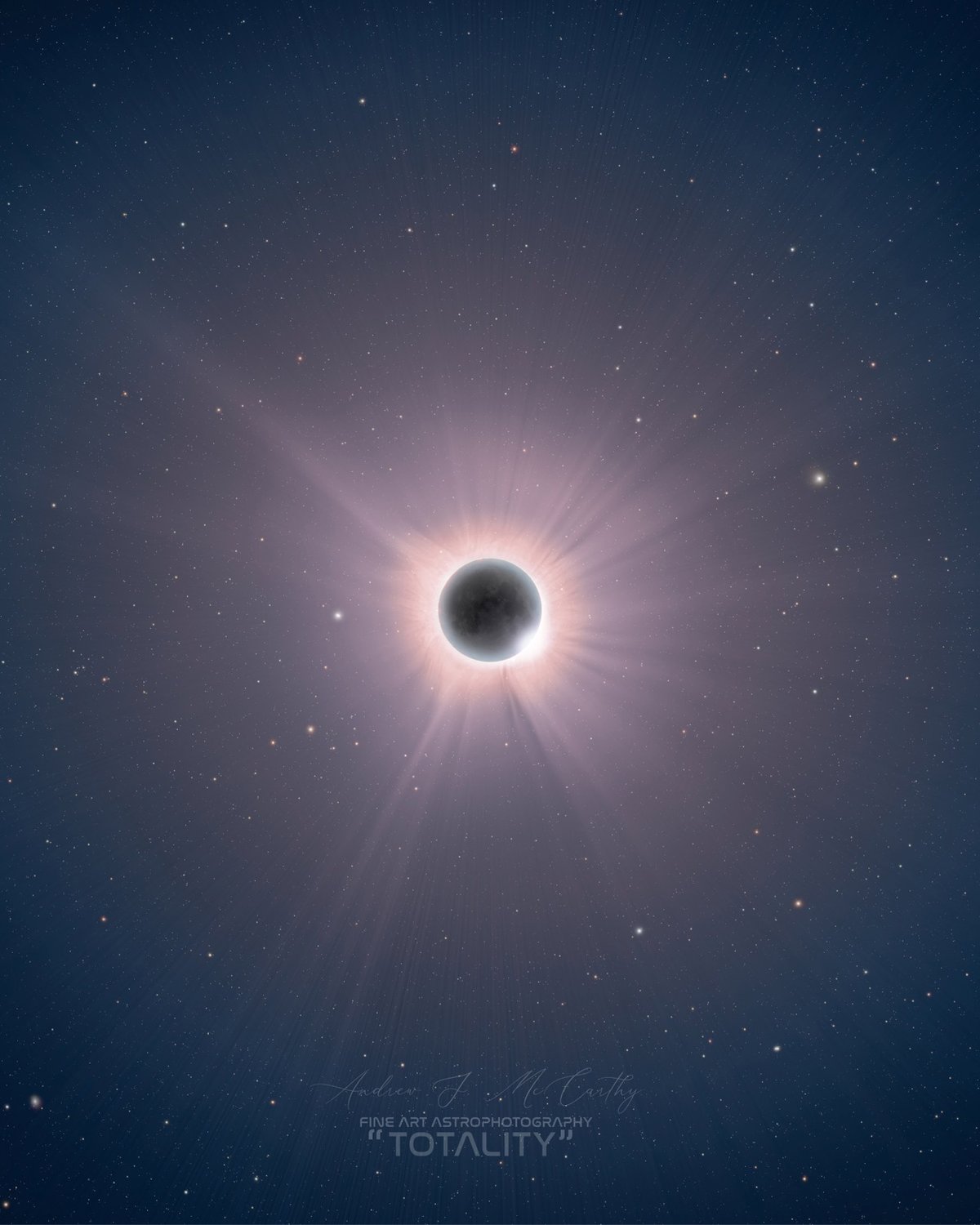
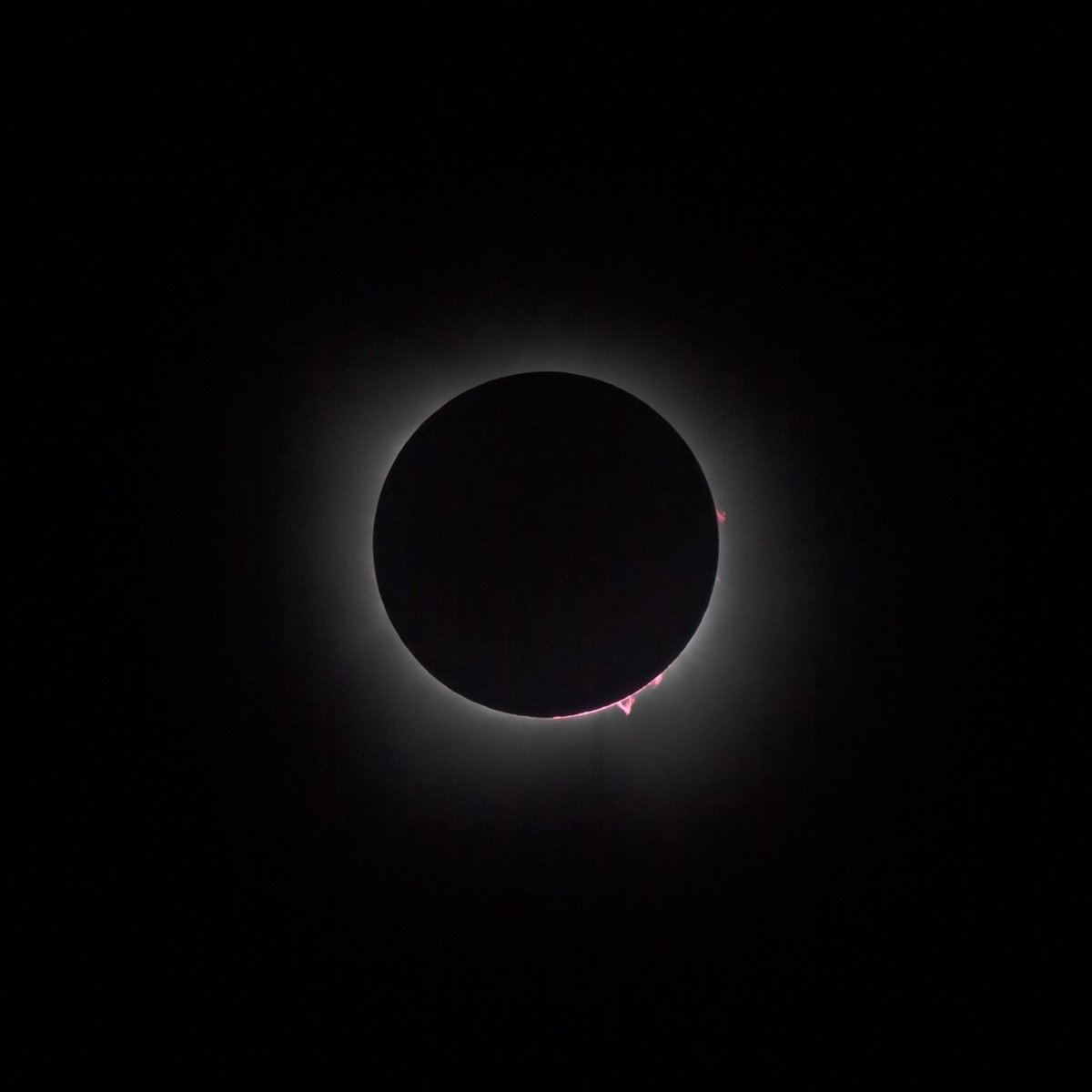
We saw the Baily’s beads and the diamond ring effect. And then…sorry, words are insufficient here. When the Moon finally slipped completely in front of the Sun and the sky went dark, I don’t even know how to describe it. The world stopped and time with it. During totality, Mouser took the photo at the top of the page. I’d seen photos like that before but had assumed that the beautifully wispy corona had been enhanced with filters in Photoshop. But no…that is actually what it looks like in the sky when viewing it with the naked eye (albeit smaller). Hands down, it was the most incredible natural event I’ve ever seen.
I’m not sure exactly what I expected, but this wasn’t it. I’d seen photos of coronas around suns, but this wasn’t that. And I’d expected that those photos, like many astronomical pictures, are long exposure, other wavelengths, and otherwise capturing things the naked eye can’t see. I thought there might be a glow of light in a circle, or nothing, or, I don’t know. What I did not expect was an unholy horror sucking the life and light and warmth out of the universe with long reaching arms, that what I’d seen in pictures was not an exaggeration but a failure to capture the extent of this thing that human eyes, and not cameras, are uniquely suited to absorb the horror of.
I had seen a partial eclipse in 1970. A partial eclipse is very interesting. It bears almost no relation to a total eclipse. Seeing a partial eclipse bears the same relation to seeing a total eclipse as kissing a man does to marrying him, or as flying in an airplane does to falling out of an airplane. Although the one experience precedes the other, it in no way prepares you for it.
I am so looking forward to Monday and crossing my fingers for clear skies — the path of totality goes right over my house.
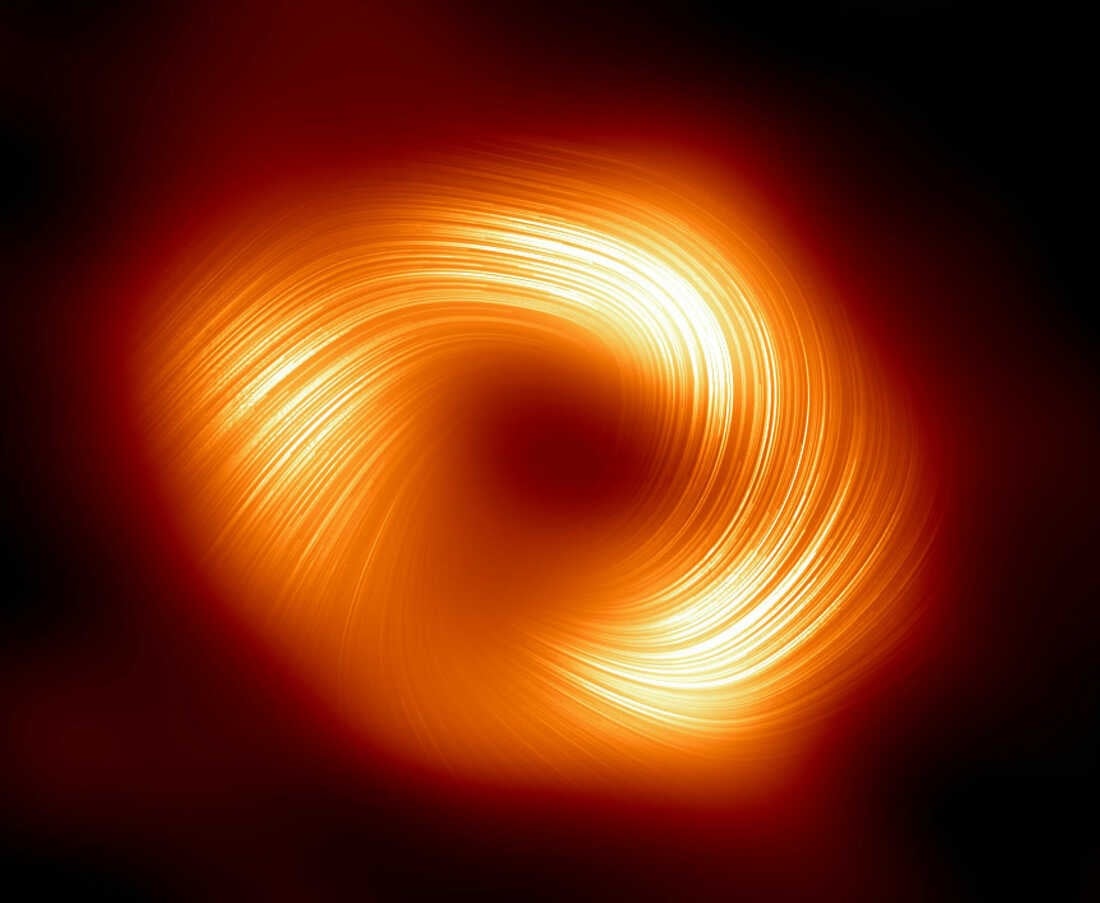
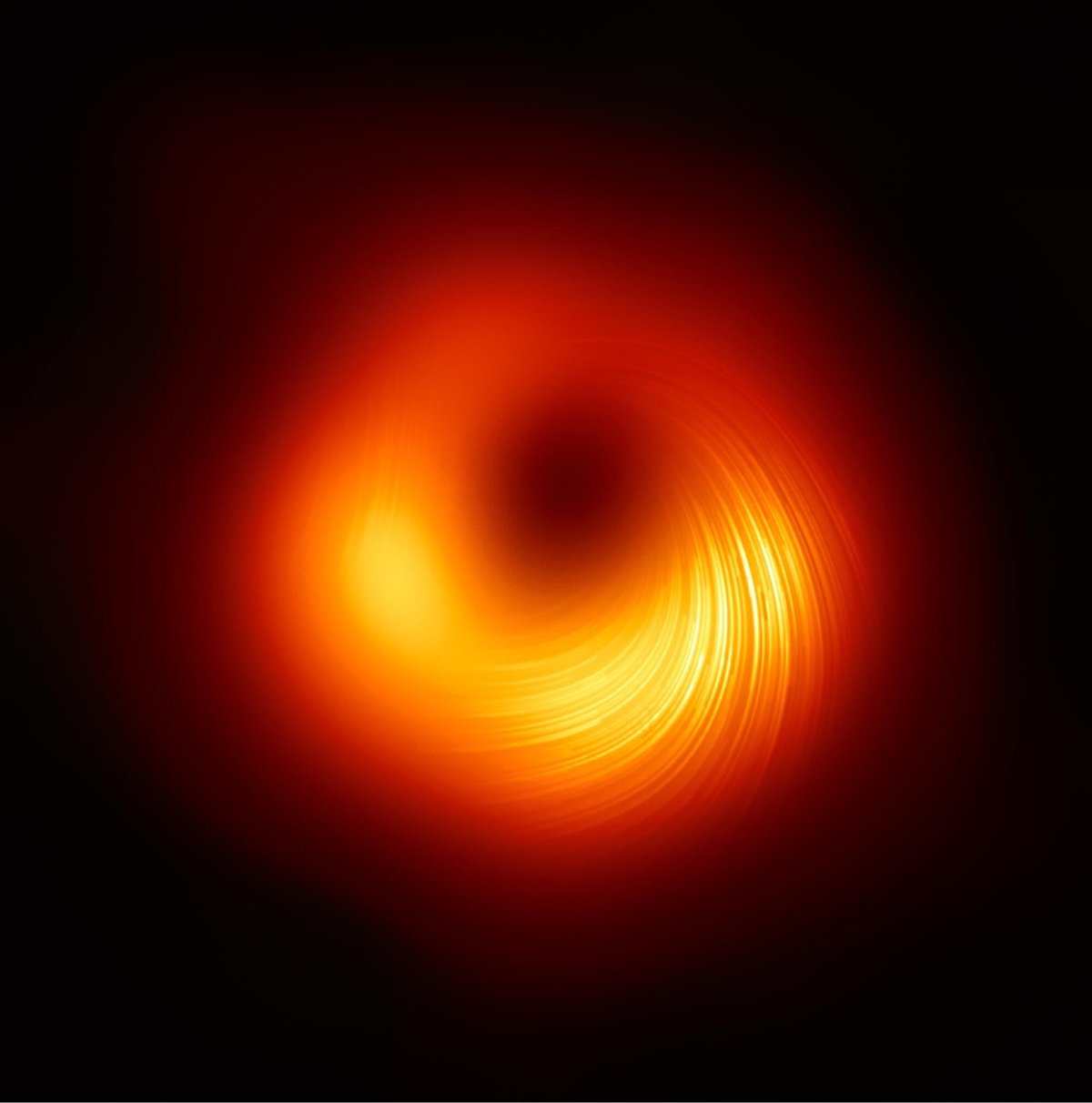
It’s been about five years since scientists captured the first blurry image of a black hole. Using what they learned from that experience, they’ve teased out some more detailed images of the black holes at the centers of the Milky Way galaxy (top) and the M87 galaxy (bottom). The process of collecting the data for these images is interesting:
The only way to “see” a black hole is to image the shadow created by light as it bends in response to the object’s powerful gravitational field. As Ars Science Editor John Timmer reported in 2019, the EHT isn’t a telescope in the traditional sense. Instead, it’s a collection of telescopes scattered around the globe. The EHT is created by interferometry, which uses light in the microwave regime of the electromagnetic spectrum captured at different locations. These recorded images are combined and processed to build an image with a resolution similar to that of a telescope the size of the most distant locations. Interferometry has been used at facilities like ALMA (the Atacama Large Millimeter/submillimeter Array) in northern Chile, where telescopes can be spread across 16 km of desert.
In theory, there’s no upper limit on the size of the array, but to determine which photons originated simultaneously at the source, you need very precise location and timing information on each of the sites. And you still have to gather sufficient photons to see anything at all. So atomic clocks were installed at many of the locations, and exact GPS measurements were built up over time. For the EHT, the large collecting area of ALMA-combined with choosing a wavelength in which supermassive black holes are very bright-ensured sufficient photons.
While this idea may initially sound somewhat mundane, it is anything but. The result is surprising because Sgr A*’s mass is about 4.3 million times that of the Sun, while M87*’s is about 6.5 billion times that of the Sun. Despite the significant difference in mass between the two supermassive black holes, the fact that their magnetic fields behave similarly and are both well-organized is an incredible discovery.
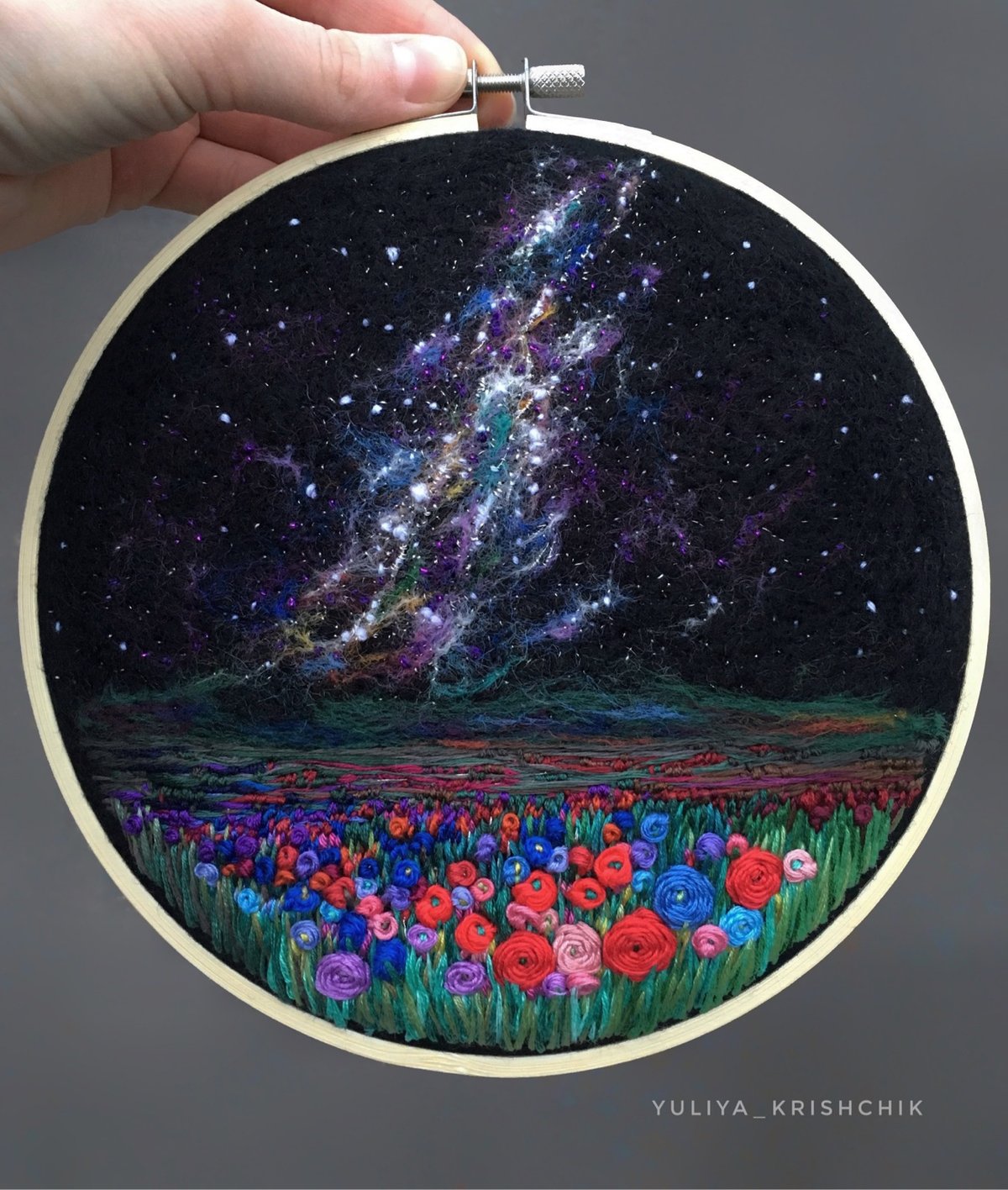
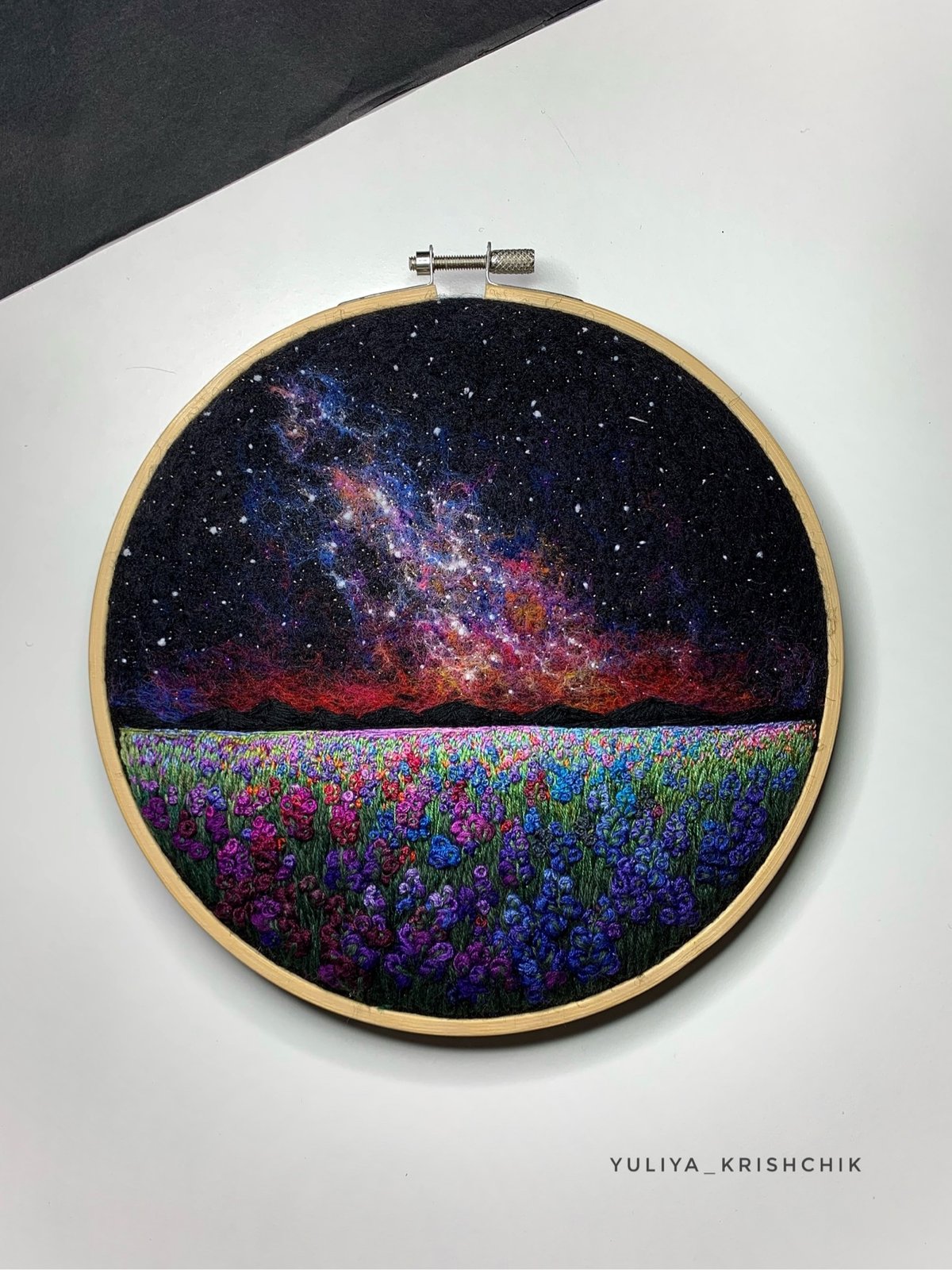
I love Yuliya Krishchik’s space-themed embroidery pieces, especially the ones featuring Milky Way-like star fields — she calls them “surreal space landscapes”. If you watch one of Krishchik’s videos, you can see that her pieces are just a bit 3D…a cool effect.
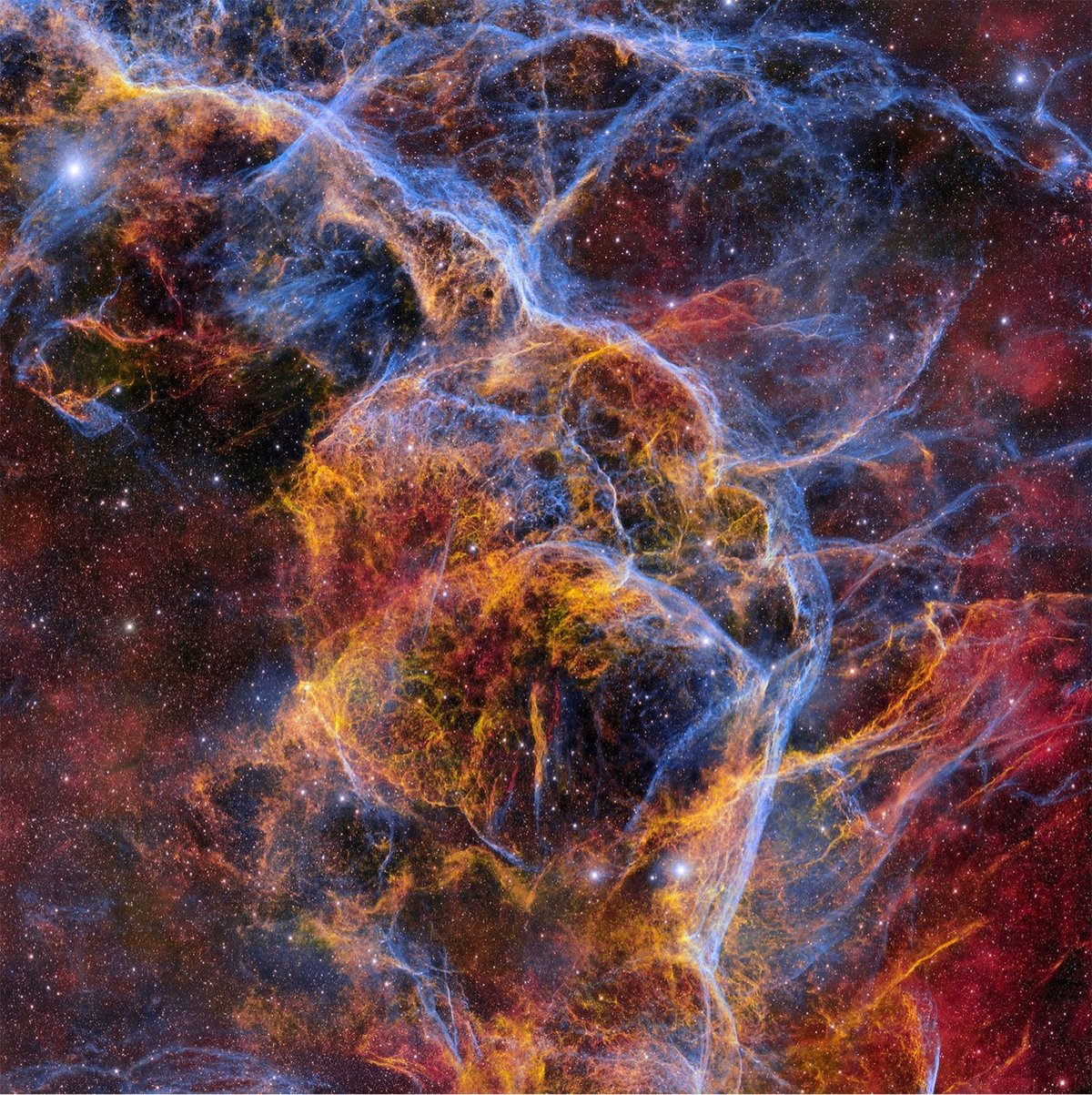
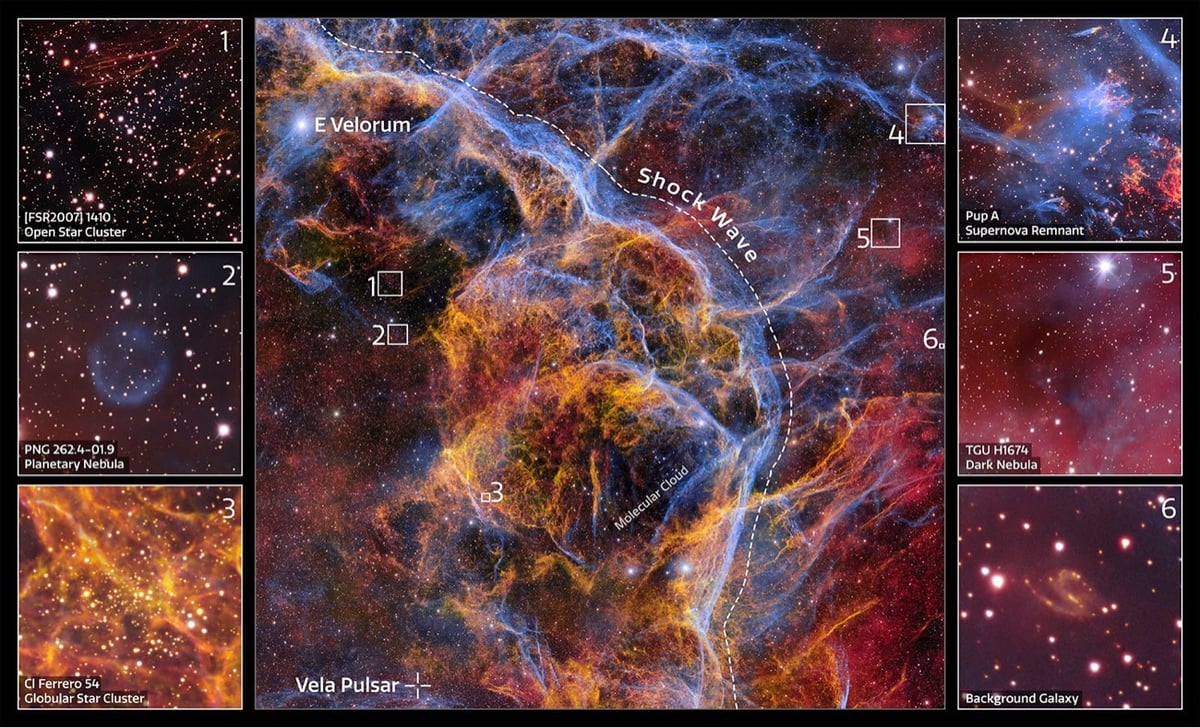
The Vela Supernova remnant, located about 800 light-years away from Earth, is the cosmic corpse of a massive star that exploded 11,000 years ago. It is one of the closest supernova remnants to Earth and the perfect subject for the remarkable Dark Energy Camera.
The supernova is a vast cosmic structure about 100 light-years across. For context, one would have to travel around the Earth 200 million times to have traveled a single light-year.
Using a scale model of the solar system the size of New York City and some dazzling visual effects, Epic Spaceman explains that black holes are generally smaller than you might think (because they’re so dense) — even the supermassive black hole at the center of our galaxy. But when you consider some of the biggest black holes we’ve discovered…wow.
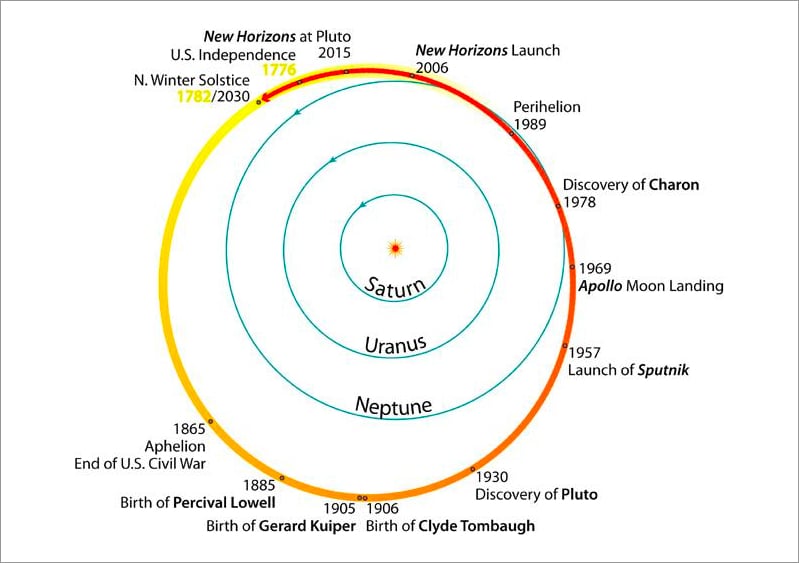
The entire history of the United States has unfolded in the time it’s taken Pluto to orbit the Sun once.
And that’s still true! But just barely. Pluto takes 247.94 Earth years to orbit the Sun. According to my calculations, the Plutonian year that started on July 4, 1776 will end this year on June 12, 2024 (give or take a few hours).
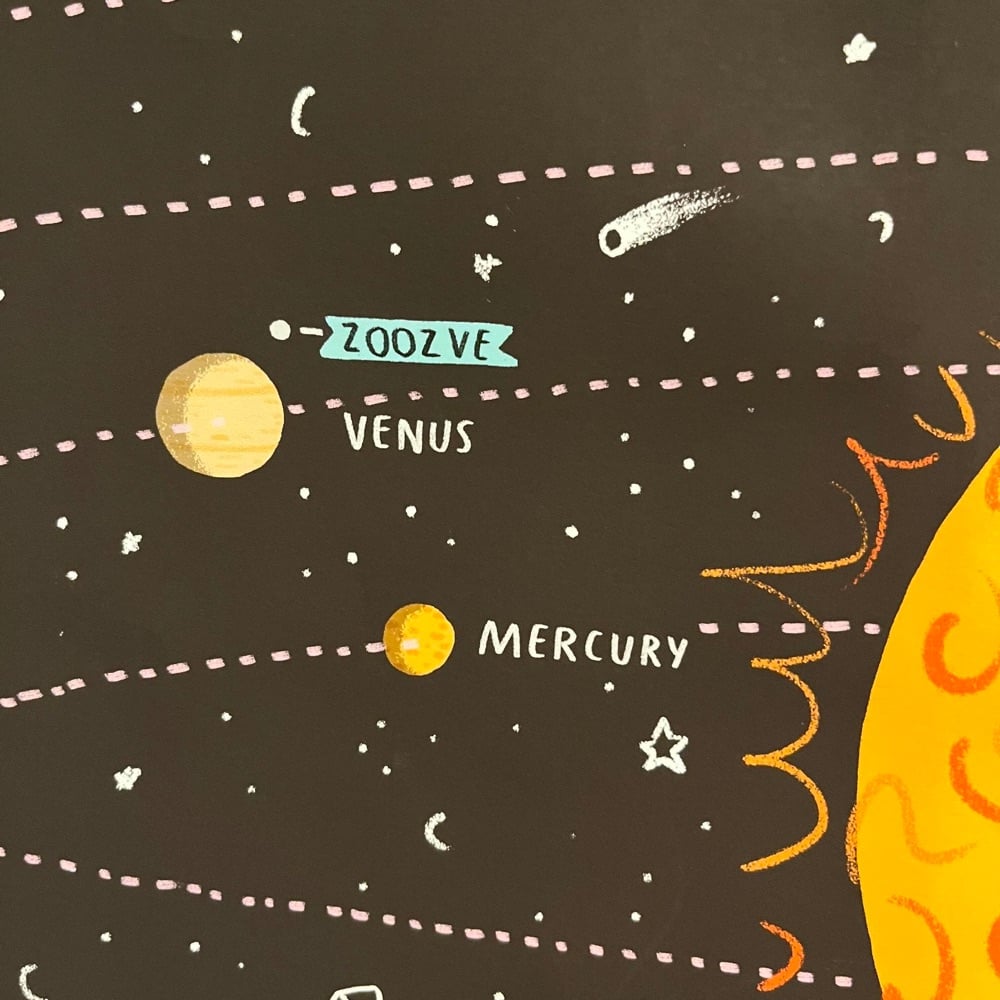
A couple of weeks ago, Radiolab aired an episode about a puzzling object on a children’s poster of the solar system: a Venusian moon called Zoozve. Venus doesn’t have any moons and “Zoozve” didn’t show up on Google at all, so co-host Latif Nasser went on a bit of a mission to find out what the heck this object was. He talked to someone at NASA, the poster’s designer, and various astronomers and physicists, including the person who had discovered Zoozve (aka 2002 VE68).
So begins a tiny mystery that leads to a newly discovered kind of object in our solar system, one that is simultaneously a moon, but also not a moon, and one that waltzes its way into asking one of the most profound questions about our universe: How predictable is it, really? And what does that mean for our place in it?
Captured by the James Webb Space Telescope, this extremely high-definition infrared image shows the magnificent Pillars of Creation formation within the Eagle Nebula. By assigning color to various wavelengths, the digitized image allows us to see a landscape otherwise invisible to the human eye. Red areas toward the end of the pillars show burgeoning stars ejecting raw materials as they form, while the relatively small red orbs scattered throughout the image show newly born stars.
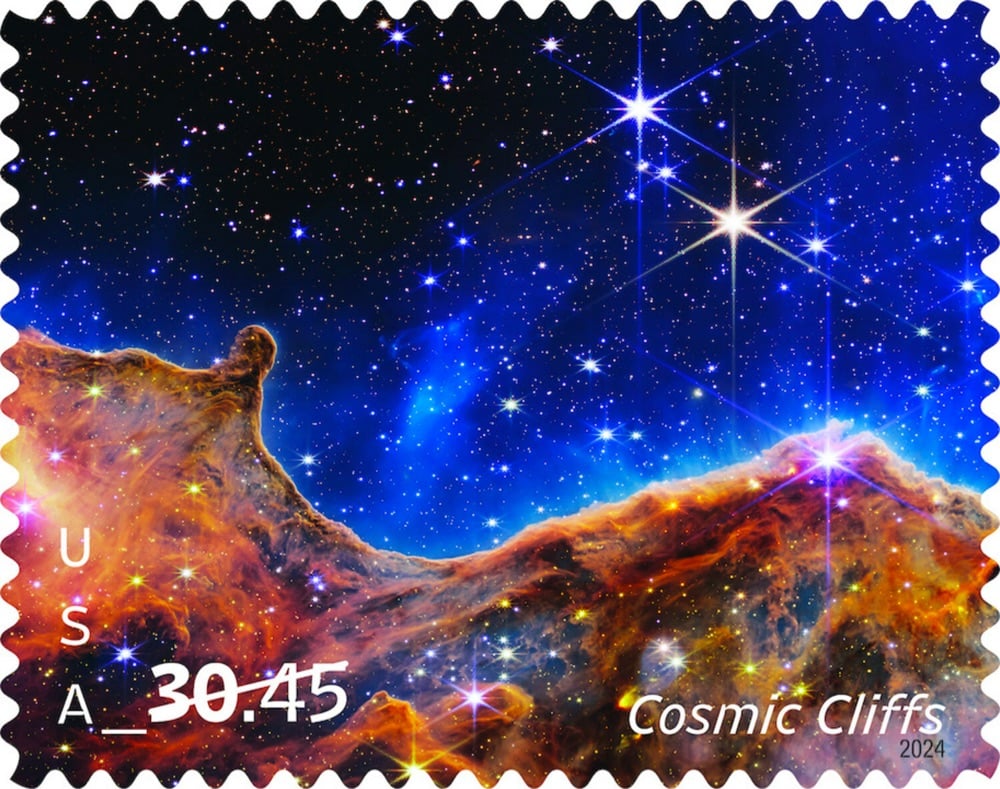
This remarkable image from the James Webb Space Telescope is a digitally colored depiction of the invisible bands of mid-infrared light emitted by the Cosmic Cliffs of the Carina Nebula. Red and yellow flares scattered throughout the cliffs show developing and newly born stars. The orange-and-brown clouds in the lower third of the image are swirls of dust and gas. Additional stars, in our Milky Way and in distant galaxies, appear in the blue and black regions above and beyond the nebula.
This is a video slideshow of some of the best images from the Mars missions — Spirit, Opportunity, Curiosity, and Perseverance — presented in 4K resolution at 60fps. These look amazing on the biggest hi-res screen you can find. (via open culture)
While the helicopter remains upright and in communication with ground controllers, imagery of its Jan. 18 flight sent to Earth this week indicates one or more of its rotor blades sustained damage during landing and it is no longer capable of flight.
Originally designed as a technology demonstration to perform up to five experimental test flights over 30 days, the first aircraft on another world operated from the Martian surface for almost three years, performed 72 flights, and flew more than 14 times farther than planned while logging more than two hours of total flight time.
Using a custom hydrogen alpha solar telescope, Jason Kurth took a collection of high-resolution photographs of the recent annular solar eclipse and arranged them into an 8K video of the event. The level of detail here is incredible — you can see solar flares and features on the surface of the Sun pulsing and shifting as the Moon moves across it. You can see a bit of Kurth’s setup on Instagram.
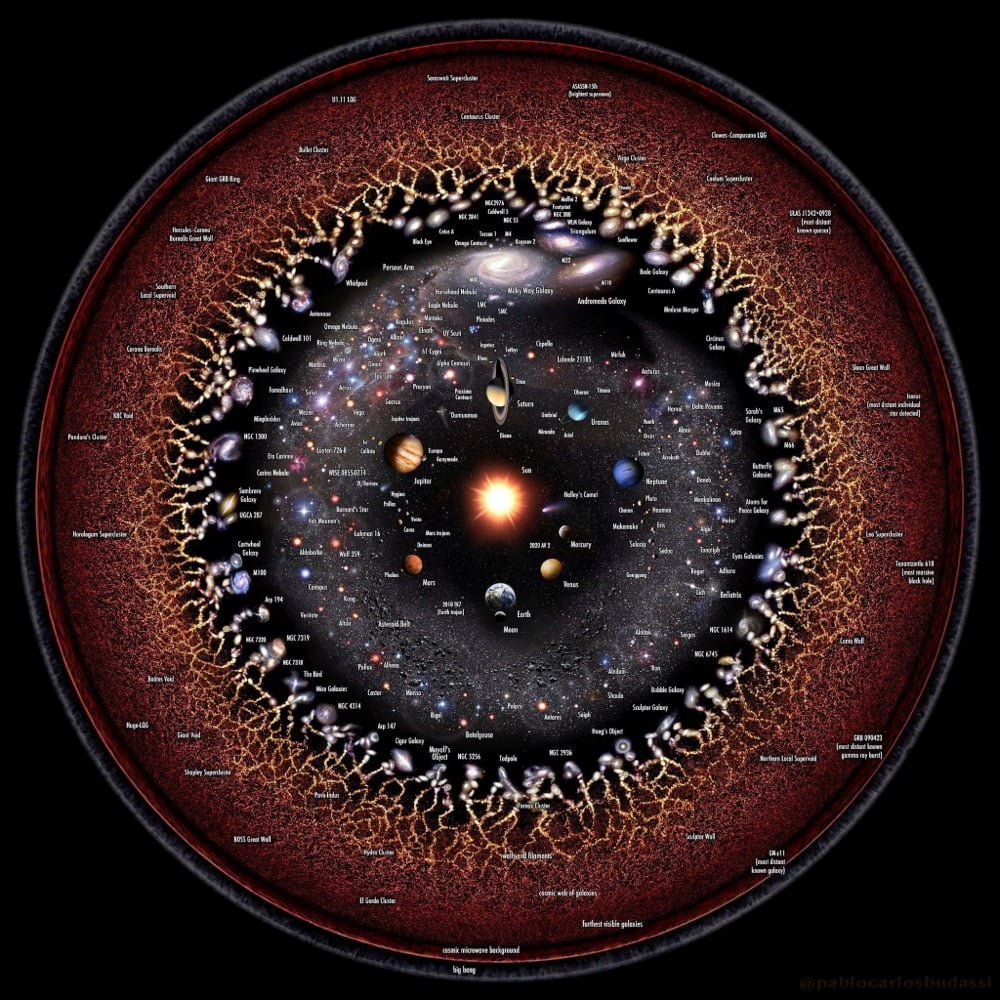
The solar system is located in the center. Towards the edges, the scale is progressively reduced to show in detail the most distant and biggest structures of the observable universe sphere.
There are several other representations of the universe on Budassi’s site, including links to prints, posters, and other products.
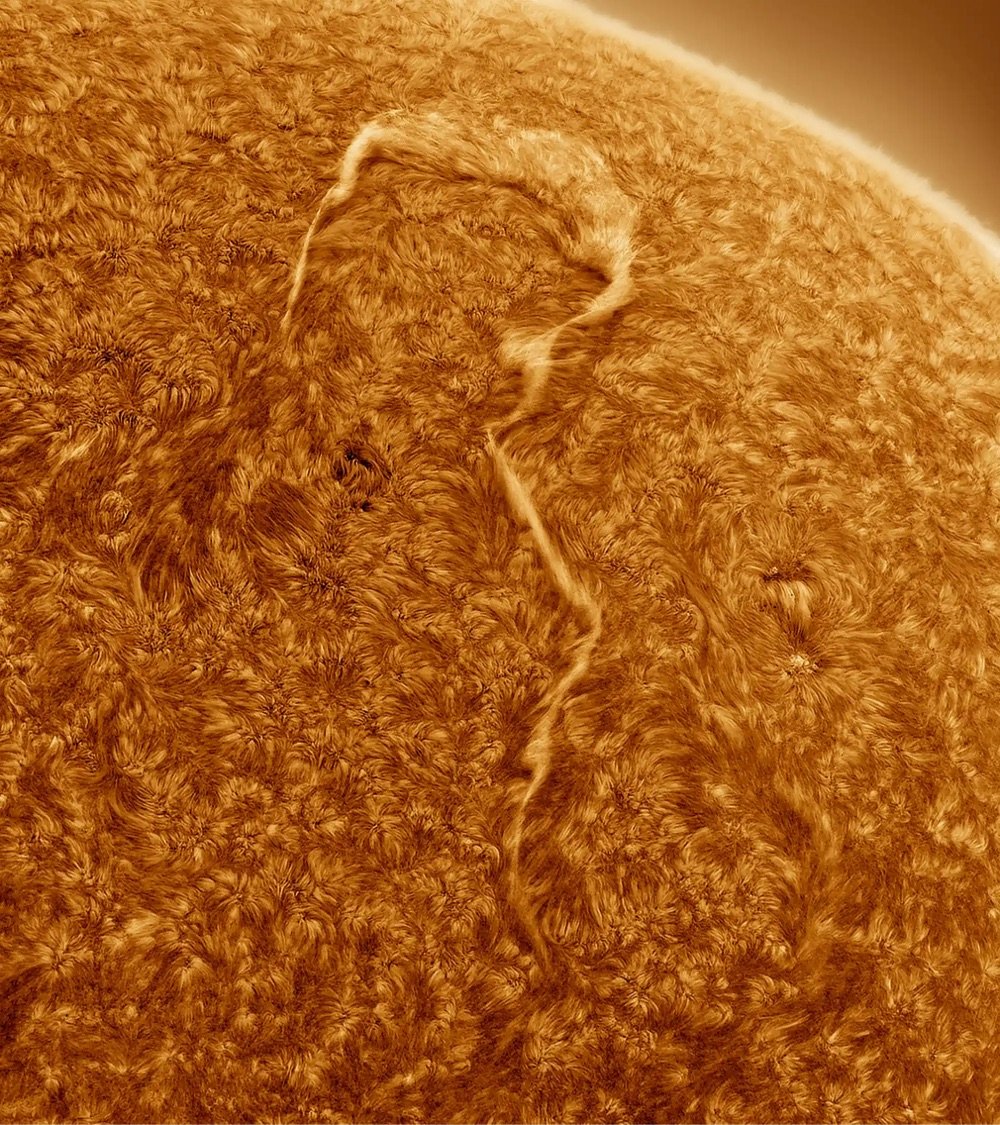
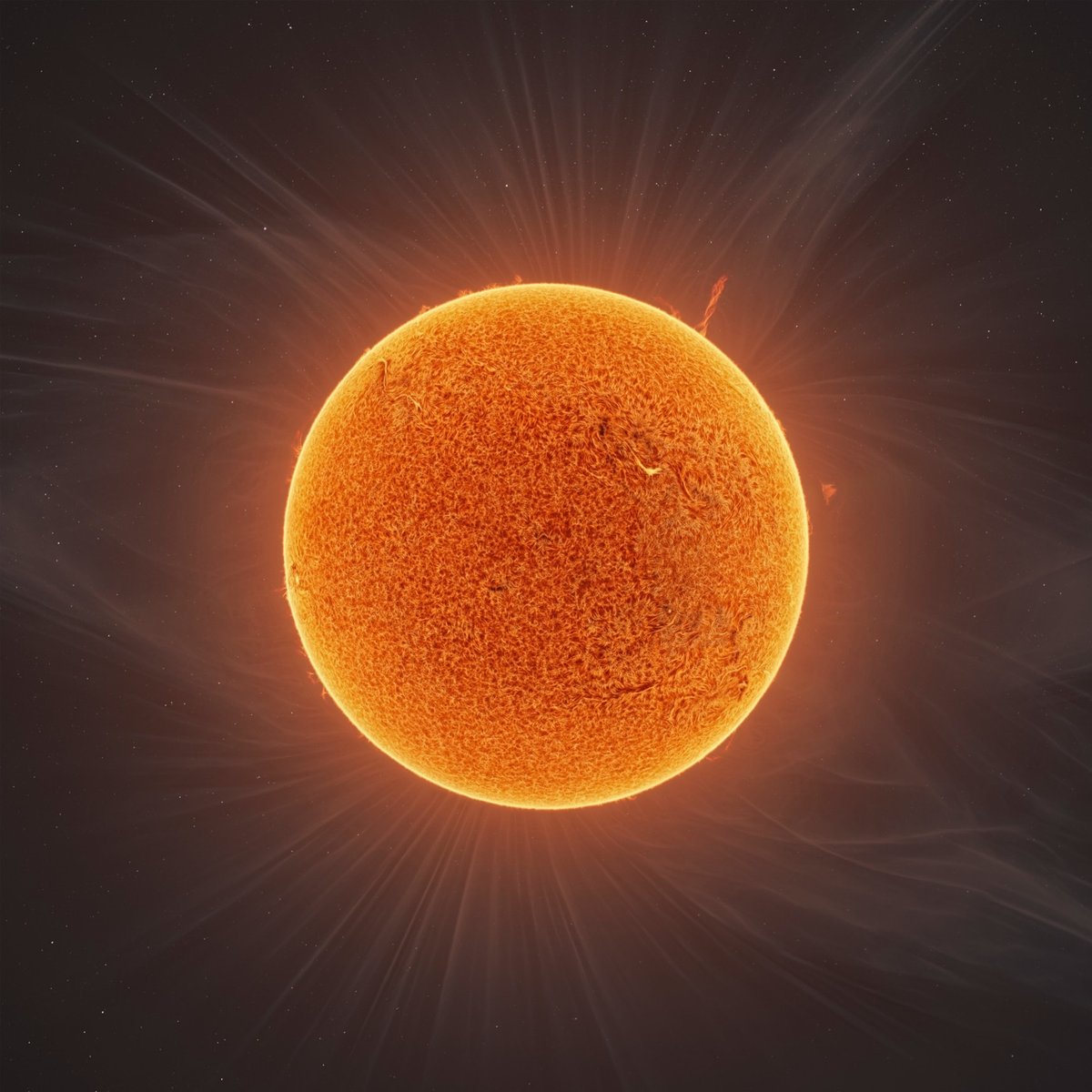
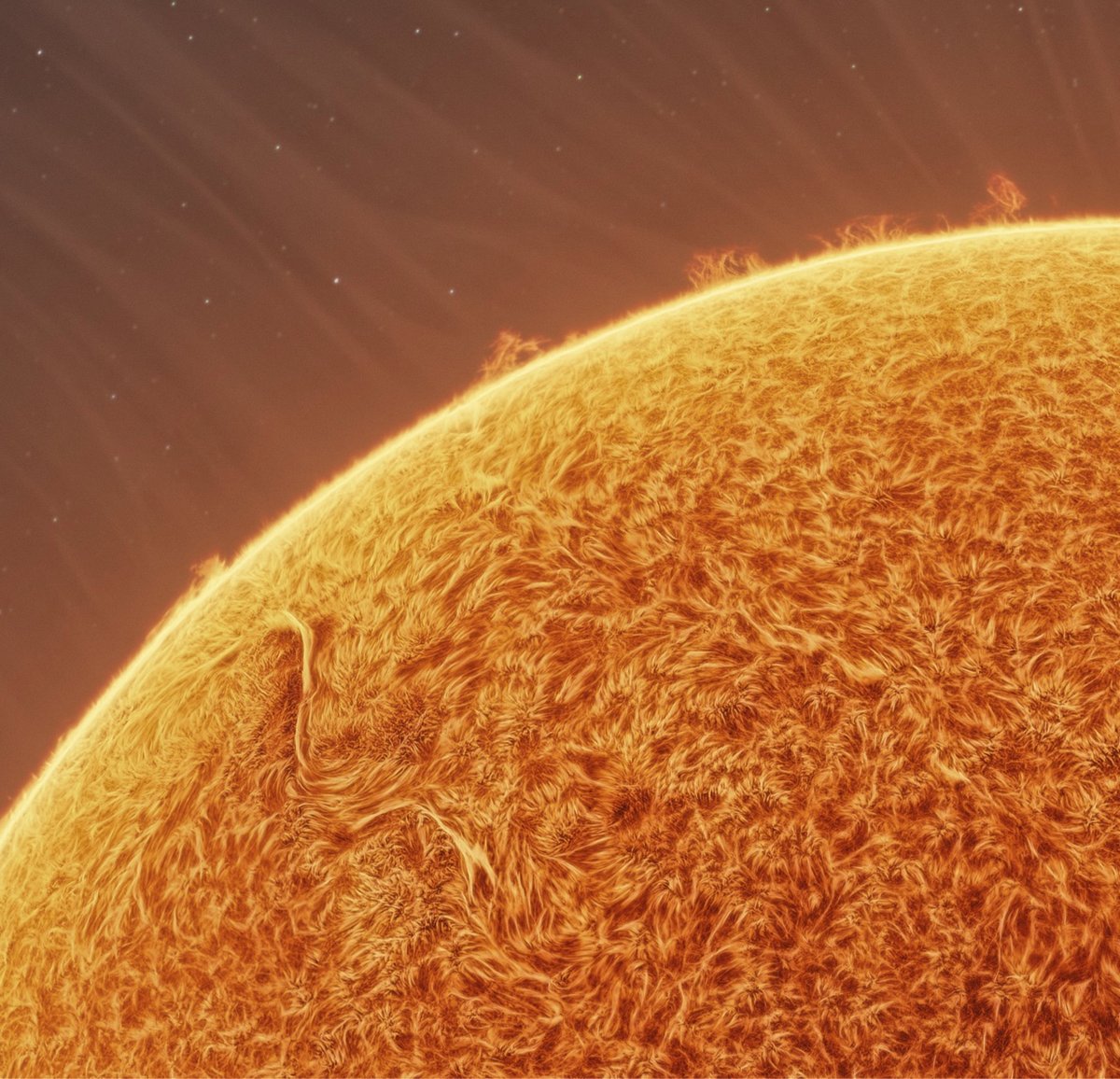
Eduardo Schaberger Poupeau for capturing a question mark on the Sun. I will never tire of looking at the detail of the Sun’s surface.
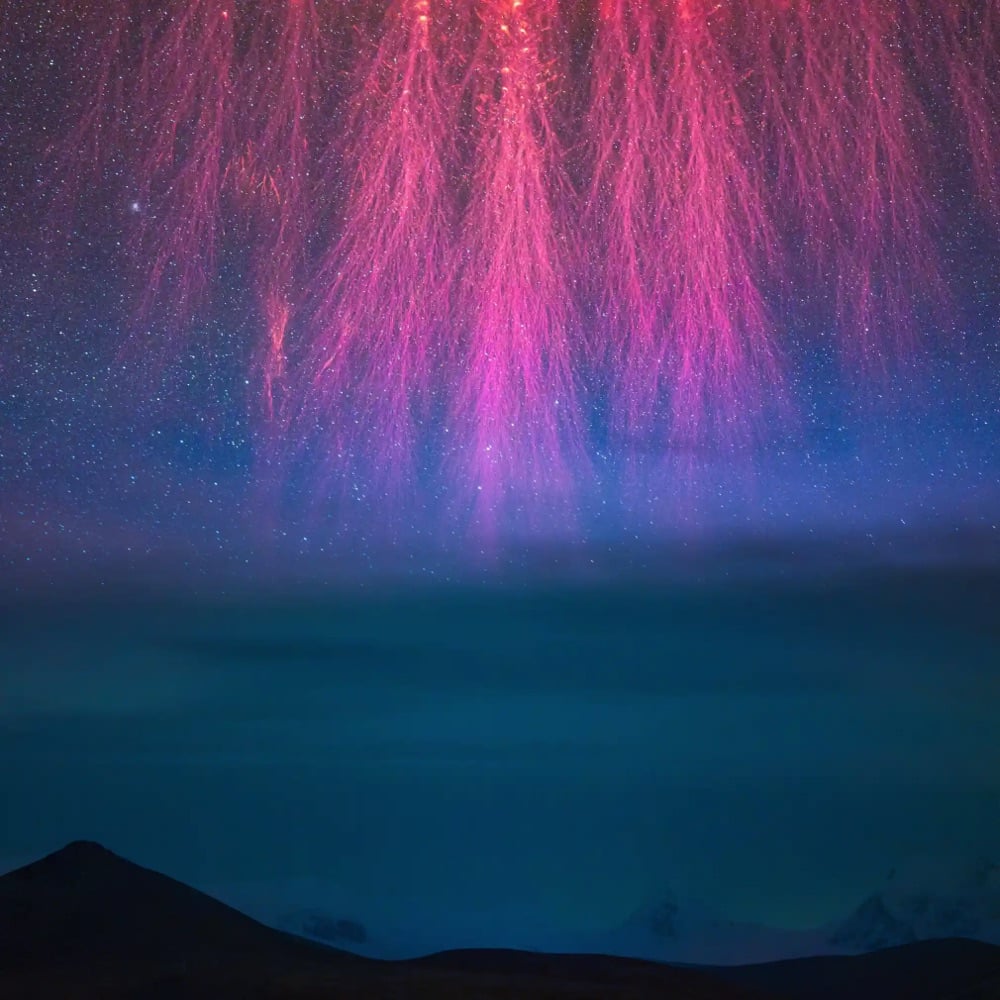
Angel An. “This is not, as it might first appear, an enormous extraterrestrial, but the lower tendrils of a sprite (red lightning)! This rarely seen electrical discharge occurs much higher in the atmosphere than normal lightning (and indeed, despite the name, is created by a different mechanism), giving the image an intriguingly misleading sense of scale.”
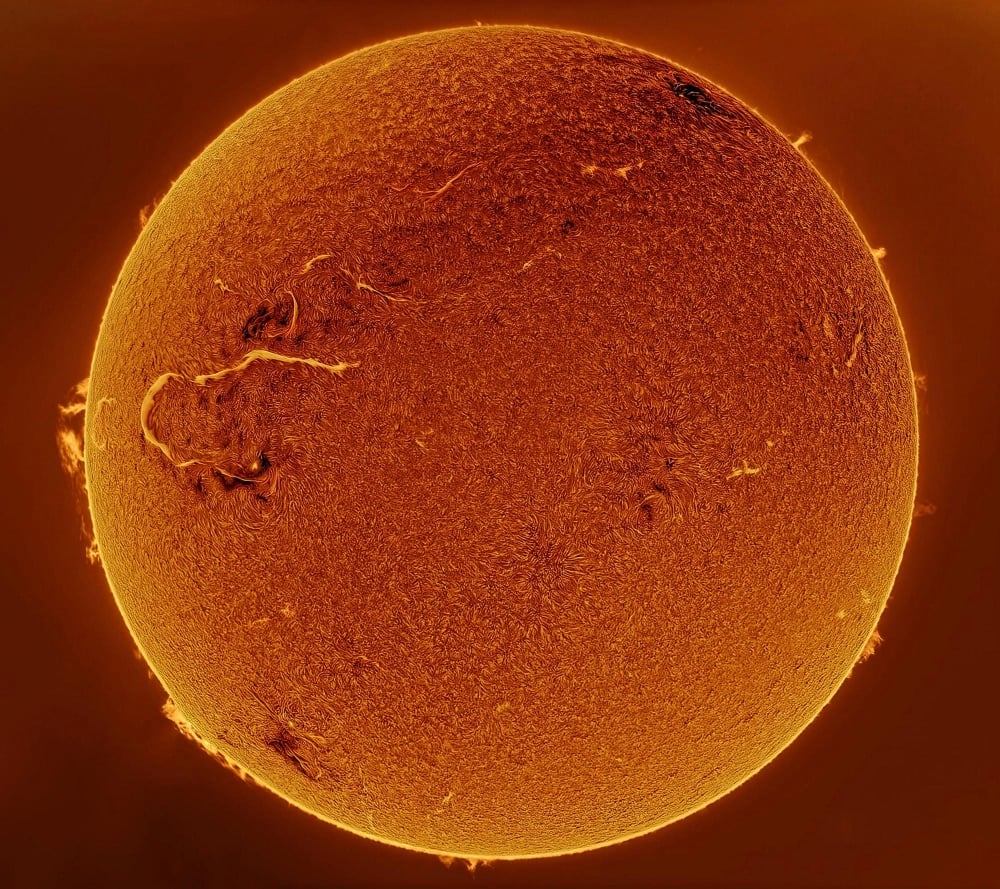
Mehmet Ergün. More Sun!
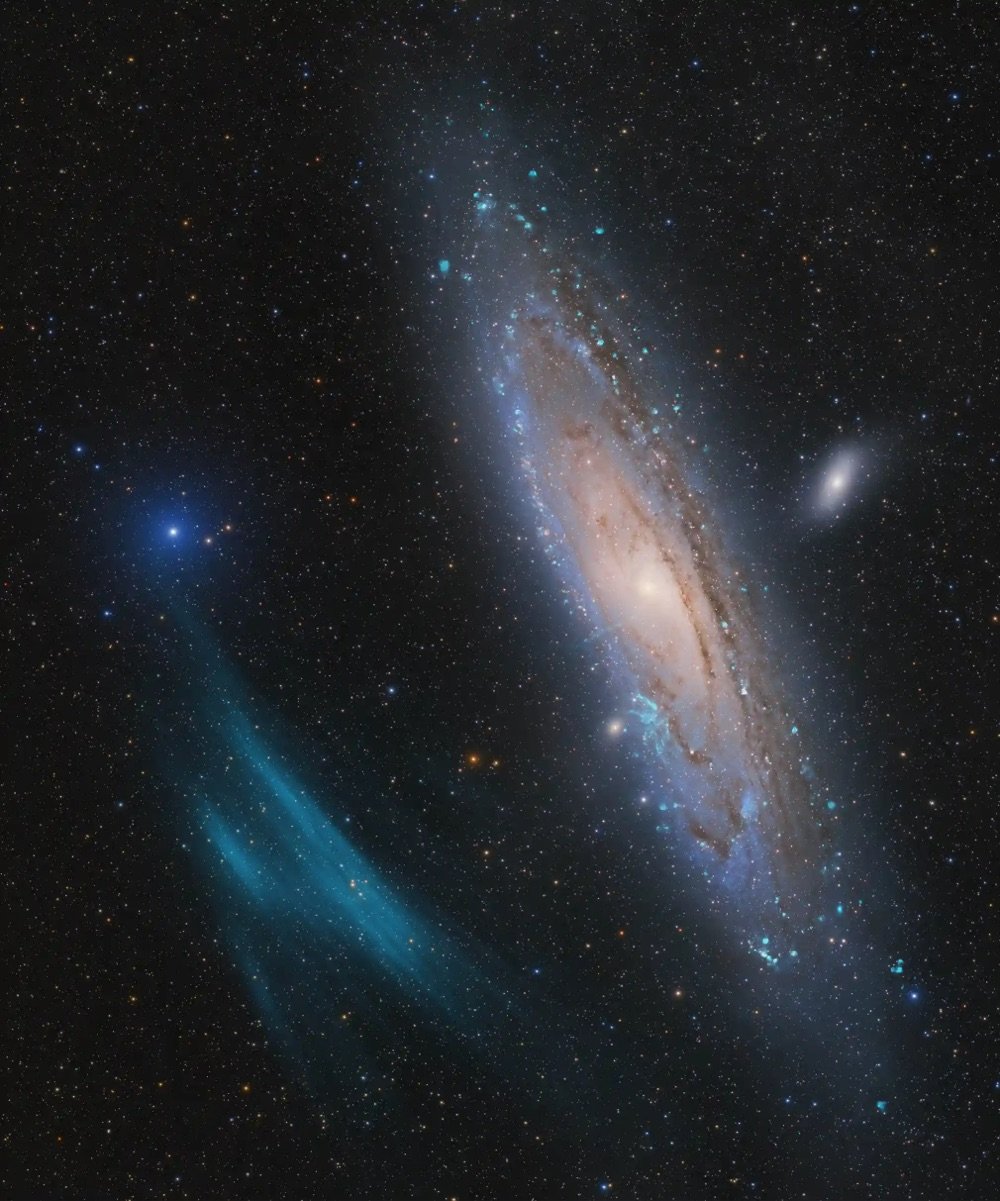
Marcel Drechsler, Xavier Strottner and Yann Sainty for their shot of the Andromeda galaxy.
The Andromeda galaxy is the closest spiral galaxy to our own Milky Way, and one of the most photographed deep-sky objects. Yet this particular photo, captured by an international trio of amateur astronomers, revealed a feature that had never been seen before: a huge plasma arc, stretching out across space right next to the Andromeda galaxy.
“Scientists are now investigating the newly discovered giant in a transnational collaboration,” explain the photographers. “It could be the largest such structure nearest to us in the Universe.”
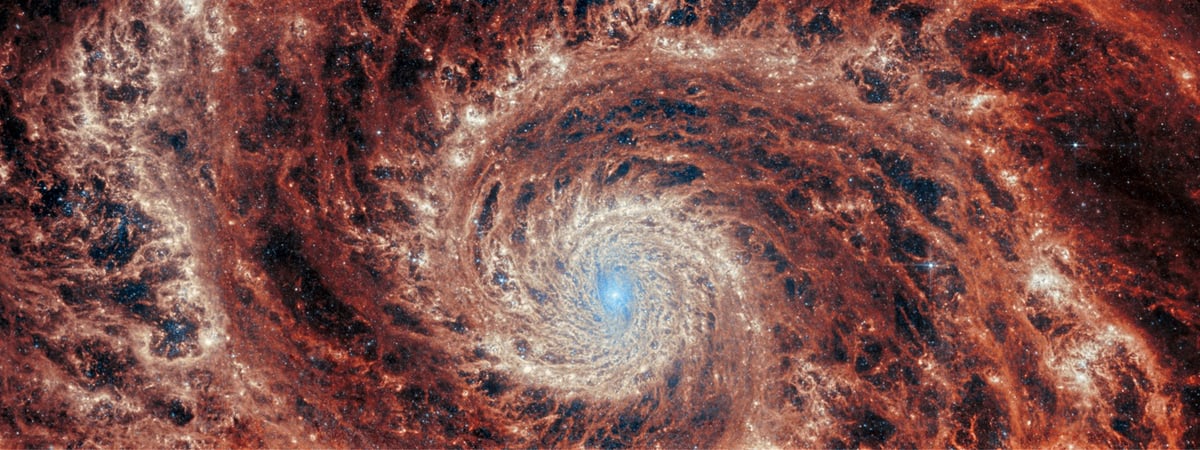
The graceful winding arms of the grand-design spiral galaxy M51 stretch across this image from the NASA/ESA/CSA James Webb Space Telescope. Unlike the menagerie of weird and wonderful spiral galaxies with ragged or disrupted spiral arms, grand-design spiral galaxies boast prominent, well-developed spiral arms like the ones showcased in this image. This galactic portrait was captured by Webb’s Mid-InfraRed Instrument (MIRI).
In this image the reprocessed stellar light by dust grains and molecules in the medium of the galaxy illuminate a dramatic filamentary medium. Empty cavities and bright filaments alternate and give the impression of ripples propagating from the spiral arms. The yellow compact regions indicate the newly formed star clusters in the galaxy.
This short, relaxing, mesmerizing video of an Martian impact crater called Aram Chaos was taken by the HiRISE camera on the Mars Reconnaissance Orbiter. The images were run through an enhanced color red-green-blue filter, which tends to highlight the structure and geology rather than the true color. For example, the blue in the video often represents basalt, an igneous rock of volcanic origin.
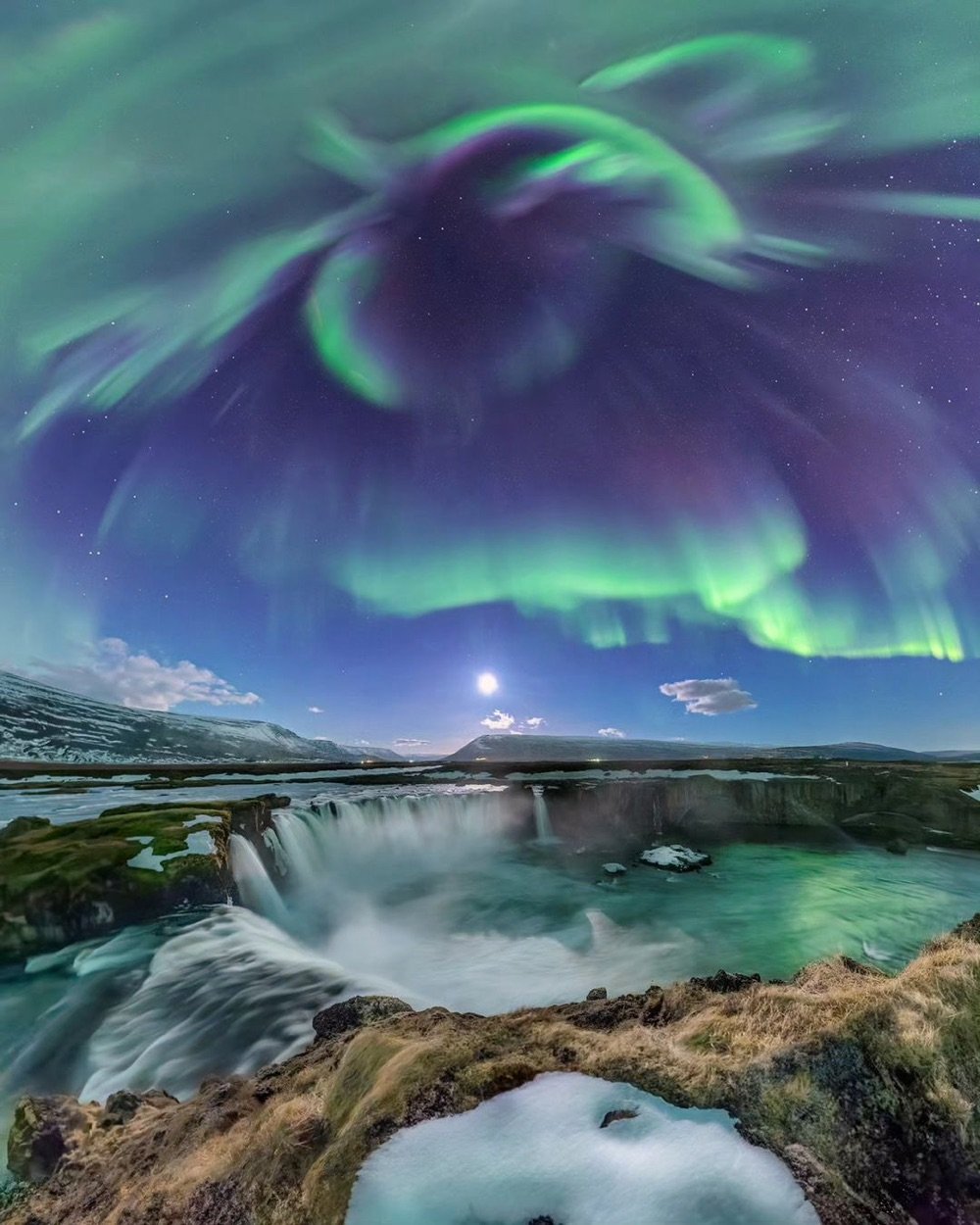
Astrophotographer Cari Letelier caught this amazing shot of the aurora borealis over the Goðafoss waterfall in Iceland. We live in a truly magical world — if science fiction authors made something like this up, you wouldn’t believe it’d ever be real. You can check out more of Letelier’s astrophotography on Instagram or on her website.
Astronomers believe that there’s a black hole at the center of almost every large galaxy in the universe. Some of those black holes are particularly energetic, chewing up the galaxies in which they reside and releasing massive amounts of energy out into the cosmos. Those black holes and the energy emitted from matter and gas falling towards their centers are what astronomers call quasars.
But if we look closely, we see who is actually in charge. Small as a grain of sand compared to the filaments, the centers of some of these galaxies shine with the power of a trillion stars, blasting out huge jets of matter, completely reshaping the cosmos around them. Quasars, the single most powerful objects in existence, so powerful that they can kill a galaxy.
Blackstar is a relaxing and meditative 45-minute video of the Sun made by Seán Doran using footage from the Solar Dynamics Observatory. Instead of the familiar yellow, Doran has chosen to outfit our star in vivid blue and black, which lends the video a sort of alien familiarity. This looks absolutely stunning in 4K.
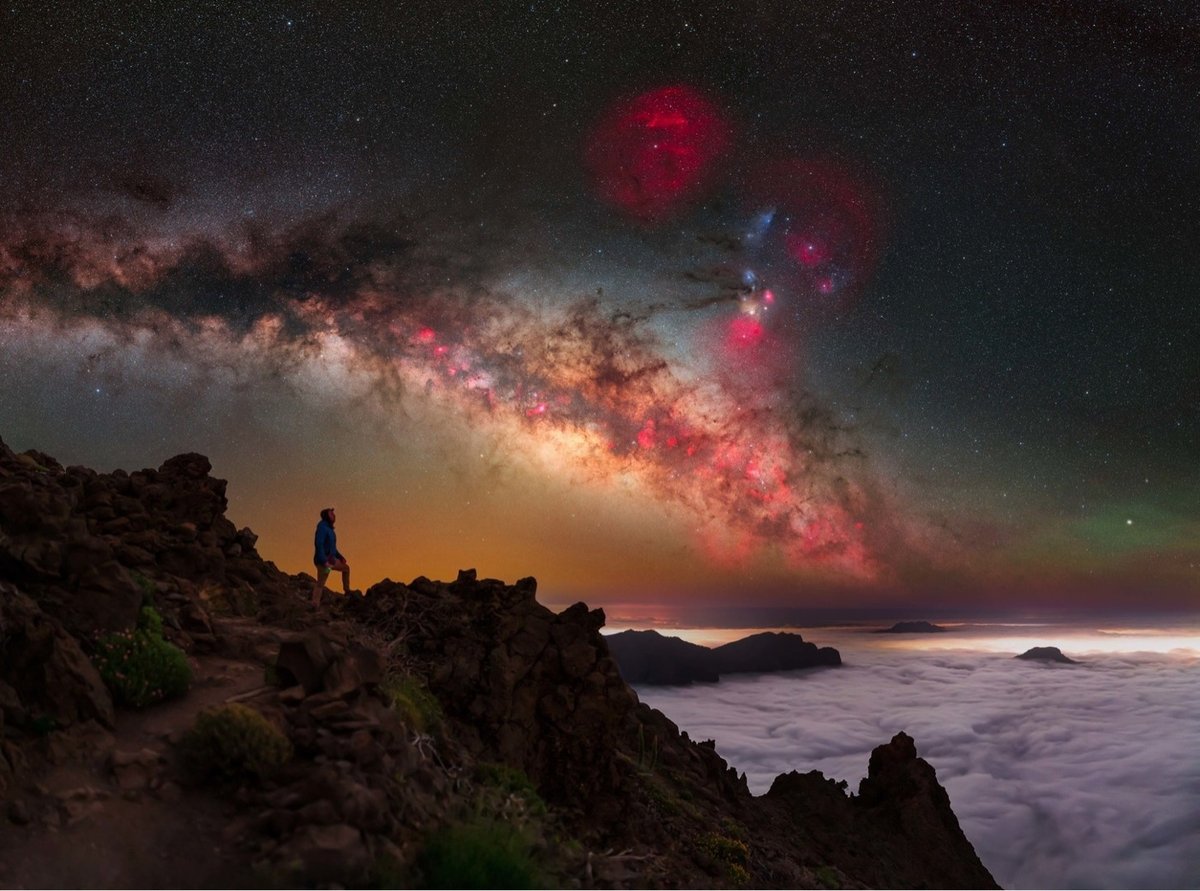
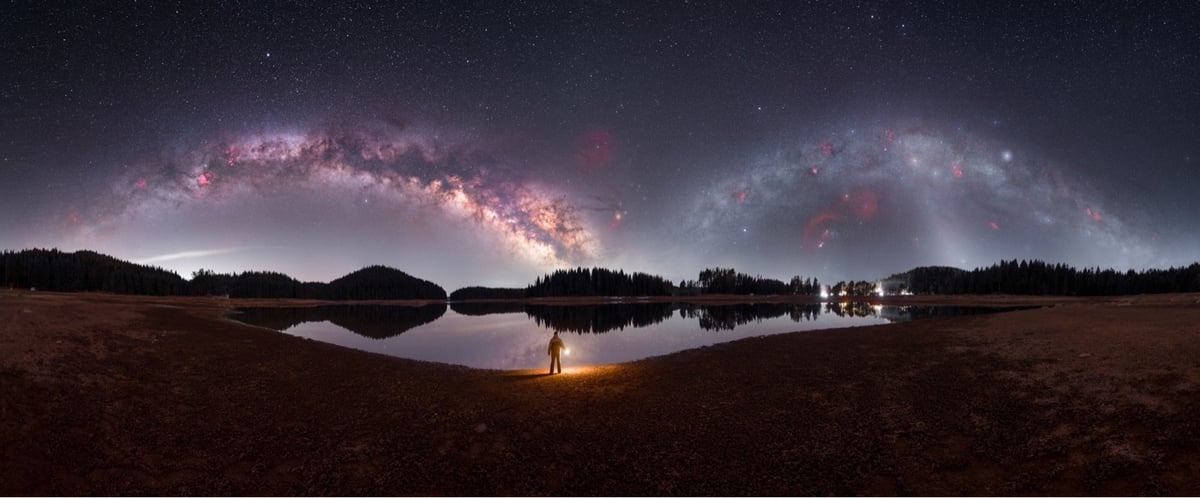
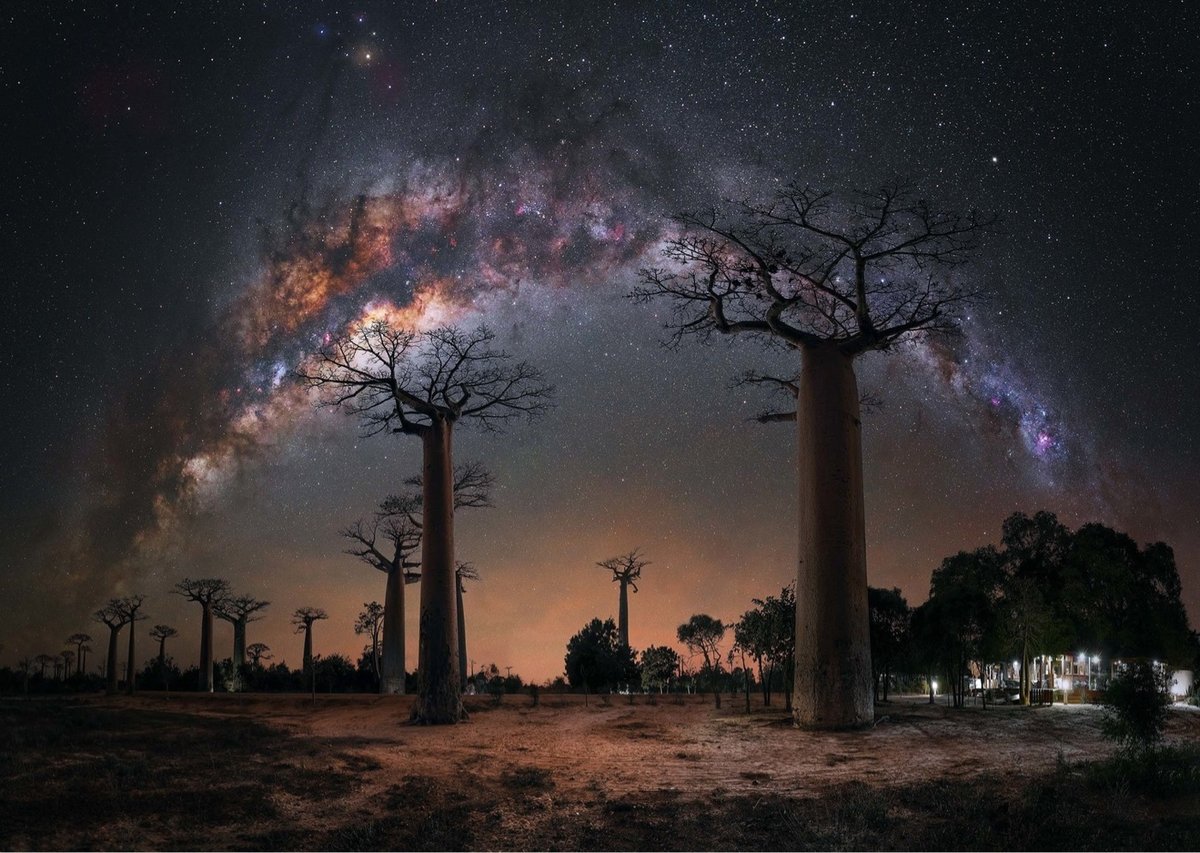
Capture the Atlas have announced their picks for the 2023 Milky Way Photographer of the Year competition. As usual, I’ve included a few of my favorites here — from top to bottom: Jakob Sahner’s photo from the Canary Islands, Mihail Minkov’s composite shot of the Milky Way as it looks in both the summer & winter, and Steffi Lieberman amongst the baobab trees in Madagascar. Here’s Minkov explaining his full-galactic view:
I’ve always wondered what the night sky would look like if we could see the two Milky Way arches from the winter and summer side by side. This is practically impossible, since they are part of a whole and are visible at different times of the day.
However, this 360-degree time-blended panorama shows us what they would look like. The two arches of the Milky Way represent one object in the starry sky, with part of it visible in winter and part of it in summer. Therefore, they are called the winter and summer arches. The winter arch includes objects that we can observe from October to March, primarily associated with the constellation Orion.
On the other hand, the summer arch features the Milky Way core, visible from March to September, which is the most characteristic and luminous part of the night sky, representing the center of our galaxy.
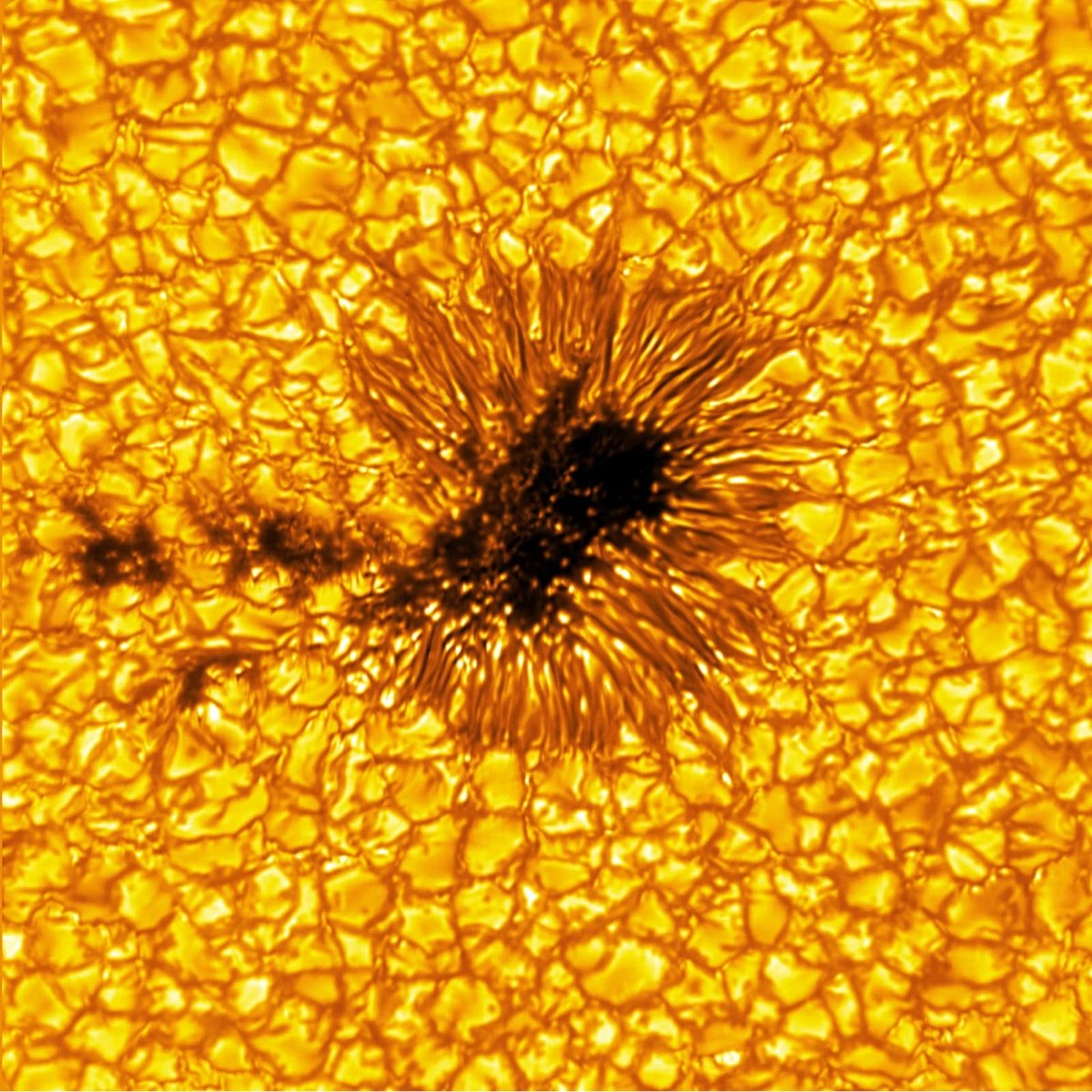
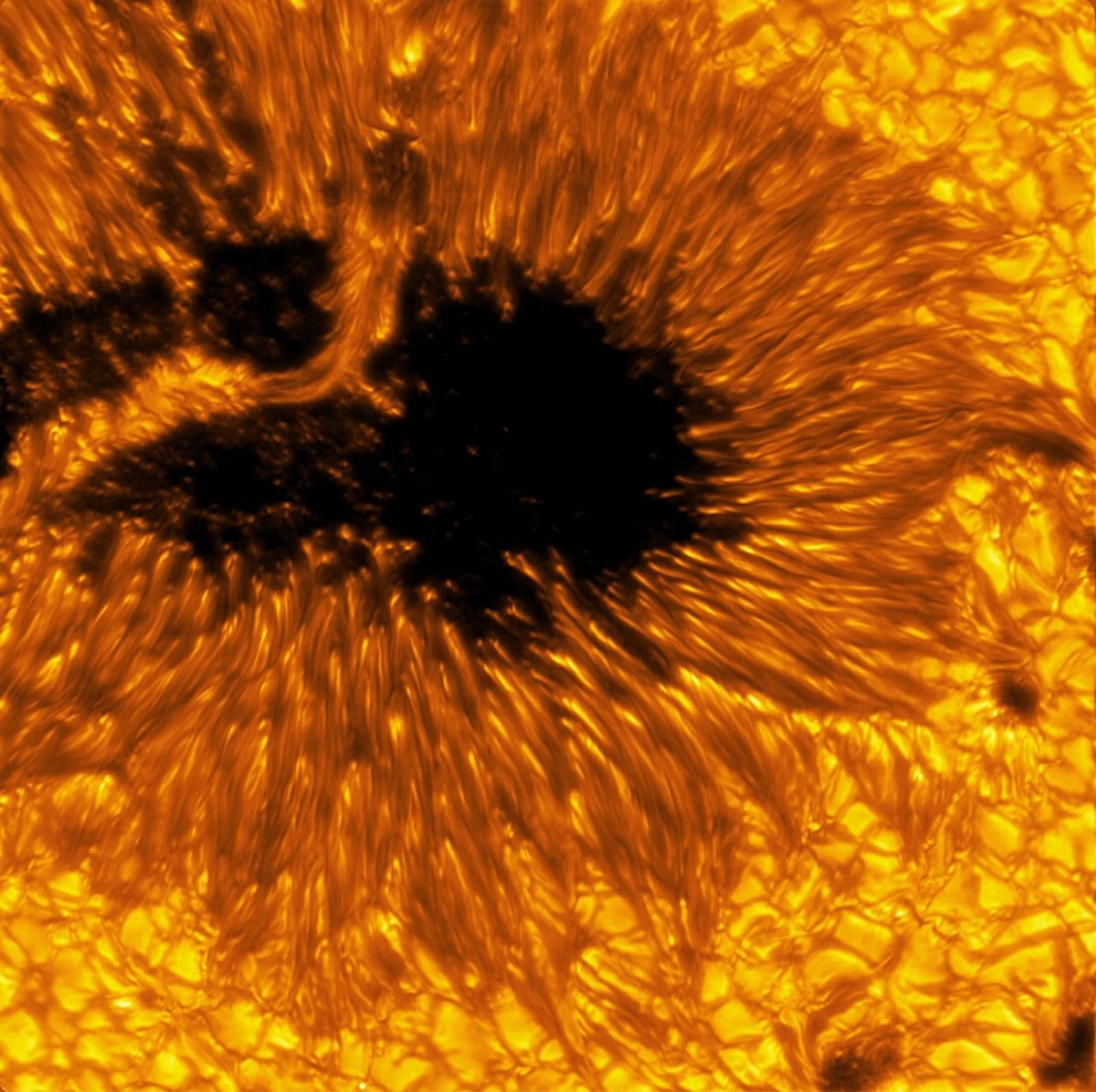
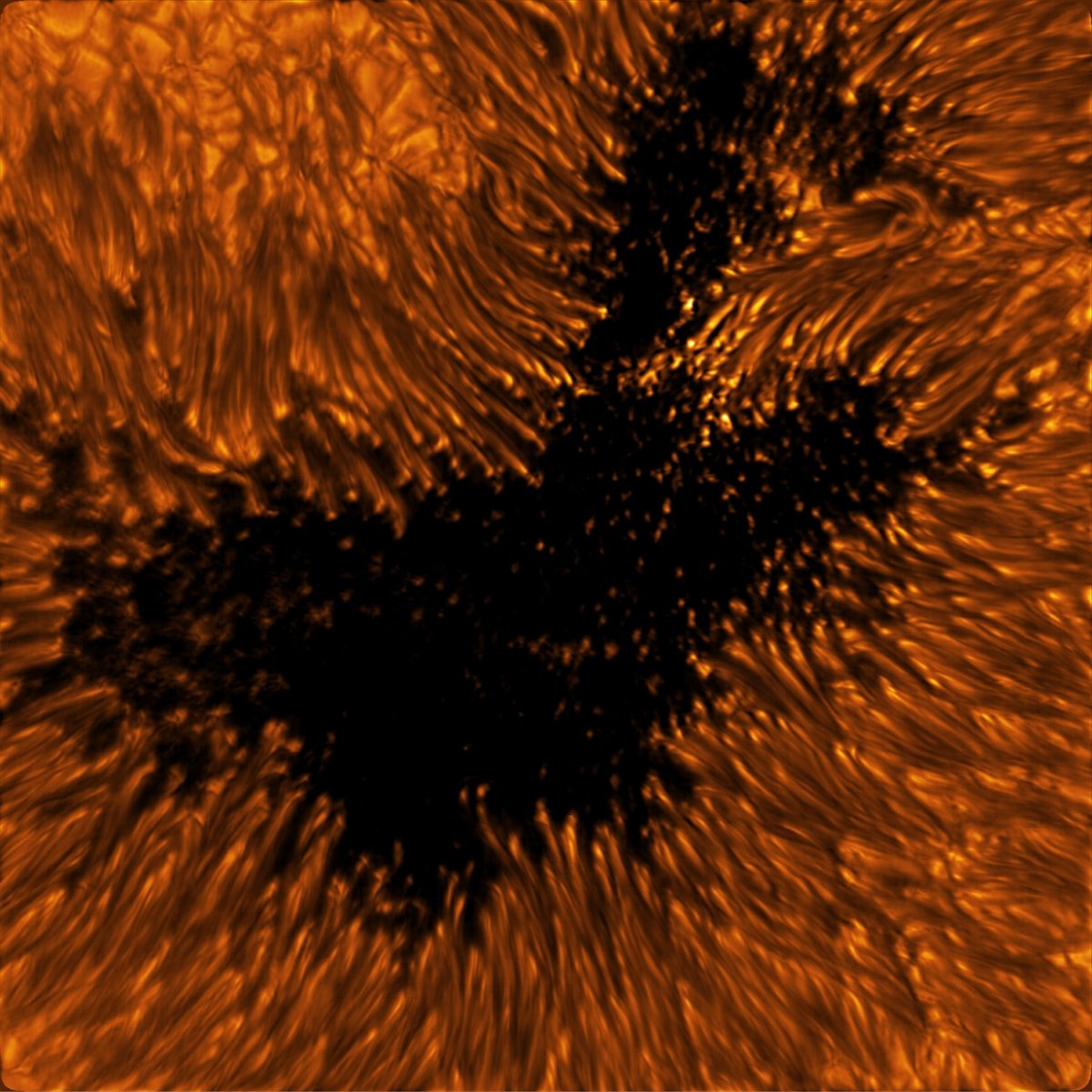
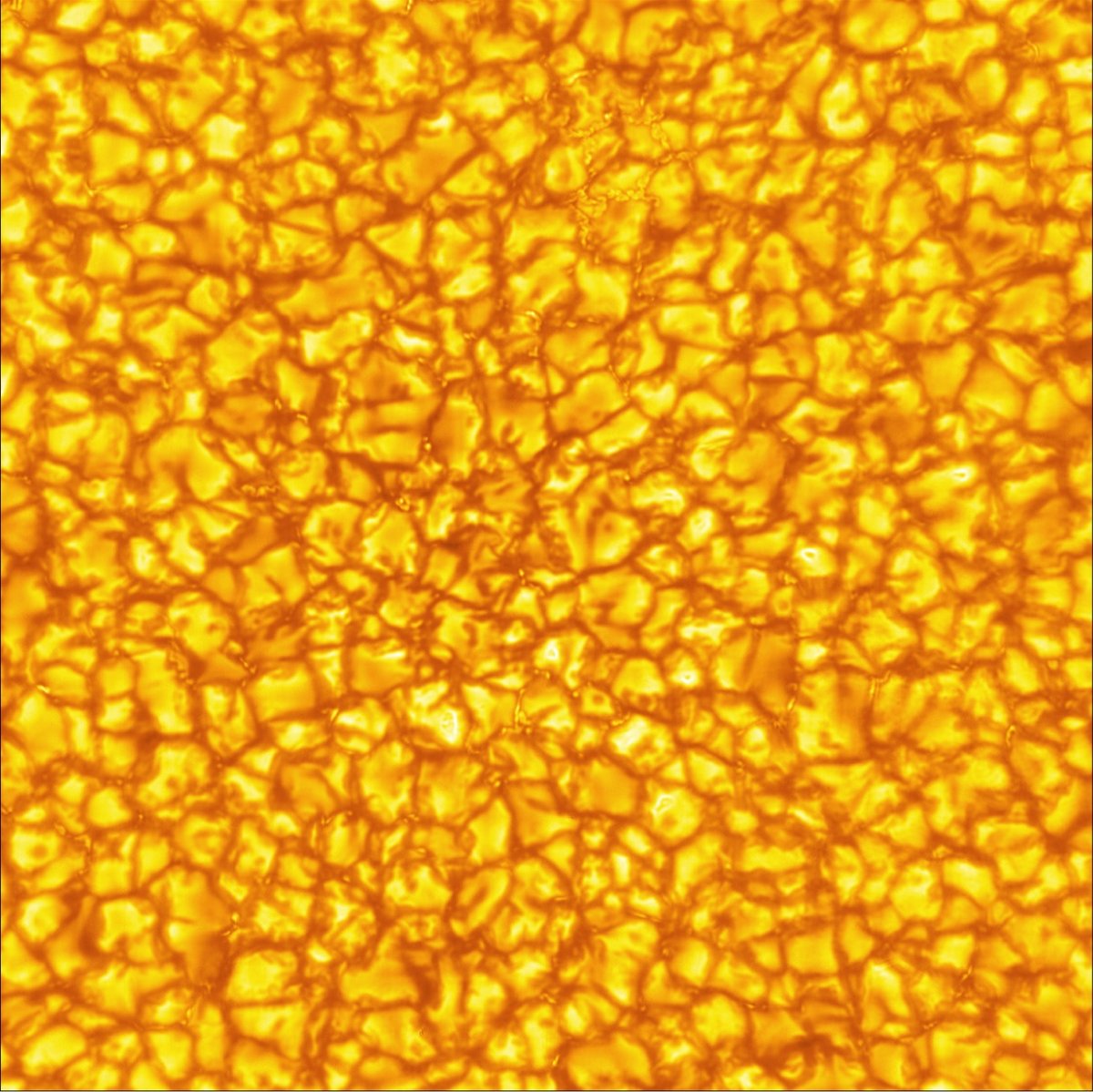
The Inouye Solar Telescope is the largest and most powerful solar telescope in the world. The telescope is still in a “learning and transitioning period” and not up to full operational speed, but scientists at the National Solar Observatory recently released a batch of images that hint at what it’s capable of. Several of the photos feature sunspots, cooler regions of the Sun with strong magnetic fields.
The sunspots pictured are dark and cool regions on the Sun’s “surface”, known as the photosphere, where strong magnetic fields persist. Sunspots vary in size, but many are often the size of Earth, if not larger. Complex sunspots or groups of sunspots can be the source of explosive events like flares and coronal mass ejections that generate solar storms. These energetic and eruptive phenomena influence the outermost atmospheric layer of the Sun, the heliosphere, with the potential to impact Earth and our critical infrastructure.
In the quiet regions of the Sun, the images show convection cells in the photosphere displaying a bright pattern of hot, upward-flowing plasma (granules) surrounded by darker lanes of cooler, down-flowing solar plasma. In the atmospheric layer above the photosphere, called the chromosphere, we see dark, elongated fibrils originating from locations of small-scale magnetic field accumulations.
This short animation from NASA shows the sizes of some of the supermassive black holes that feature at the center of galaxies. Some are relatively small:
First up is 1601+3113, a dwarf galaxy hosting a black hole packed with the mass of 100,000 Suns. The matter is so compressed that even the black hole’s shadow is smaller than our Sun.
While others are much larger than the solar system…and this isn’t even the biggest one:
At the animation’s larger scale lies M87’s black hole, now with a updated mass of 5.4 billion Suns. Its shadow is so big that even a beam of light — traveling at 670 million mph (1 billion kph) — would take about two and a half days to cross it.
The aptly named “Fusion of Helios” is a fusion from the minds of two astrophotographers, Andrew McCarthy and Jason Guenzel. Using a custom-modified hydrogen alpha solar telescope, the combined data from over 90,000 individual images was jointly processed to reveal the layers of intricate details within the solar chromosphere. A geometrically altered image of the 2017 eclipse as an artistic element in this composition to display an otherwise invisible structure. Great care was taken to align the two atmospheric layers in a scientifically plausible way using NASA’s SOHO data as a reference.
So how do I resolve atmospheric details, like spicules, prominences, and filaments? The trick is tuning the telescope to an emission line where these objects aren’t drown out by the bright photosphere. Specifically, I’m shooting in the Hydrogen-alpha band of the visible spectrum (656.28nm). Hydrogen Alpha (HA) filters are common in astrophotography, but just adding one to your already filtered telescope will just reduce the sun’s light to a dim pink disk, and using it without the aperture filter we use to observe the details on the photosphere will blind you by not filtering enough light. If you just stack filters, you still can’t see details. So what’s the solution?
A series of precisely-manufactured filters that can be tuned to the appropriate emission line, built right into the telescope’s image train does the trick! While scopes built for this purpose do exist (look up “coronado solarmax” or “lunt solar telescope” I employ a heat-tuned hydrogen alpha filter (daystar quark) with an energy rejection filter (ERF) on a simple 5” doublet refractor. That gives me a details up close look at our sun’s atmosphere SAFELY. I’ve made a few custom modifications that have helped me produce a more seamless final image, but am not *quite* yet ready to share them, but just the ERF+Quark on a refractor will get you great views.
Photography has always been a combination of technology, artistry, and wrangling whatever light you can get to best express the feeling that you’re going for — astrophotography certainly dials that wrangling up to 11.
Prints of this image (and some digital downloads) are available in various sizes from McCarthy and Guenzel.
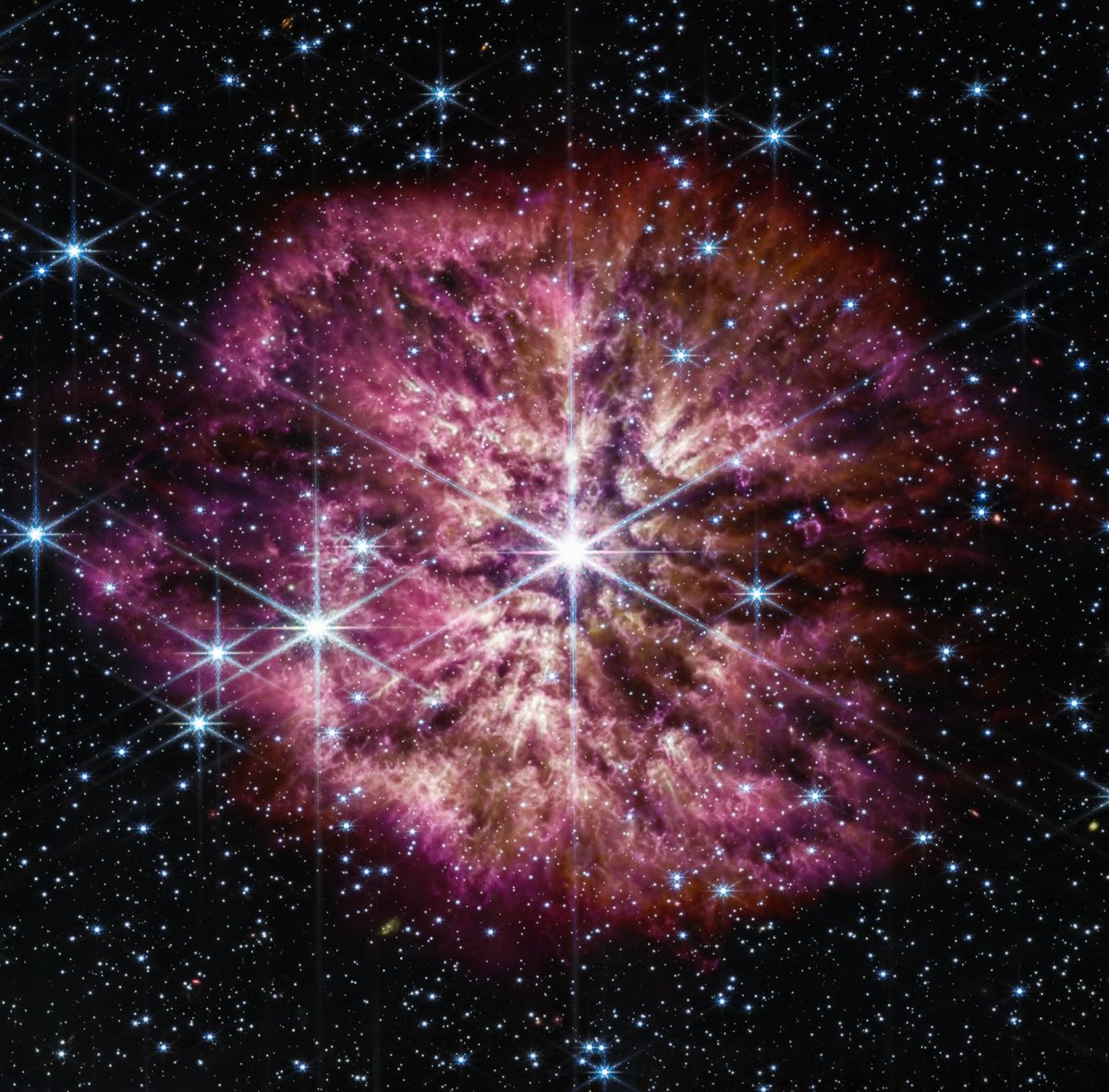
Folks, I told you that this was going to become a JWST fan blog and if you didn’t hear me the first time, consider yourself notified. NASA’s newest space telescope is still stretching its legs, but even back in its early days last summer, it captured this breathtaking near-infrared and mid-infrared image of a star preparing to go supernova.
The 10 light-years-wide nebula is made of material cast off from the aging star in random ejections, and from dust produced in the ensuing turbulence. This brilliant stage of mass loss precedes the star’s eventual supernova, when nuclear fusion in its core stops and the pressure of gravity causes it to collapse in on itself and then explode.
Images like these are useful for studying dust, which sounds a little boring but actually is fascinating (italics mine):
The origin of cosmic dust that can survive a supernova blast and contribute to the universe’s overall “dust budget” is of great interest to astronomers for multiple reasons. Dust is integral to the workings of the universe: It shelters forming stars, gathers together to help form planets, and serves as a platform for molecules to form and clump together — including the building blocks of life on Earth. Despite the many essential roles that dust plays, there is still more dust in the universe than astronomers’ current dust-formation theories can explain. The universe is operating with a dust budget surplus.
Currently imagining a sci-fi office dramedy about the dust budget surplus — someone over at HBO Max or Apple+ get on this.







Stay Connected