Here is a pleasantly painful trailer for a new movie from the filmmaker Joanna Arnow. It opens this Friday, April 26, at IFC and Lincoln Center in NYC. I don’t know if I’m going to watch it, but I couldn’t really look away.
Arnow also stars as…
an emotionally detached young Brooklynite drifting through unremarkable days and nights. Neither her on-again-off-again BDSM relationship with a mildly disinterested older dom, nor her nondescript corporate job, appear to bring her any satisfaction.
And yet “she finds a core of poignant truth about the ways people search for … emotional happiness and sexual gratification” (per the Lincoln Center summary). It’s currently at a 100% on Rotten Tomatoes, FWIW. (This bit also made me laugh out loud.)
Letterboxd asked Dune director Denis Villeneuve what his four favorite films were and he cheated and listed five (including 2001 and Blade Runner).
First of all, who knows how long Blade Runner has been on his top 5 (or even 10 or 20 list) but getting to do a sequel of one of your favorite films has to be unbelievably rewarding as a director.1
And I’m going to cheat as well here and list a number of other films that Villeneuve has publicly praised, courtesy of this piece from IndieWire: Vertigo, Children of Men, Downsizing (?), There Will Be Blood, Seven Samurai, The Beguiled, Jaws, and three Nolan films (Dunkirk, Inception, Tenet).
I was trying to think of what might be the equivalent to this for me and all I could come up with is getting hired to reboot Suck or something.↩
Ryan Gosling was on Saturday Night Live this weekend and they did a sequel to one of my favorite SNL sketches (which is completely dorky in a design nerd sort of way) ever: Papyrus. Behold, Papyrus 2:
Avatar spawned worlds, right? Every little leaf of every little flower, every little eyelash of every little creature: thoroughly thought out. But the logo: it’s Papyrus, in bold. Nobody cares. Does James Cameron care? I don’t think so.
A thoughtful video essay from The Cinema Cartography about 15 of film’s greatest documentaries, including The Thin Blue Line, Grizzly Man, The Act of Killing, Shoah, Hoop Dreams, and OJ: Made in America (my personal favorite).
I am not sure I agree with their #1 pick? But it’s been a loooong time since I saw it (in the theater when it came out, if you can believe it), so maybe it’s time for another viewing. (via open culture)
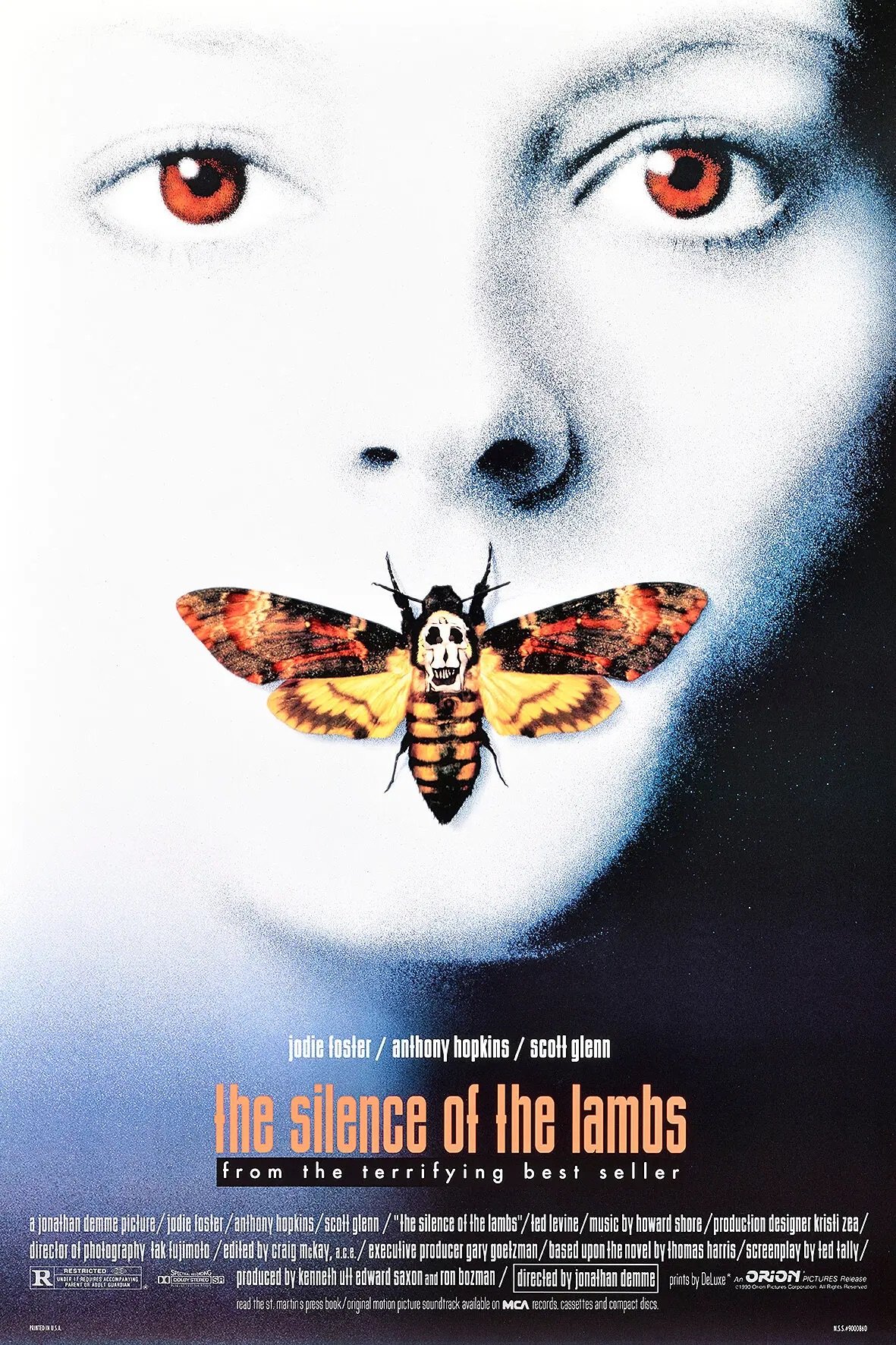
I love a good movie poster and Dawn Baillie designed one of the best ones ever: the iconic poster for The Silence of the Lambs. Her other work includes posters for Dirty Dancing, Little Miss Sunshine, Zoolander, The Truman Show, and The Royal Tenenbaums. A show of her work opens soon at Poster House in NYC. Some of Baillie’s original posters are for sale at Posteritati.
For Ars Technica, science writer Jennifer Ouellette and theoretical physicist Sean Carroll review time travel used in 20 popular movies, ranging from The Terminator to Bill and Ted’s Excellent Adventure to Interstellar. Each movie is rated on scientific accuracy and how entertaining the use of time travel is. Here’s part of their review of Superman (1978).
Our standards are admittedly lax when it comes to the physical mechanism by which cinematic heroes journey through time, but “flying really fast around the Earth so that it reverses the direction of its rotation and sends it back to a previous moment” is such thoroughgoing lunacy that one must almost pause in admiration. Then we return to our senses and ask, “Why does Superman’s flight have any effect on the rotation of the Earth? And what does that rotation have to do with the direction of time? Do I get younger if I start twirling counterclockwise?” No, dear reader, you do not. Indeed, by the rules handed down by Einstein, Superman’s near-speed-of-light journey would actually send him into the future, not into the past.
To its dubious credit, Superman pioneers two different flaws that will frequently recur in movies to come. First, time travel is portrayed as a miraculous cure-all, which is then never used again. Superman essentially goes back in time to save his girlfriend. This is admirable, but aren’t there other, more historically significant global disasters that could be averted by the same strategy? This is a narrative problem, not a scientific or logical one, but it rankles.
Then, of course, there is the flaw that almost always accompanies stories in which the past gets changed by time-travelers: Where did those time-travelers come from? We, the viewers, see a sequence of events that seems to make sense if we don’t think too hard. Lois Lane dies, Superman gets upset, he travels back in time, stops the events that led to Lois dying, and we live happily ever after. But at the end of this sequence, Superman still has the memory of Lois dying the first time around. Yet because he changed history, that event he remembers never happened. Lois certainly doesn’t remember it. How does he?
When the Star Wars films aired in Chile, instead of cutting away from the movie for commercial breaks, the TV station “seamlessly” inserted ads for Cerveza Cristal beer. We’re talking Obi-Wan opening a chest to find a lightsaber for Luke and instead it reveals a ice-chest full of beer. Or the Emperor Force-reaching for a lightsaber and a can of beer flies into his hand. And of course the whole thing has turned into a meme.
From a YouTube channel called The Solomon Society, a pair of videos that some of the most beautiful shots in the history of film. When Denis Villeneuve emphasizes the important of image in film, these are the kinds of shots that he’s talking about.
I haven’t watched this yet, but it’s definitely in my queue: a recording of a livestreamed panel of all the visual effects nominees from this year’s Oscars, talking about their work on those films. I got this from Todd Vaziri, a visual effects artist at ILM, who says:
If you’re at all interested in visual effects, you gotta watch this Academy presentation that took place last weekend. It goes in-depth with all five nominees, and shows before/after material that hasn’t been seen publicly.
The meat of the program begins at around 24 minutes when they start showing visual effects reels from the nominated films (The Creator, Godzilla Minus One, Guardians of the Galaxy Vol. 3, Mission: Impossible – Dead Reckoning Part One, Napoleon), followed by a discussion with the members of the effects teams.
How many times last year did you go to church? How many times did you go to a dinner party? How many times last year did you go to club meeting? In barely a couple of decades, half of all the civic infrastructure in America has simply vanished. It’s equivalent to say half of all the roads in America just disappeared.
Here are all the cool new movie trailers that they played during The Big Game™. Or, the ones that I give a shit about anyway. First up, Deadpool and Wolverine:
Did I even see the second Deadpool movie? Does it matter? I’ll see this one. Next: Kingdom of the Planet of the Apes.
Apes in charge, running down the humans? I’m in. There’s also Despicable Me 4 (a franchise I like more than I care to admit), The Fall Guy (based on the 80s TV show I very much didn’t watch; starring, somehow, Ryan Gosling & Emily Blunt — I hope this is a pleasant surprise), and Twisters (the Twister sequel no one asked for).
Last weekend, my daughter and I watched all 8 episodes of Percy Jackson and the Olympians on Disney+. We binged it. That’s how people watch TV shows now: streaming services have entire shows available at the click of the “next episode” button. Many shows are uploaded a whole season at a time for maximum bingeability — no need to wait more than the time it takes to skip the credits to continue the story. It’s an all-you-can-eat media buffet. The mechanics and economics of streaming media have changed how we watch TV and movies — the binge watch reigns supreme.
But recently, I’ve found myself watching some shows in a much different way. When I find a new show I really like or I’m digging into the newest season of a favorite series, instead of getting hooked and then blasting through all the available episodes, I’ll slow down or even stop watching so as to prolong the pleasure…or to delay the end. I feel like a squirrel, hoarding nuts for the winter. It’s stinge watching instead of binge watching.
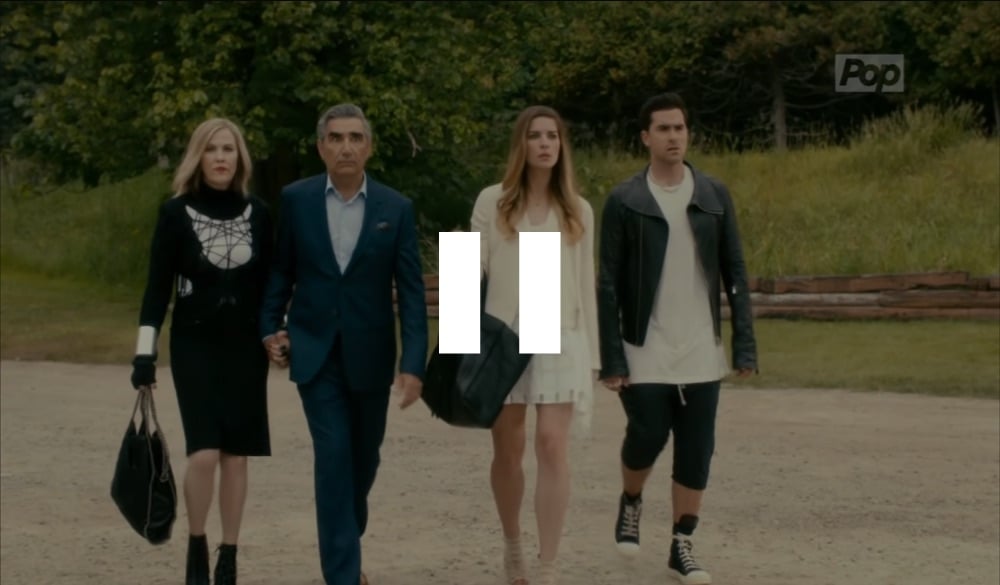
Schitt’s Creek was the first show I recall stinge watching. I just didn’t want to stop spending time with those people and so I went from watching 1-2 episodes per day to a few a week. The final season’s 14 episodes probably took me longer to watch than the first three seasons put together. I’ve also done this with The Great British Bake-off, The Expanse, and Silo. And it’s gotten worse — right now, I’m in the middle of four different shows that I am loving but cannot bring myself to actually watch: Reservation Dogs (love those shitasses), For All Mankind (haven’t watched the last episode of the most recent season), Star Trek: Strange New Worlds (stalled out on the second-to-last episode of s01), and The Great (I stopped in the middle of an episode where something Very Dramatic happens and I just can’t seem to continue).
Wondering if anyone else has been stinge watching and curious about what their motivations might be, I asked about it on Instagram and found that dozens of others swim against the fierce current of binge watching…and even stinge read books.1 The Sopranos, Ted Lasso, The Wire, Firefly, Escape at Dannemora, Fleishman Is in Trouble, The Bear, Griselda, and Brooklyn 99 were all cited as shows too good to keep watching. One reader told me she still hasn’t watched the end of Schitt’s Creek “because those characters all grew so much and I knew the last episode would be really emotional and I wanted to avoid crying”.
This was a common theme amongst the stinge watchers, particularly with series finales. Digital media producer Micaela Mielniczenko didn’t want to finish Gilmore Girls “because I loved the characters so much and I didn’t want the story and world to end”. I felt the same way about The Expanse — I wanted to live in that world and with those characters forever, a testament to the world building and character development by the writers, directors, showrunners, and actors.
My friend Adriana X. Jacobs, a professor of modern Hebrew literature, poet, game designer, and long-time stinge watcher, says she has trouble with denouements. She told me:
They put me in a melancholy mood. I prefer the build-up, that long stretch when a character is tunneling (literally or figuratively) their way into or out of a problem. But the story interests me a lot less once the issues start to resolve. This is why it took me YEARS to finish Oldboy (dir. Park Chan-wook), a movie I kept pausing and abandoning when the protagonist was still trapped in that unholy hotel room.
I knew that the story would take him out of the room but I wanted to remain in the mess and confinement. It’s the same thing with Normal People. Even though I’ve read the book and know that the ending is (thank god) open-ended, by not finishing the series, I leave these chaotic characters even further suspended in that beautiful, very human state of uncertainty and possibility.
Wow, yes, exactly.
Andreas, who normally hoards shows to watch in the “dark days of winter” in Berlin, said that he had trouble finishing Wednesday on Netflix: “God I loved that so, so much, I could not bear the thought of it ending so soon.” He rewatched the entire first season immediately after finishing the show and even “did a whole keynote speech only with [Wednesday’s] quotes as slides”.2
Courtney Walsh, who is holding off on finishing Brooklyn 99, told me:
Delaying the finale keeps the characters in stasis and delays me feeling sad when it’s over. By keeping it in the queue, I’ll be happy when I watch, not sad.
Several other people told me they hold off on watching certain shows until they need them. When I asked her when she was going to watch the rest of Brooklyn 99, Walsh said:
When I need a guaranteed, bittersweet day. When I’m thinking about the past and I know that these 8-10 episodes will fit the bill. Probably in the next year or two. Bittersweet is a hard emotion to plan for and keep for later. When I can, I do!
Ryan N said that he keeps a stash of Queer Eye episodes because they’re “like soothing medicine in dark times”. Mielniczenko keeps the last episode or two (or sometimes a whole season) of a show in her queue because she likes “the idea that I can finish these shows at any point”. I definitely held back on the final episodes of Schitt’s Creek until I was emotionally ready and on GBBO episodes until I needed a guaranteed pick-me-up on a particularly gloomy day.
Josh Puetz is portioning Firefly out in drips and drabs — he last watched an episode in Dec 2022 as a treat to himself for being sick — and I asked how he was going to decide when to finish the rest of it:
I think…when I’m ready to let go of the characters and story on my terms. So many endings and changes in life are out of our control, but this one little thing (ending a series, saying goodbye) happens when I need it.
Puetz said he’s not a binge watcher at all (one-in-a-row is the most he can muster), but I both binge and stinge. Several of the shows I mentioned above (like Reservation Dogs & ST: Strange New Worlds), I binged several episodes at a stretch before slowing down when I realized, oh god, I’m going to run out! I loved Succession and could not wait to watch the series finale last May. The second season of the Gilded Age aired over two months last fall and I gobbled up each episode as it aired on Sunday nights.
Mielniczenko said she doesn’t horde every book or show; her stinge watch candidates “usually have a world that is unique/exciting or comforting/wholesome”. Like I said above, for me it usually comes down to the characters and the world and whether they overcome my need to find out how the plot wraps up. When something is soapy or sensational, like The Gilded Age or The White Lotus, I have to watch to find out what happens. But if my desire for the company of beloved characters and the comfort of a familiar place outweighs my desire for plot closure, I slow down and bank those shows for later.3
Streaming services are definitely geared towards binge watching, but the creators of particular shows have worked their magic so well, creating realities that feel unusually real, that some of us want to stay in them for as long as we can. My Brilliant Friend, one of my favorite shows of the last few years, is returning this year for a fourth and final season on HBO, and I am at once deliriously excited to meet those characters again but am also already bracing myself to have to say goodbye to them. At least I’ll have fellow stinge watchers to commiserate with.
Are you a stinge watcher? Let us know which shows you’re stuck on and why in the comments.
I hoard books too, but it’s more difficult to do with audiobooks and ebooks. Sometimes I’ll get to the end of an audiobook without realizing it and the “Audible hopes you have enjoyed this program” trods on my spirit a bit.↩
I don’t know about you, but I would love to see that keynote deck! (This reminds me of the time I suggested to my daughter that she do a school project about the philosophy of The Good Place because she’s seen that show seven times. She did not take my advice.)↩
Several people said that they don’t hoard shows, they just rewatch them, sometimes just after they’ve finished. I do that too, but rewatching doesn’t feel the same. Knowing what happens is comforting in a different way, but the novelty is important to me in terms of spending time in worlds with characters.↩
I don’t know exactly what this is, but it appears to be an ad for Lay’s potato chips made by Jimmy Kimmel Live? But whatever, it’s great: a Groundhog Day-inspired clip starring Ned Ryerson (Stephen Tobolowsky) himself that’s perfect for hawking a bajillion different flavors of potato chips. (via @ironicsans)
The film industry in France works a little differently that the American film industry. In this video, Evan Puschak explains how France treats filmmaking as a public good to be invested in at all levels.
One of the most interesting things is that the government gives grants to filmmakers that are specifically untethered to box office success in order “to support an independent cinema that is bold in terms of market standards and that cannot find its financial balance without public assistance”. Filmmakers who have made their early work with this public assistance include Agnes Varda, Celine Sciamma, and Claire Denis.
This is the trailer for Orion and the Dark, an animated kids movie written by Charlie Kaufman. Yes, the I’m Thinking of Ending Things; Synecdoche, New York; Eternal Sunshine of the Spotless Mind Charlie Kaufman. And it’s getting pretty good reviews so far. The AV Club:
Orion And The Dark may look almost nothing like any Charlie Kaufman film to date, but it bears his personality. While that might be a bit much for the youngest kids, for 11-year-olds like those depicted in this story, it may strike a chord simply by refusing to underestimate their intelligence.
Adam Sandler in a movie about space… I honestly didn’t know what to expect when I clicked play on the trailer for Spaceman this morning. Was I going to get Waterboy / Billy Madison Adam Sandler or Uncut Gems / Punch-Drunk Love Adam Sandler? Thankfully, it appears to be the latter. Spaceman is directed by Johan Renck (who directed the excellent Chernobyl) and is based on Jaroslav Kalfař’s 2017 novel Spaceman of Bohemia.
Six months into a solitary research mission to the edge of the solar system, an astronaut, Jakub (Adam Sandler), realizes that the marriage he left behind might not be waiting for him when he returns to Earth. Desperate to fix things with his wife, Lenka (Carey Mulligan), he is helped by a mysterious creature from the beginning of time he finds hiding in the bowels of his ship. Hanus (voiced by Paul Dano) works with Jakub to make sense of what went wrong before it is too late.
One of the many reasons that Ferris Bueller’s Day Off works so well as a film is that the music kicks ass *and* it meshes so well with the action. In the heyday of MTV, this was no accident — parts of the movie function almost as elaborate music videos. No scene illustrates this more than when Ferris is hurrying across backyards and through homes to beat his parents & sister back to the house. As good as that scene is, I think Todd Vaziri improved it by re-cutting it to music from Inception. So good!
I’m still catching up from being blissfully away from the internet in December so apologies to those of you for which this is old news, but Furiosa: A Mad Max Saga looks %$&*#@ good. My expectations for this film couldn’t be any higher — Fury Road was one of my favorite films of the past 10 years. Crucially, the Furiosa production team includes editor Margaret Sixel and several other folks who won awards for Fury Road — that’s a great sign.
Origin chronicles the tragedy and triumph of Pulitzer Prize winning journalist Isabel Wilkerson as she investigates a global phenomenon of epic proportions. Portrayed by Academy Award nominee Aunjanue Ellis-Taylor (“King Richard”), Isabel experiences unfathomable personal loss and love as she crosses continents and cultures to craft one of the defining American books of our time. Inspired by the New York Times best-seller “Caste,” ORIGIN explores the mystery of history, the wonders of romance and a fight for the future of us all.
I’m intrigued! Origin is set for a wide release in theaters on Jan 19th.
I always look forward to David Ehrlich’s annual love letter to cinema and his favorite films of the year. So put this thing on the biggest screen you can find, slap on some headphones, and get ready to put a bunch of excellent films on your must-watch list. This year in conjunction with the video, Ehrlich is raising money for the Palestine Children’s Relief Fund.
I reckon most of us have certain books, movies, TV shows, music, podcasts, and other media that we turn to when we need some comfort. These are things we’ve seen, read, or heard before — often many times — and know exactly what we’re going to get from them.
What we reach for depends on our needs. When I just want something familiar on in the background while I’m doing something else, to provide a vibe and the barest hint of a plot to follow, I often turn on Star Trek: TNG or old episodes of Doctor Who on Pluto TV. A few years ago during a really tough period, I read several of Tom Clancy’s novels (The Hunt for Red October, Patriot Games, and Red Storm Rising) to keep my brain reliably engaged but also unfettered by challenging prose or the deep emotional lives of the characters. I rewatch Star Wars and Avengers movies for their reliable entertainment, characters I’m invested in, and predictable-but-satisfying outcomes — these are often good plane movies.
When I’m feeling a lot of relational feelings and need a bit of salt to make them feel even more intense (and punishing), I’ll watch season two of Fleabag or Midnight in Paris or even 50 First Dates (which is as close as I get to rom-coms). Radiohead is a great all-arounder for many situations — I’ve leaned on Everything In Its Right Place, True Love Waits, Videotape, and even Burn the Witch at various times in my life. The Great British Bake Off is reliably low stakes, entertaining, and nothing but good vibes.
As the bulk of 2023 recedes from memory, I wanted to share some of the things from my media diet posts that stood out for me last year. Enjoy.
Succession. I did not think I would enjoy a show about extremely wealthy people acting poorly, but the writing and acting were so fantastic that I could not resist.
25 years of kottke.org. Very proud of what I’ve accomplished here and also genuinely humbled by how many people have made this little site a part of their lives.
Antidepressants + therapy. I was in a bad way last spring and it is not too strong to say that finding the right antidepressant and arriving at some personal truths in therapy changed my life.
The Bear (season two). I don’t always love it (especially when the intensity ramps up) but there’s definitely something special about this show.
Crossword puzzles. A few times a week, a friend and I do the NY Times crossword puzzle together over FaceTime. It’s become one of my favorite things.
AirPods Pro (2nd generation). Am I ever going to shut up about these? Possibly not. The sound quality is better than the first-gen ones and the sound cancelling is just fantastic. I used these on several long flights recently and you basically can’t hear much of anything but your music.
The Kottke Hypertext Tee. Might be bad form to put your own merch on a list like this, but I’m just tickled that these exist. Putting an actual physical good out into the world that people connect with is somehow satisfying in a way that digital media is not.
ChatGPT. This very quickly became an indispensable part of my work process.
Downhill mountain biking. I did this a couple years ago and it didn’t click for me. But my son and I went last summer and I loved it…it’s one my favorite things I did all year. Gonna try and get out more in 2024!
Once Upon a Time in Northern Ireland. Probably the best TV thing I watched last year. Listening to survivors of The Troubles talking about their experiences was unbelievably compelling.
Au Kouign-Amann. One of my all-time favorite pastries. Looks like a boring cake, tastes like magic.
Democracy Awakening: Notes on the State of America by Heather Cox Richardson. An extremely clear-eyed explanation of how Trumpism fits in with the Republicans’ decades-long project of weakening American democracy.
The Creator. I liked this original sci-fi a lot — more stuff that’s not Star Wars and Marvel pls.
BLTs. I could not get enough of this simple sandwich at the end of last summer — I was eating like 4-5 a week. When the tomatoes are good, there’s nothing like a BLT.
The little hearts my daughter put on the backs of the envelopes containing her letters from camp. Self explanatory, no notes.
Over the past few months, I’ve had some time away from the computer and have taken several very long plane trips and some shorter car rides, which means a bit more reading, TV & movie watching, and podcast listening than usual. Oh, and holiday movies.
Anyway, here’s my recent media diet — a roundup of what I’ve been reading, watching, listening to, and experiencing over the past few months.
The Killer. The excellent Michael Fassbender portrays a solitary, bored, and comfortable killer for hire who has a bit of a midlife crisis in fast forward when a job goes wrong. (A-)
Fortnite OG. I started playing Fortnite in earnest during Chapter 3, so it was fun to go back to Chapter 1 to see how the game worked back then. (B+)
Edge of Tomorrow. Speaking of video games… Still love this under-appreciated film, despite a third act that falls a tiny bit flat. (A)
The Vaster Wilds by Lauren Groff. I did not enjoy this quite as much as Matrix — especially the last third — but Groff is one hell of a writer. (B+)
New Blue Sun. Good on André 3000 for not doing the expected thing and instead releasing an instrumental album on which he plays the flute. (A-)
Songs of Silence. I can’t remember who clued me into this lovely instrumental album by Vince Clarke (Erasure, Depeche Mode), but it’s been heavily in the rotation lately. (B+)
Trifecta. A.L.I.S.O.N.’s Deep Space Archives is a favorite chill work album for me and this one is nearly as good. (B+)
Shoulda Been Dead. I had no idea that Kevin Kelly appeared on an early episode of This American Life until someone mentioned it offhand on our Thailand walk. What a story…listen all the way to the end. (A)
Train Dreams by Denis Johnson. Oh the writing here is exquisite. (A)
The Mountain in the Sea by Ray Nayler. Are AGI robots intelligent? Are octopuses? Are humans? This novel plays entertainingly with these ideas. (A-)
Myeongdong Kyoja. I stumbled upon this place, extremely cold and hungry, and after a brief wait in line, I was conducted to an open seat by the no-nonsense hostess running the dining room. The menu only has four items, conveniently pictured on the wall — I got the kalguksu and mandu. The hostess took my order and then, glancing at my frozen hands, reached down and briefly gave one of them a squeeze, accompanied by a concerned look that lasted barely half a second before she returned to bustling around the room. A delicious meal and a welcome moment of humanity in an unfamiliar land. (A)
Barbie. Second viewing. Entertaining and funny, but this is a movie that has Something To Say and I still can’t figure out what that is. (B+)
Emily the Criminal. There were a few hiccups here and there, but I largely enjoyed this Aubrey Plaza vehicle. (A-)
Midnight in Paris. Not going to recommend a Woody Allen movie these days, but this is one of my comfort movies — I watch it every few months and love every second of it. (A)
Gran Turismo. Extremely predictable; they could have done more with this. (B)
The Rey/Ren Star Wars trilogy. I have lost any ability to determine if any of these movies are actually good — I just like them. 🤷♂️ (B+)
Loki (season two). This was kind of all over the place for me but finished pretty strong. Glorious purpose indeed. (B)
Home Alone. First time rewatching this in at least a decade? This movie would have worked just as well if Kevin were 15% less annoying. (B+)
The Grinch. My original review stands: “I wasn’t expecting to sympathize so much with The Grinch here. The social safety net constructed by the upper middle class Whos totally failed the most vulnerable member of their society in a particularly heartless way. Those Whos kinda had it coming.” (B+)
Past installments of my media diet are available here. What good things have you watched, read, or listened to lately?
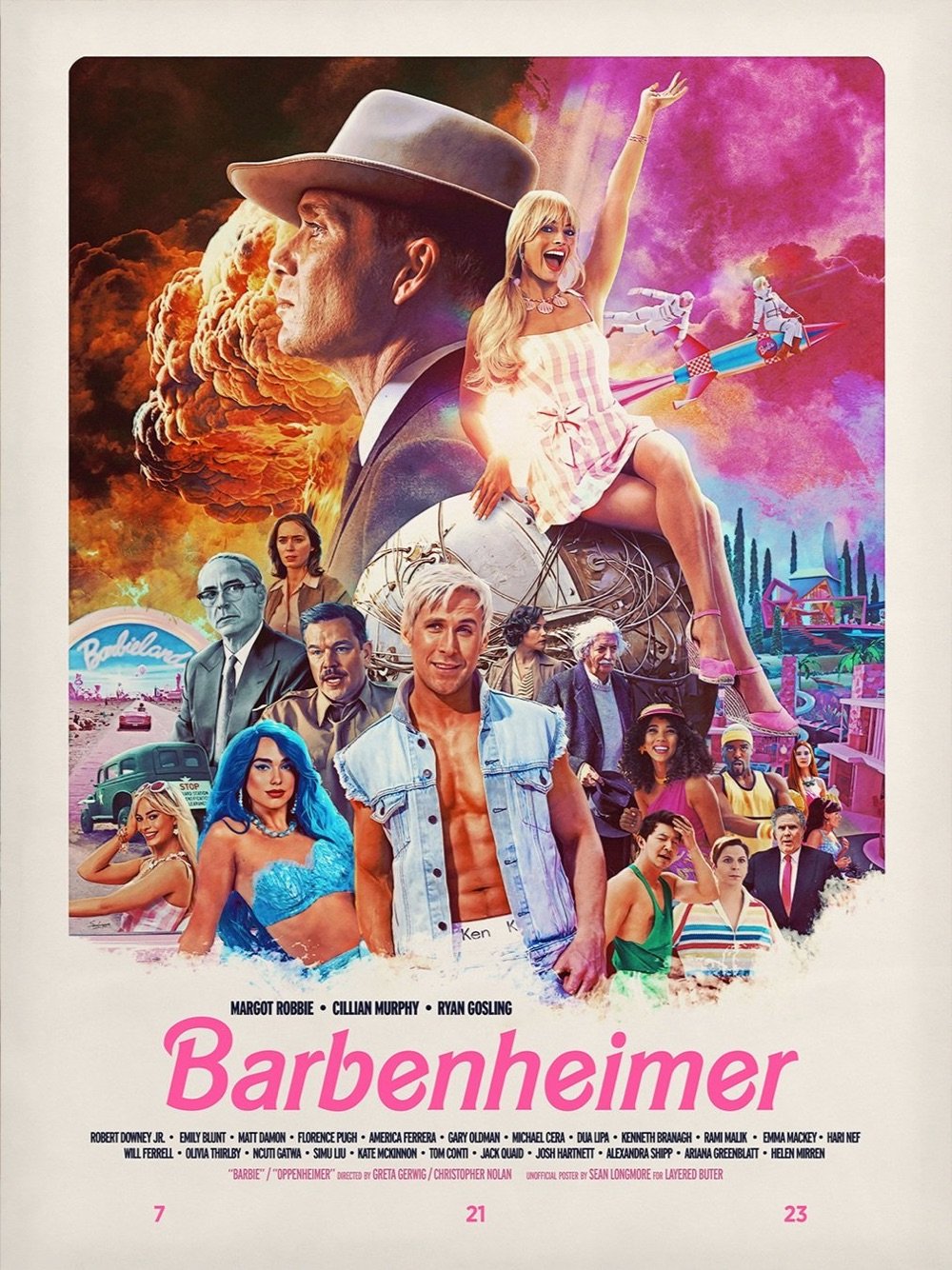
I am not in the habit of buying movie posters, but I bought one this year — for a movie that doesn’t even exist. A few weeks ago, I was lucky enough to snag one of Sean Longmore’s Barbenheimer posters. It’s still in the shipping canister, but I’m gonna get it framed and find a spot for it on my wall soon.
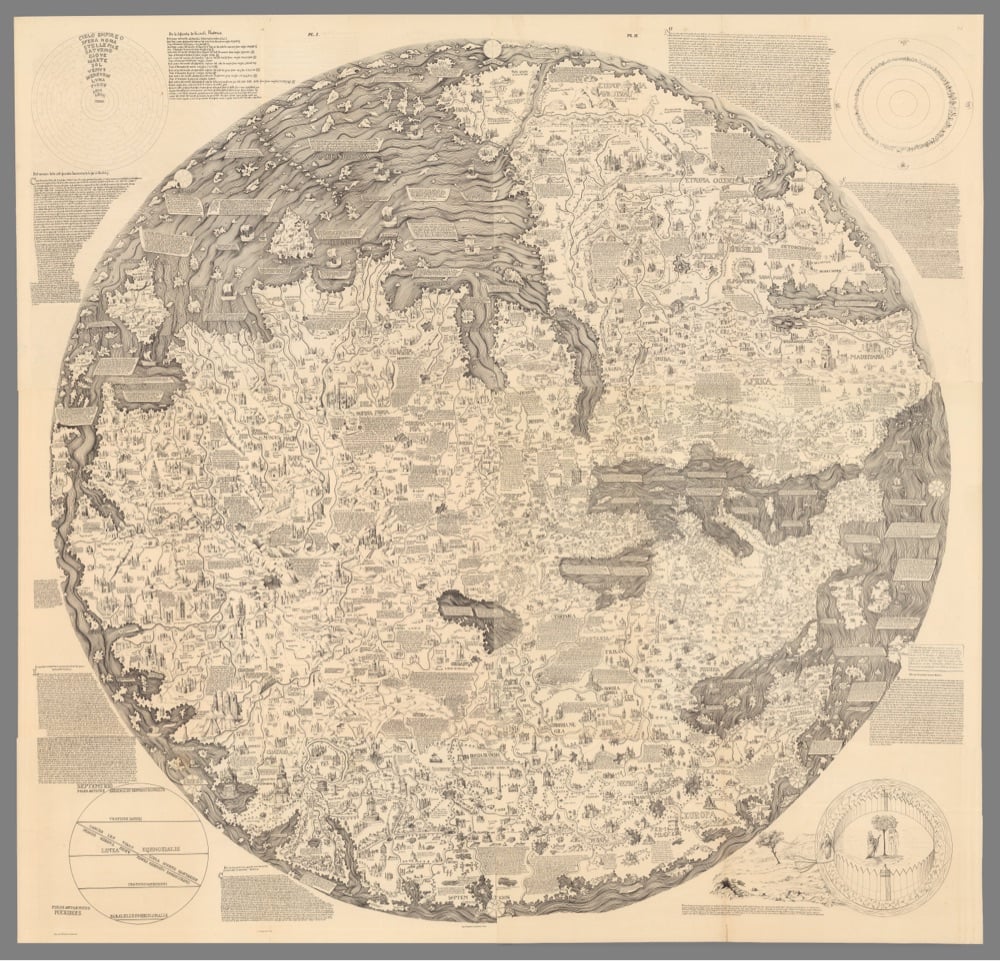
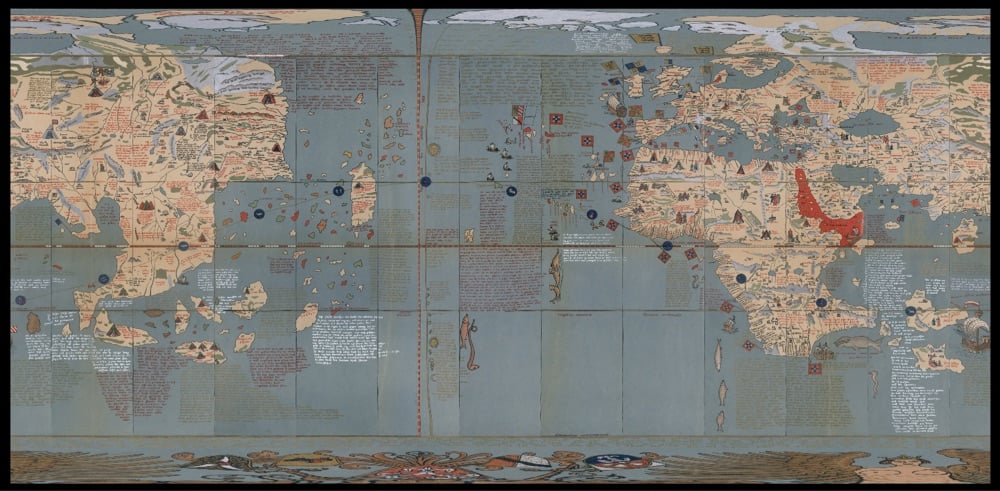
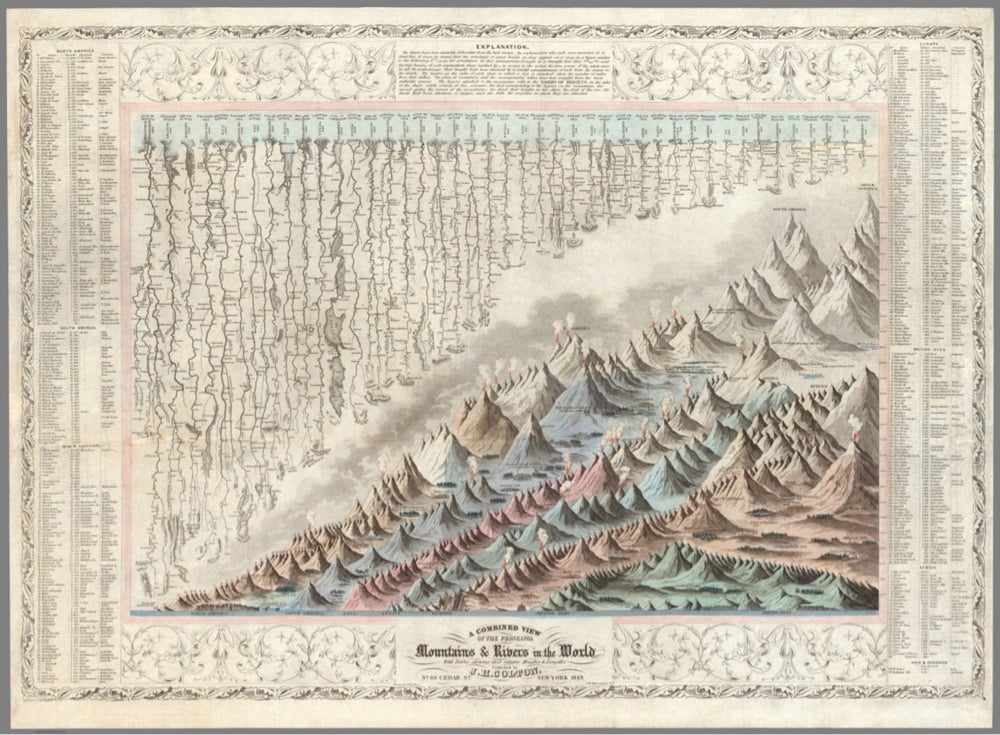
The David Rumsey Map Collection is one of the true gems of the web: a massive trove of maps & related images from over 40 years of collecting.
Rumsey began building a collection of North and South American historical maps and related cartographic materials in 1980. Eventually the collection expanded to include historical maps of the entire world, from the 16th to the 21st centuries. His collection, with more than 200,000 maps, is one of the largest private map collections in the United States.
Italian filmmaker Andrea Gatopoulos has made a documentary film called A Stranger Quest about Rumsey’s passion for maps. Here’s the trailer:
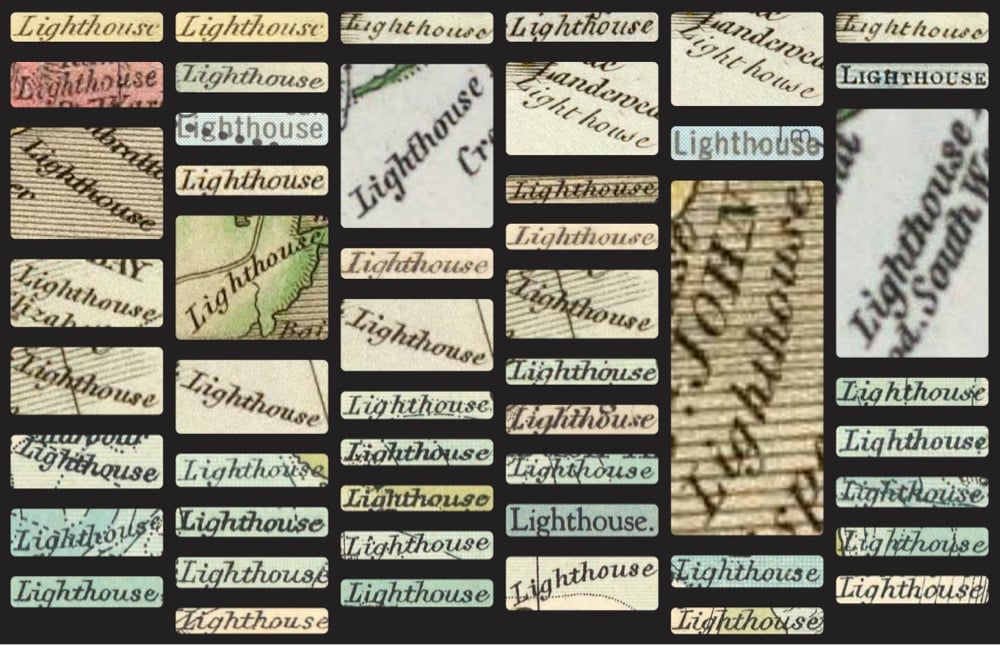
And because I can’t resist, a few maps from the collection:
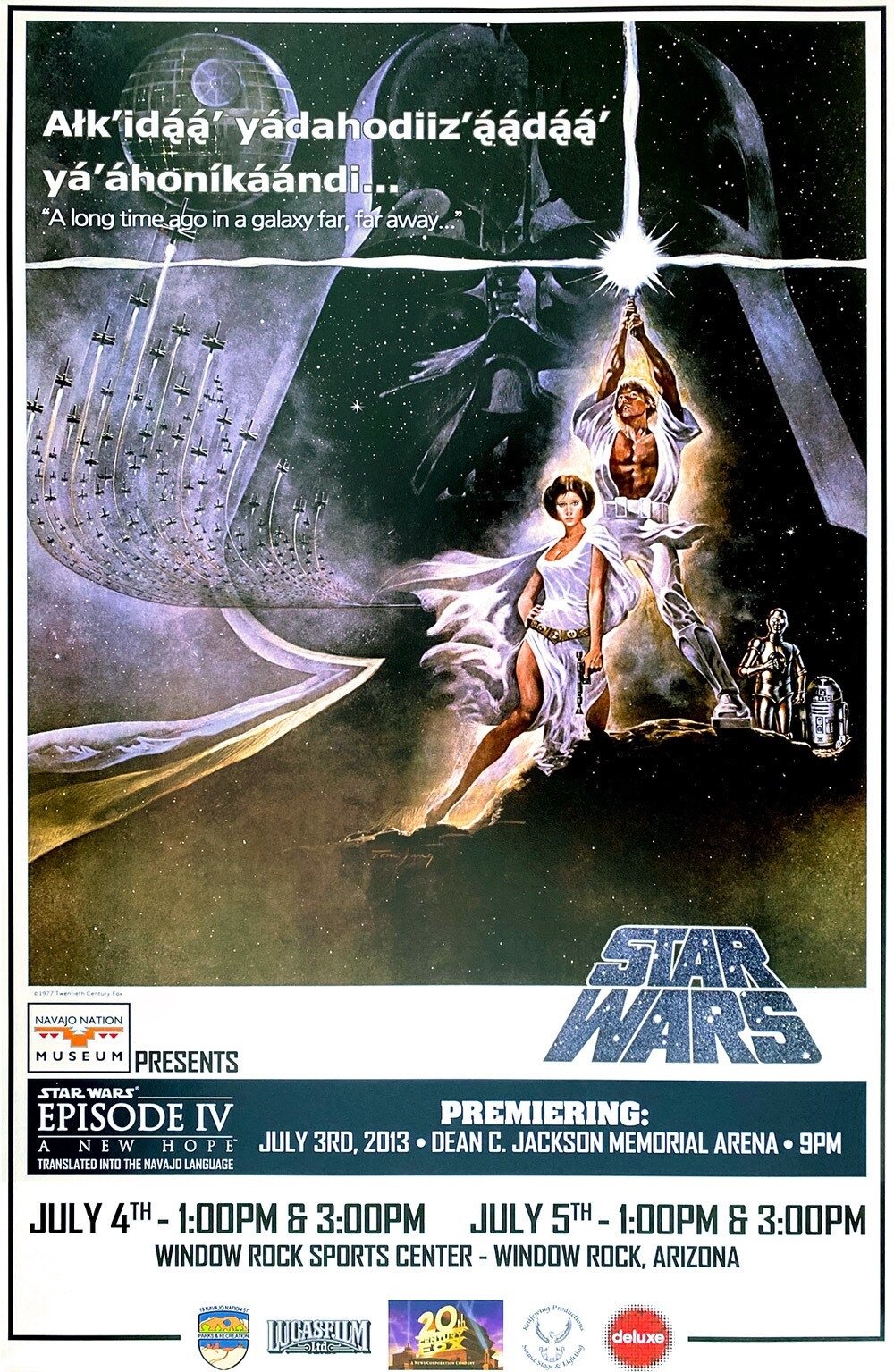
About ten years ago, after a long campaign by Navajo Nation member Manny Wheeler, Disney/Lucasfilm released the first Star Wars movie dubbed into the Navajo language. In this clip from the PBS series Native America, the Navajo version of Star Wars is shown at a drive-in in Arizona, with some of the voice actors who contributed to the dub in attendance. Some Navajo feel a strong connection to some of the themes in the movie:
The Force and the universe is all interconnected. When you put that in the Navajo language, especially for an elder to hear that, they’re going to just be thinking, like, yeah, of course. It’s not just a movie. That’s stuff we really believe.
Mr. Coyote states that on December 13th he received of Defendant via parcel post one Acme Rocket Sled. The intention of Mr. Coyote was to use the Rocket Sled to aid him in pursuit of his prey. Upon receipt of the Rocket Sled Mr. Coyote removed it from its wooden shipping crate and, sighting his prey in the distance, activated the ignition. As Mr. Coyote gripped the handlebars, the Rocket Sled accelerated with such sudden and precipitate force as to stretch Mr. Coyote’s forelimbs to a length of fifty feet. Subsequently, the rest of Mr. Coyote’s body shot forward with a violent jolt, causing severe strain to his back and neck and placing him unexpectedly astride the Rocket Sled. Disappearing over the horizon at such speed as to leave a diminishing jet trail along its path, the Rocket Sled soon brought Mr. Coyote abreast of his prey. At that moment the animal he was pursuing veered sharply to the right. Mr. Coyote vigorously attempted to follow this maneuver but was unable to, due to poorly designed steering on the Rocket Sled and a faulty or nonexistent braking system. Shortly thereafter, the unchecked progress of the Rocket Sled brought it and Mr. Coyote into collision with the side of a mesa.
My excitement was tempered almost immediately by hearing that Warner Bros. has shelved the completed film (starring John Cena & Will Forte and produced by James Gunn) in order to take a $30 million tax write-off.
In another maneuver by the David Zaslav-run Warner Bros Discovery to kill movies, we hear on very good authority that Warner Bros will not be releasing the hybrid live-action/animated Coyote vs. Acme, with the conglom taking an estimated $30M write-down on the $70M production. We understand the write-down for the pic was applied to the recently reported Q3.
What the fuck? Understandably, the folks who made the film arepissed.
I was lucky to help write on this. [Dave Green] spent years directing a hilarious heartwarming film that tested well with every audience. If great stories with beloved characters and A-list stars are getting shelved for tax write offs, why are studios even in the movie business.
Warners declined to comment, but a good source tells me the decision was made this weekend by Warners film chiefs Mike De Luca and Pam Abdy, along with new animation head Bill Damaschke, after the online outcry by filmmakers and the animation community, as well as some heated back-and-forth between the studio and reps for the director and stars. Warners had agreed to pay the top talent their streaming bonuses despite the film being scrapped, but obviously, everyone involved in this project wants it to be released by someone.
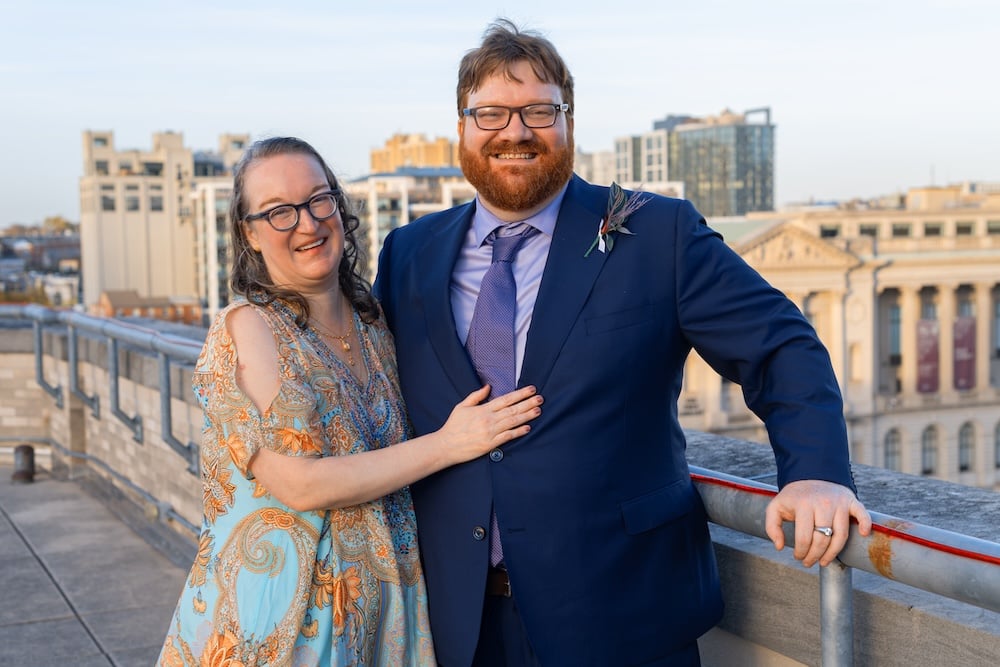
Tomorrow, November 4th, 2023, is my first wedding anniversary. I married Karen McGrane at the Franklin Institute in Philadelphia in 2022. We walked down the aisle to Gonzo’s “I’m Going To Back There Someday.” It was one of the best days of my life.
To celebrate our anniversary, I’m reposting what I wrote shortly after I moved into Karen’s house (which also, somewhat unusually, was the first time we met in person). It’s also the most recent — and since we haven’t renewed our WordPress license, quite possibly the last — post on Snarkmarket.com. I hope Kottke.org readers enjoy it.
Why write a blog post somewhere nobody has published in five years, in a new WordPress interface where you recognize… yeah, nothing? Where somehow you can’t even upload a JPG or PNG file you downloaded from another site “for security reasons” without converting it first? Or get paragraph tags or linebreaks working inside blockquotes? (Really? On Sir Tim Berners-Lee’s own World Wide Web???)
Because sometimes there is no other place to put such things. There is no other place where you want to put such things.
I bought a new laptop late in 2020, one of the new Apple Silicon M1 MacBook Pros that was announced just after the election (which was also my birthday). It is easily the best laptop I’ve ever used, let alone owned. I’m typing on it now. (It doesn’t have enough ports; otherwise, it is as perfect a machine as has ever existed until the next one comes out.) Buying that laptop started something for me: a new round of investment in myself after a long period of being fearful and dormant. And shortly after I bought it, I covered it in Muppets stickers.
I’m hardly unique in loving The Muppets; we’re past fifty years of Sesame Street and even longer of Jim Henson’s earlier creations, meaning just about every living generation has been touched by those special creatures one way or another. But the Muppets are a talisman of something I try to guard in myself: tenderness, exaggerated emotion, a desire to experience the world as something new, an urge to creativity and renewal, a fear of rejection, and a sometimes desperate need to be loved in a world where love is often in short supply.
The most famous song from The Muppet Movie is the opening number, “The Rainbow Connection.” It’s sung by Kermit the Frog, as played and performed by Jim Henson himself, and the conceit in the movie is that Kermit is playing and singing the song alone, on a banjo. This conceit is quickly abandoned, at least aurally; a whole orchestra comes in, turning a dead-simple children’s song into something swelling and cinematic. It’s three minutes long, and sung by a puppet, performed by someone who, for all his unbounded talents for voice and performance, can’t really sing. But I think it’s the greatest song ever written for a film. (A surprisingly competitive category!) It’s really worth watching, as many times as you can.
Here is a story about the writing of “The Rainbow Connection.” And here are the lyrics:
[Verse 1]
Why are there so many Songs about rainbows And what’s on the other side?
Rainbows are visions But only illusions And rainbows have nothing to hide
So we’ve been told and some choose to believe it I know they’re wrong, wait and see
[Hook]
Someday we’ll find it, the rainbow connection The lovers, the dreamers, and me
[Verse 2]
Who said that every wish Would be heard and answered When wished on the morning star?
Somebody thought of that And someone believed it Look what it’s done so far
What’s so amazing that keeps us stargazing And what do we think we might see?
[Hook]
Someday we’ll find it, the rainbow connection The lovers, the dreamers, and me
[Bridge]
All of us under its spell We know that it’s probably magic
[Verse 3]
Have you been half asleep And have you heard voices? I’ve heard them calling my name
Is this the sweet sound That calls the young sailors? The voice might be one and the same
I’ve heard it too many times to ignore it: It’s something that I’m supposed to be
[Hook]
Someday we’ll find it, the rainbow connection The lovers, the dreamers, and me
[End/Outro]
That’s the whole thing.
As a child, I was taught that this song was about hope in tough times — a rejection of cynicism, an attempt to uphold on the threshold of the Reaganite 1980s something of the idealism of the 1960s, from Martin Luther King Jr’s “I Have A Dream” speech to the antiwar movement, only somewhat looser and more adaptable (if also more inchoate). The song also had a religious element to it: something of my mother’s highly adaptable (and thoroughly idiosyncratic) Catholicism — a belief there was a magical, spiritual universe both separate from and pervading the one we could see. The Rainbow Connection was not heaven in any proper theological sense, but it was the heaven my mother believed in. And, I think, that she still believes in.
And it is those things — insofar as it “is” anything but a sweet song with a good melody — but it’s also something else. And as you get older, and continue to deal with grief and heartache (as I have, many times), and are dealt reversals and disappointments, the other meaning of “The Rainbow Connection” becomes insistent and impossible to ignore.
It is a song about what you can and can’t believe in after a life filled with missed chances, casual cruelties, and dead family and friends. It’s a song shot full of the melancholy many of us remember most clearly in our own childhoods, an ache to your bones that has never gone away. It is every heartbreak you have ever had, every injury suffered to your body, mind, and pride. It is how you think about friendship and community when your community is broken and your friends are all so very far away. It is not about a cohort of happy dreamers, or lovers. It is about how you care for your child inside when all your illusions are gone. It is the last illusion you keep, because without it, you would have nothing left.
The questions “The Rainbow Connection” asks are genuine questions, with a more ironic edge than Kermit places on it in the song itself:
“Who said that every wish / Would be heard and answered”? Really ask yourself: who?
“Somebody thought of that / And someone believed it.” Who thought of it? Why have any of us ever believed it?
“Look what it’s done so far.” What has it done? Have you actually looked? Where are we? All these years of struggle: what were they for? And what have they done?
“What’s so amazing that keeps us stargazing / And what do we think we might see?” What are we looking for? How would we even know it if we saw it?
And if not this, then what? What are the alternatives? Lie down and die? Give in to the world’s cruelty and cynicism and make yourself a part of it? Tranquilize yourself and wait for something to change? Could we even do otherwise? After all… it seems like most people genuinely can do exactly that.
Seen from this perspective, The Muppets are not childlike or naïve at all. They are advancing a powerful critique of how we live and what we believe, and how we’ve come to settle for so much less than what we are capable of. There is a utopian element to “The Rainbow Connection,” but it turns out to be a very slight one. A Minimum Viable Utopia, if you will.
The other song that matters the most to me from The Muppet Movie (which, like Michael Jackson’s Off the Wall and Prince’s self-titled album, was released shortly before I was born) is Gonzo’s “I’m Going To Go Back There Someday.” And this song, too, has multiple layers that are worth unpacking.
Here are the lyrics:
Verse 1:
This looks familiar Vaguely familiar Almost unreal yet It’s too soon to feel yet
Hook:
Close to my soul And yet so far away I’m going to go back there Someday
Verse 2:
Sunrises, night falls Sometimes the sky calls Is that a song there? And do I belong there?
Hook:
I’ve never been there But I know the way I’m going to go back there Someday
Bridge:
Come and go with me It’s more fun to share We’ll both be, completely At home in midair
We’re flying not walking On featherless wings We can hold on to love Like invisible strings
Verse 3:
There’s not a word yet For old friends who’ve just met
Part heaven, part space Or have I found my place?
Hook:
You can just visit But I plan to stay I’m going to go back there Someday
I’m going to go back there Someday
[End/Outro]
This song is somehow even simpler than “The Rainbow Connection,” but it wears its ironies farther out on its sleeves.
The obvious (although not literal) reading of the song is that Gonzo is not talking about any past he remembers, or even really a future he’s waiting for, but about the love and newfound family he’s discovered with his friends now all around him: the Muppets to whom he’s singing the song. Again, as a child, this is what I was taught without having to be told, and for the most part, it’s what I believed.
The second, more critical take on “I’m Going To Go Back There Someday” is that it is a profound confession of abandonment and loneliness in Gonzo’s formative years. It is the absence of anything like the heartsoaring love he is stumbling to find words to describe, and his very early and extremely keen awareness of that absence, even before he knew there was hope of anything different. It is less about loss (you have to have something before you can lose it, technically) than lack.
And while you could say that Gonzo is realizing now that he’s found what he’s long been looking for, the fact that he still puts it in the future tense suggests that he’s still feeling something lacking, either in his companions or in himself. He still feels incomplete, blown apart, alone and lonely, en route to something he does not have and has never had, does not know and has never known — something that he can only describe or define by its absence. A negative theology.
You could take this a step further and say that what “I’m Going To Go Back There Someday” is really about is the fact that such a place does not exist, has never existed, and if it waits for anyone, it does not wait for the singer. Gonzo — Tim Carmody — is so irreducibly damaged by what has happened to him, so thoroughly alone, that he can only think of love and belonging as a return to a paradise he’s never known and will never in his lifetime see.
The trouble with all of this is that sometimes the impossible happens.
Here I’m going to invoke another important text from my childhood, but I won’t take the time to explicate it, because I can talk about baseball (and specifically, this single plate appearance) forever.
It is hard to talk or even to think about miracles, especially if (like me) you have long since relaxed the God hypothesis. The 18th-century empiricist / skeptical philosopher David Hume defined a miracle as “a transgression of a law of nature by a particular volition of the Deity, or by the interposition of some invisible agent.”
Nothing is esteemed a miracle, if it ever happen in the common course of nature. It is no miracle that a man, seemingly in good health, should die on a sudden: because such a kind of death, though more unusual than any other, has yet been frequently observed to happen. But it is a miracle, that a dead man should come to life; because that has never been observed in any age or country.
The trouble for Hume with miracles is the trouble for Hume with all knowledge (including very basic relationships of cause and effect): the evidence to genuinely believe in miracles is always lacking. It falls apart given the tiniest bit of criticism — and yet, people are inclined to believe in miracles anyways.
In fact, people all over the world, at every age and in every walk of life, may be more inclined to believe in something impossible they believe they’ve witnessed themselves, alone or in a small group, than an ordinary event witnessed again and again by millions of people. Aristotle, too, understood, this irony, writing in the Poetics that (translations differ, but here is the gist) “the poet should prefer probable impossibilities to improbable possibilities.” And if you can keep God’s hands off the probable impossible, so much the better.
The world Gonzo prophecies in “I’m Going To Go Back There Someday,” that Kermit imagines in “The Rainbow Connection,” is not supposed to exist. It is an illusion, an impossibility, even if it remains a necessary one. And yet: sometimes, somehow, after you have already set aside your own eligibility for such things, and doubted their real existence for others or their cameos in your own past, you nevertheless, to your own total astonishment, find yourself back there again.
On Saturday, February 6th, I moved back to the city of Philadelphia. I made my nostos, not to the city where I was born (Detroit, which will also always have my heart), but the city I chose when I was 22, and where I spent most of the important years of my life.
I am back. I am home.
You can just visit But I plan to stay I’m going to go back there Someday


Stay Connected